Dog Won’t Drink Water Outside? 7 Reasons and Easy Fixes
If your dog will not drink water outside, it can feel confusing at first. Many dogs drink normally at home but hesitate on walks, at parks, or during day trips. That does not always mean something is wrong. In many cases, the problem is simply that the setting, timing, or water setup feels unfamiliar. The good news is that small routine changes often make outdoor hydration much easier.
This matters because dogs do not always pause naturally to drink when they are busy exploring. Owners often need a simple way to offer water that feels familiar and low-pressure. Once you understand what is getting in the way, it becomes much easier to solve the problem without turning every outing into a struggle.

1. Your Dog Is Too Distracted
Outdoor spaces are full of smells, movement, sounds, and new things to investigate. Some dogs are simply too stimulated to stop and drink.
Easy fix
Offer water during calmer pauses instead of in the busiest moment of the walk. A shaded stop or quiet bench often works better than a crowded area.
2. The Water Setup Feels Unfamiliar
A dog that is used to a bowl at home may not immediately understand a new portable setup outside.
Easy fix
Use one consistent hydration tool and let your dog practice with it in calm settings first. Our guide on training your dog to drink from a travel water bottle walks through that transition step by step.
3. The Timing Is Off
Some owners wait too long to offer water, which means the dog is already overstimulated, panting heavily, or focused on getting home.
Easy fix
Offer water earlier in the outing, not only at the point when your dog seems obviously thirsty. Short, planned breaks usually work better than waiting.
4. The Dog Does Not Like the Delivery Method
Some dogs dislike drinking from strange containers, shallow caps, or awkward bowls that move while they try to drink.
Easy fix
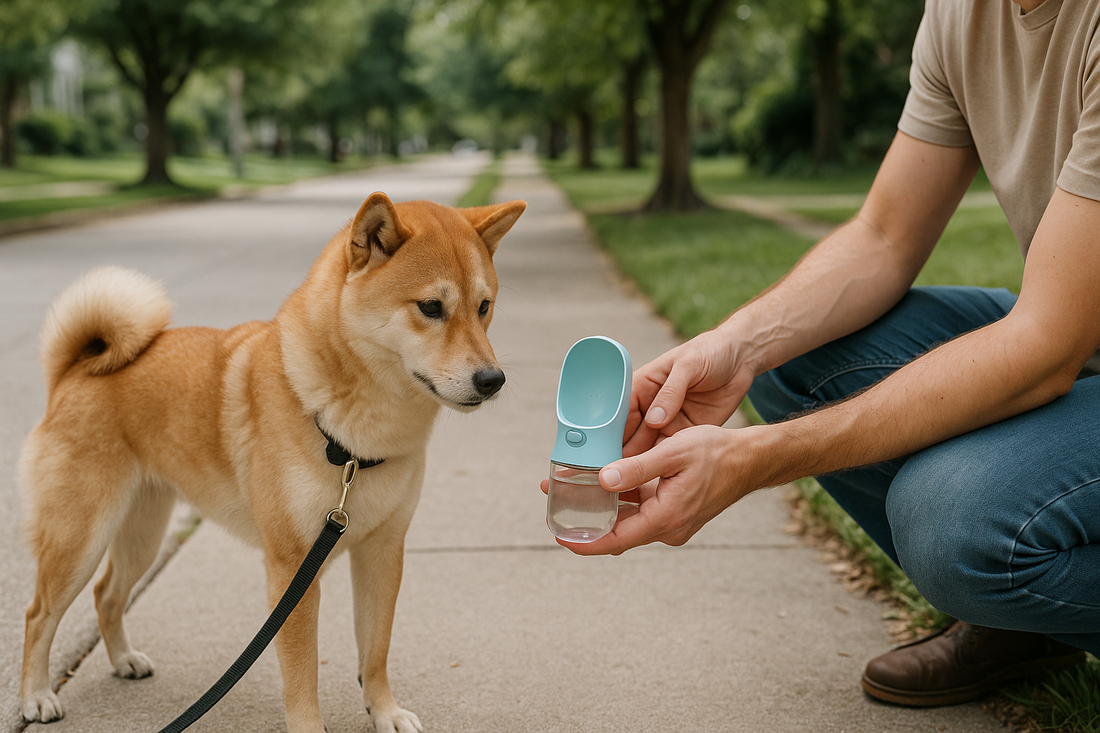
A dog water bottle and food container helps because it gives you one simple, repeatable setup that is easy to carry and easy to present during breaks.
5. The Water Is Too Warm or Unappealing
If water has been sitting in a hot car or bottle for too long, some dogs may lose interest.
Easy fix
Start with fresh water and avoid leaving it in heat for long periods before the walk or trip.
6. Your Dog Is Nervous in New Places
Anxious dogs may not relax enough to drink outdoors, even if they need water.
Easy fix
Start with familiar routes and quiet environments, then build confidence gradually before expecting easy drinking in more stimulating locations.
7. The Routine Is Inconsistent
If hydration happens differently every time, some dogs never learn what to expect.
Easy fix
Use the same bottle, similar break timing, and a calm approach on most outings so the habit starts to feel predictable.
Solutions / What to Do
The best solution is to reduce friction. Bring one hydration tool consistently, offer water early in calmer moments, and make the experience familiar instead of rushed. Dogs usually do better when outdoor drinking feels like part of a routine rather than a last-minute interruption.
If your dog already drinks at home, that is a good sign. You are usually not teaching the idea of drinking itself. You are just helping your dog understand how to do it comfortably in a new setting.
Why the Product Helps
Outdoor hydration problems are often practical problems in disguise. If the container is awkward, the water spills, or the setup feels clumsy, owners are less likely to offer water often enough and dogs are less likely to trust it quickly. A portable bottle made for dogs helps because it keeps the routine simple, portable, and easier to repeat on real walks.
That repeatability is what makes the difference. The easier the setup is for you, the easier it becomes for your dog to learn the pattern too.

Why It Matters / Benefits
When your dog drinks more comfortably outside, outings become easier to manage. You can handle warm walks, longer trips, and park visits with more confidence because hydration is no longer a guessing game. This also reduces stress for owners who want to be prepared without carrying a complicated kit.
The long-term benefit is consistency. A dog that understands outdoor hydration routines is easier to care for on ordinary walks and on bigger day trips too.
FAQ
Why will my dog not drink water outside?
Common reasons include distraction, unfamiliar containers, poor timing, anxiety, or inconsistent hydration routines.
How do I get my dog to drink water on walks?
Offer water during calm breaks, use a familiar portable setup, and start the routine earlier instead of waiting until your dog seems uncomfortable.
Should I worry if my dog only refuses water outside?
If your dog drinks normally at home, it is often a routine or environment issue. If you notice other unusual symptoms, it is best to check with your veterinarian.
Is a dog travel water bottle worth it?
Yes, especially if it helps you offer water more consistently and gives your dog one predictable way to drink outdoors.
Can I train my dog to drink outside more easily?
Yes. Most dogs improve when you practice calmly, keep the setup consistent, and make outdoor hydration feel familiar.
If your dog will not drink water outside, keep the routine simple, use one practical bottle, and build the habit in calm stages so outings start to feel easier for both of you.