How Much Water Does a Dog Need on a Walk?
If you are wondering how much water a dog needs on a walk, the honest answer is that it depends on the dog, the weather, the pace, and the length of the outing. Still, one thing is consistent: it is easier to meet your dog’s hydration needs when you plan for them before you leave the house. Many owners underestimate how quickly a normal walk can turn into a longer, warmer, or more active outing than expected.
That is why this question matters. You do not need to obsess over exact numbers for every short walk, but you do need a practical system for offering water when it makes sense. A simple travel setup can help you respond sooner instead of waiting until your dog seems obviously thirsty.

What Changes a Dog’s Water Needs on a Walk
Not every walk asks the same thing from your dog, so hydration needs naturally change from one outing to the next.
Weather and temperature
Warm days, direct sun, and humid conditions can make dogs need water sooner than they would on a cool, shaded walk.
Walk length and pace
A quick neighborhood loop is very different from a long park visit, a hike, or a day trip with multiple stops. The longer and more active the outing, the more important planned water breaks become.
Dog size, coat, and energy level
Large dogs, energetic dogs, and dogs with heavier coats may need more frequent hydration support, especially if they get excited outdoors.
If your outings often stretch beyond a basic walk, our guide to dog travel checklists for walks, hikes, and road trips can help you build a more complete routine.
Signs Your Dog May Need Water Sooner
You do not need to wait for a dramatic signal before offering a drink. Many hydration decisions are best made proactively.
What owners often notice
Dogs may slow down, look less focused, pant more heavily, or seem eager to stop in shade. These signs do not always mean a problem, but they do tell you it may be time for a break.
Why timing matters
Offering water earlier is usually easier than waiting until your dog is clearly uncomfortable. Short, sensible water breaks fit naturally into better walk routines.
Solutions / What to Do
The simplest solution is to make hydration easy enough that you actually do it. That usually means bringing water in a way that feels practical for real life, not bulky or messy.
Bring a dog-specific water setup
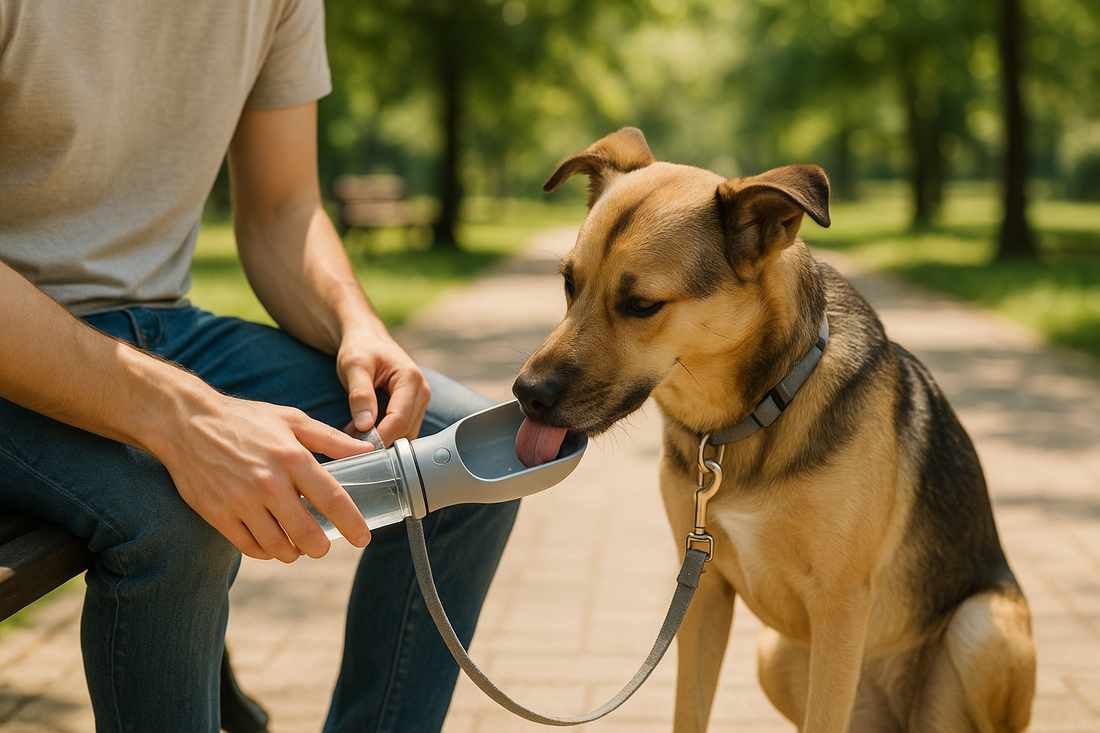
A dog water bottle and food container helps because it keeps water ready in one compact item that is easier to carry than a separate bottle and bowl.
Offer water on longer or warmer walks
You do not need to interrupt every short outing, but for longer walks, active play, travel days, or hot conditions, a planned water break makes sense.
Think in routines, not perfect measurements
The goal is not memorizing the exact amount for every situation. The goal is making sure your dog has a comfortable, repeatable way to drink when needed.
Why the Product Helps
Hydration problems on walks are often not about owners forgetting that water matters. They are about the setup being inconvenient. If you have to carry a loose bowl, an extra bottle, and treats separately, it becomes easier to skip the whole thing on shorter outings.
That is why a grab-and-go product helps. A combined water bottle and food container reduces friction, keeps supplies organized, and makes it far more likely that you will bring water consistently. That practical consistency is what solves the real problem.

Why It Matters / Benefits
Better hydration support makes walks more flexible and less stressful. You can stay out longer when needed, adjust to warmer weather more comfortably, and avoid the feeling that you are improvising every time your dog needs a break. It also helps build better outdoor habits overall.
The benefit is not only physical comfort for your dog. It is also peace of mind for you. When you know water is already handled, the walk feels easier from the start.
What to Look For in a Walk Hydration Setup
The best walk hydration setup is the one you will actually carry.
Look for easy one-hand use
That matters when you are holding a leash or moving through a busy area.
Look for leak resistance
A bottle that makes a mess in your bag or car is less likely to become part of your routine.
Look for realistic portability
If it feels awkward on a normal walk, it may only come along on special trips. Choose something simple enough for everyday use.
If you are still deciding what type of bottle makes sense, our article on how to choose the right travel water bottle for dogs breaks down the most practical features.
FAQ
How much water does a dog need on a walk?
It depends on the length of the walk, the weather, and your dog’s size and energy level. Longer, warmer, or more active outings usually call for planned water breaks.
Do I need to bring water on every dog walk?
Not always for very short outings in mild weather, but it is a smart habit for longer walks, warm days, travel, and active sessions.
How do I know if my dog needs water during a walk?
Heavy panting, slowing down, seeking shade, or seeming less comfortable can all be signs that a break and some water would help.
Is a travel water bottle worth it for dog walks?
Yes, especially if it makes you more likely to bring water consistently instead of leaving it behind because the setup feels inconvenient.
What is the easiest hydration solution for dog walks?
A compact dog water bottle is often the simplest option because it keeps hydration easy, portable, and ready when you need it.
If you want walks to feel simpler and better prepared, start with a hydration routine that is easy to carry, easy to use, and easy to repeat.