How to Stop Fast Eating in Dogs
If you are wondering how to stop fast eating in dogs, the good news is that there are simple ways to improve mealtime behavior. Dogs that eat too quickly often gulp food, swallow air, and finish meals before their body has time to register fullness. That can lead to discomfort, messy habits, and a stressful feeding routine. With the right tools and a few practical changes, you can help your dog slow down and enjoy safer, calmer meals.
Fast eating is common in puppies, highly food-motivated dogs, and pets that have developed rushed habits over time. Some dogs behave this way because they are excited, while others do it because they feel competitive around food. Instead of relying on one quick fix, it usually works best to combine feeding accessories, routine changes, and a more structured setup.

Why Dogs Eat Too Fast
Before trying to solve the problem, it helps to understand what may be causing it. Some dogs simply love food and rush toward every meal. Others eat quickly because they learned to compete in a multi-pet household or had inconsistent feeding schedules in the past.
Breed tendencies, personality, and environment also matter. Energetic dogs may struggle to settle before meals, while anxious dogs may eat fast because they feel the need to guard access to food. Recognizing the cause can help you choose the right solution instead of treating every fast eater the same way.
Use the Right Feeding Tools
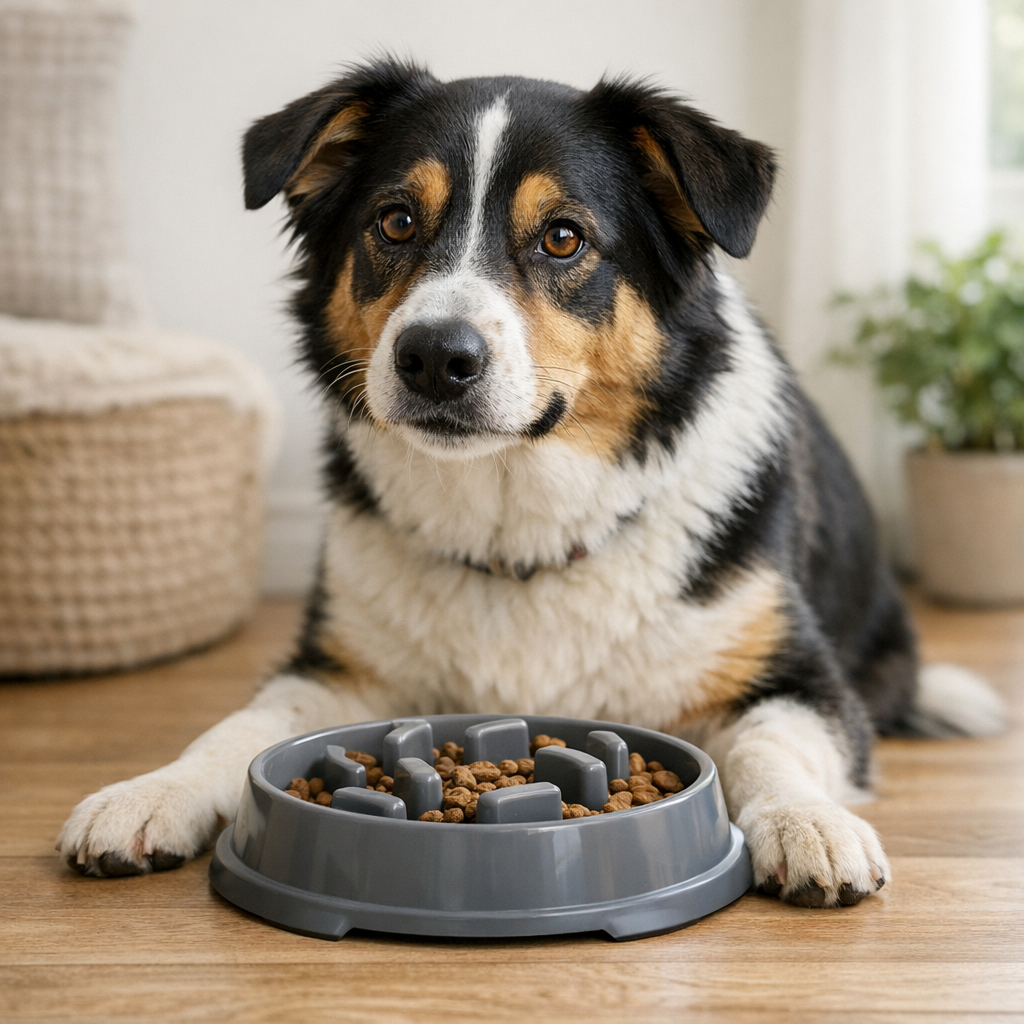
One of the easiest ways to stop fast eating in dogs is to change the bowl. A standard bowl gives your dog instant access to the full meal, but a slow feeder bowl spreads food into ridges or patterns that naturally reduce speed.
Slow feeder bowls
A slow feeder dog bowl is often the first tool to try. It helps prevent gulping by making the dog work around the food instead of inhaling it. This creates a slower eating rhythm without requiring major training.
Lick mats for calm feeding moments
If your dog also becomes overstimulated around food, a lick mat can be useful for snacks, wet food, or calming enrichment between meals. Repetitive licking can encourage more relaxed behavior, especially when paired with a predictable routine.
You can explore mealtime solutions in our feeding and health collection to find practical tools that support slower, calmer eating.
Change the Feeding Routine
Products help, but routine matters just as much. Dogs often respond well when mealtimes become predictable and low-stress.
Serve smaller portions in stages
Instead of placing the full amount down at once, try splitting one meal into two smaller servings. This can slow your dog’s pace and reduce the excitement that comes from seeing a large amount of food in the bowl.
Feed in a calm environment
Noise, activity, and nearby pets can make some dogs more frantic during meals. Feeding in a quiet space helps reduce distractions and food-related tension.
Stick to a schedule
Consistent feeding times can reduce urgency. When dogs know when food is coming, they may feel less pressure to rush through every meal.
Encourage a pause before eating
Asking your dog to sit and wait briefly before placing the bowl down can help lower arousal. This small moment of structure often leads to a calmer start.

Benefits of Slower Eating
Helping a dog eat more slowly is not only about tidier meals. It can also improve the overall feeding experience for both pet and owner.
Supports better digestion
When dogs slow down, they may swallow less air and have a more comfortable mealtime experience. While this is not a replacement for veterinary care, it can support better day-to-day feeding habits.
Reduces stress at mealtime
A dog that eats in a more controlled way often appears calmer before and after meals. That can make a big difference in busy homes where feeding time tends to feel chaotic.
Adds simple enrichment
Slower feeding methods engage your dog’s brain as well as appetite. Even small amounts of enrichment can improve the quality of daily routines.
What to Look for When Choosing a Solution
Not every approach works for every dog, so it is worth choosing products and habits that fit your dog’s needs.
Size and breed compatibility
Small dogs, large dogs, and flat-faced breeds may need different feeder designs. A bowl that is too hard to use can cause frustration instead of helping.
Easy cleaning
Daily-use feeding accessories should be simple to wash. Hygiene matters, especially if you use wet food, toppers, or enrichment spreads.
Durability for everyday use
If your dog is enthusiastic around food, choose sturdy products that can handle repeated use. Non-slip bases and solid materials are especially helpful.
For dogs that benefit from multiple calming tools, our dog slow feeder bowl and dog lick mat slow feeder can work well together as part of a better mealtime routine.
Tips / What to Look For
Start with one solution that fits your dog’s size and feeding style, then build a calm routine around it. Consistency matters more than complexity, and simple changes are often the easiest to maintain long term.
Why It Matters
Learning how to stop fast eating in dogs is really about supporting healthier daily habits. Meals happen every day, often twice a day, so even a small improvement can have a lasting effect. A calmer dog, cleaner feeding area, and more structured routine benefit the whole household.
If your current setup is not working, you do not need to overhaul everything at once. Start with one or two smart adjustments, then build from there. Many pet parents find that once they introduce the right tools and feeding pattern, the improvement is easy to maintain. You can also browse our feeding and health collection for products designed to support safer, calmer mealtimes.

FAQ
Why does my dog eat so fast?
Dogs may eat quickly because of excitement, habit, food competition, anxiety, or inconsistent feeding routines. Some are simply highly motivated by food.
How can I stop my dog from gulping food?
Try a slow feeder bowl, serve smaller portions, create a calmer feeding area, and keep mealtimes consistent. These changes often help reduce gulping.
Do slow feeder bowls help with fast eating?
Yes, they are one of the most effective everyday tools for slowing down fast eaters because they make dogs work around the food instead of swallowing it all at once.
Can a lick mat help with fast eating in dogs?
A lick mat is more useful for calming enrichment, wet food, or snacks, but it can still support a better mealtime routine when used alongside a slow feeder bowl.
When should I talk to a vet about fast eating?
If fast eating comes with vomiting, choking, digestive distress, sudden behavior changes, or other health concerns, it is best to speak with your veterinarian.
If you want a more peaceful feeding routine, start with simple tools that fit your dog’s habits and build a setup that makes every meal feel calmer and easier.
If you are ready to make this part of your routine easier, start with one dependable product and then explore the wider category if you want more options.
Our Dog Slow Feeder Bowl is a strong place to begin, and you can also browse Dog Feeding Essentials for a fuller setup.