Dog Road Trip Hydration Tips for Short and Long Drives
You load the car, clip the harness, and think, “It’s only a 40-minute drive.” Then traffic slows, the sun hits one side of the car, and your dog starts panting harder than expected before you even reach the highway. Dog road trip hydration tips matter because car travel changes fast. A short drive can turn into an 80-minute one, and a long drive can get uncomfortable long before your dog looks obviously thirsty.
A labrador on a spring road trip is one thing. A French bulldog in warm weather traffic is a different story. Add a dark coat, a packed car, or a dog that gets worked up in transit, and hydration becomes something you need to plan, not improvise at the gas station.

Start Hydration Before the Car Door Closes
Many people wait until the first stop to think about water. That is late. If your dog gets into the car already warm from loading, playing, or walking around the driveway, the trip starts with a disadvantage.
Offer water before you leave, especially in warm weather or if the dog gets excited around car rides. A beagle or mini Aussie may hop in and settle fine. A boxer, husky, or doodle that treats every trip like a major event can start panting before the engine is even on.
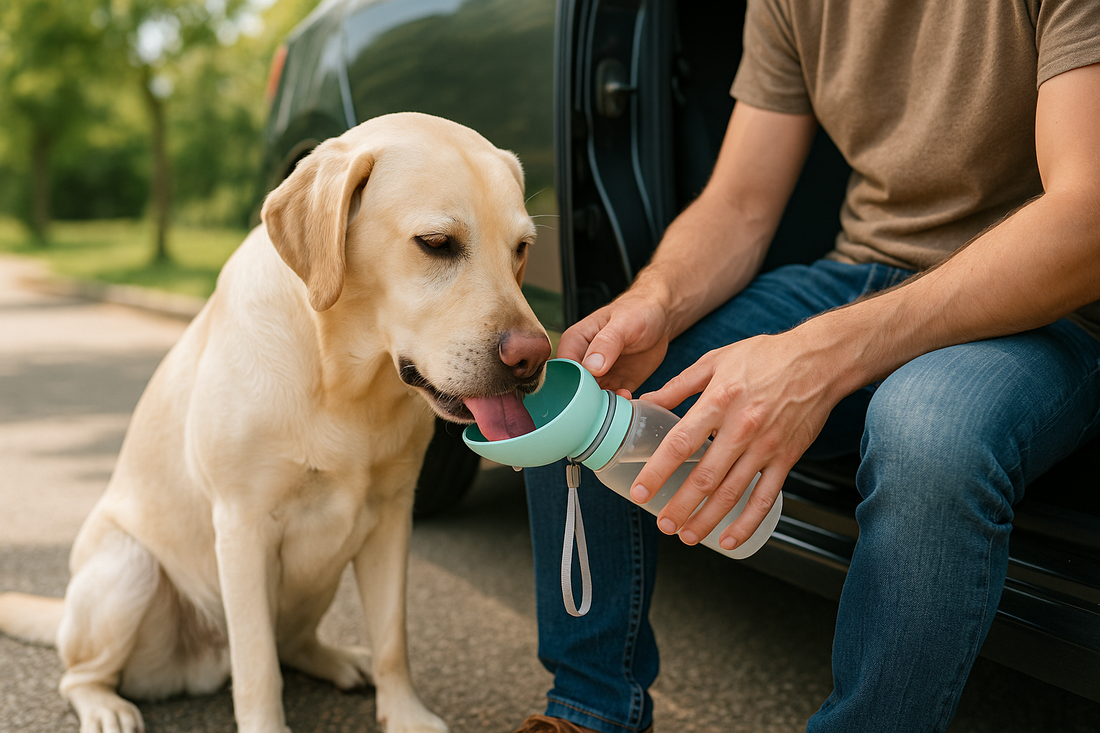
A dog water bottle and food container helps here because you can offer a quick drink before departure and again at the first stop without unpacking separate gear. That matters more than people expect on travel days.
Short Drives Still Need a Plan
A lot of owners think hydration planning only matters for long road trips. Not really. A “short drive” with a dog can include loading time, waiting in the car, a hot parking lot, errands, and the drive back. Suddenly your 25-minute ride has stretched well past an hour.
For short drives, the goal is not repeated big water breaks. You want easy access and flexibility. Keep water within reach, not buried under bags. If you are doing warm-weather errands with your dog, our earlier guide on what to pack for a summer dog walk in hot weather fits this topic well because many short drives end with a walk in conditions that feel hotter than expected.
The best road trip setup for short drives is the one you actually keep in the car every time. If it is too fussy, it disappears after week one.
Long Drives Need Real Stop Strategy
Longer drives are where weak hydration routines show up fast. You do not want to guess. You want a stop pattern.
For most dogs
A practical rhythm is to offer water every 1.5 to 2 hours, sooner in hot weather, heavy traffic, or if your dog is panting hard. Some dogs will take only a few sips. That is fine. Offer, do not force.
For brachycephalic or heavy-coated dogs
Pugs, bulldogs, shih tzus, and thick-coated breeds usually need more conservative handling. Stop earlier. Keep the car cooler. Do not assume they will “settle” if they are already warm.
For anxious travelers
Some dogs pant from stress as much as temperature. Those dogs still need hydration, but they may drink better during calm roadside breaks than right after you pull in.
The dog travel hydration collection is the most relevant collection here because it supports exactly this kind of stop-and-go travel routine.
What to Watch for During the Drive
Not every hydration issue looks dramatic. Many start small.
Watch for fast panting that does not settle, sticky saliva, restlessness, constant repositioning, or a dog that seems more wired and uncomfortable than usual. A black lab sprawled quietly but panting heavily in the back seat may need a stop sooner than a terrier who is upright and alert but breathing normally.
And pay attention to your own setup. If you have to pull over, dig through bags, find a bowl, and pour carefully while your dog circles the car, the hydration routine is too awkward. That is exactly why portable travel gear earns its place on longer drives.
Practical Road Trip Hydration Tips
- Offer water before departure, not only at the first stop.
- On longer drives, aim for water access about every 1.5 to 2 hours and earlier in heat or traffic.
- Keep the bottle within reach, not in the trunk under luggage.
- Use calm stops. Many dogs drink better once they have moved a little and sniffed around.
- Do not wait for dramatic thirst signs. By then the dog is already uncomfortable.
- If the weather is warm, assume the car ride is more demanding than it looks on the map.
Food, Water, and Timing Work Together
Road trip hydration is easier when the rest of the schedule makes sense. Huge meals right before departure can leave some dogs sluggish or uncomfortable. No water at all before leaving creates the opposite problem. Most dogs do better with a balanced approach: normal hydration, sensible feeding timing, and planned breaks rather than random ones.
If you are still figuring out what bottle size makes sense for your dog’s trips, our article on the best travel water bottle size for small, medium, and large dogs helps you match capacity to your actual routine.

FAQ
How often should I offer water on a road trip with my dog?
For many dogs, every 1.5 to 2 hours is a practical baseline, with more frequent stops in warm weather, traffic, or stressful travel conditions.
Should dogs drink before getting in the car?
Yes. Starting the trip hydrated is usually easier than trying to catch up later at the first stop.
What if my dog pants in the car but will not drink?
Try offering water after a short calm break outside the car. Some dogs need movement and a quieter moment before they will drink.
Is one water stop enough for a 3-hour drive?
Sometimes, but not always. Warm weather, a large dog, or heavy traffic can make one stop feel too sparse.
What travel item makes hydration easier on road trips?
A portable dog water bottle is usually the easiest option because it keeps water accessible during both short and long stops.
Check your travel setup before your next drive and make water the easiest part of the trip. See how the dog water bottle and food container handles short stops and long drives →