Summer Dog Walk Essentials for Hot Weather
You leave home for a quick 20-minute walk, and by the second block your cocker spaniel is panting like you just finished a hike. The sidewalk feels hot through your shoes. The sunny side of the street suddenly looks like a bad idea. Summer dog walk essentials are not about carrying more stuff. They are about avoiding that exact situation before it starts.
On a 29-30°C day, a labrador, doodle, pug, or French bulldog can look stressed much faster than people expect, especially on exposed pavement with no shade. A short walk can still be too much if the route is wrong, the timing is off, or you left home with nothing but a leash and good intentions. Pack a few useful things, change the rhythm a bit, and the whole walk gets easier.

Bring Water You Can Actually Use Mid-Walk
Plenty of people know they should bring water in summer. Fewer bring a setup they will really use once the dog is pulling, panting, and trying to drag them toward the nearest patch of grass.
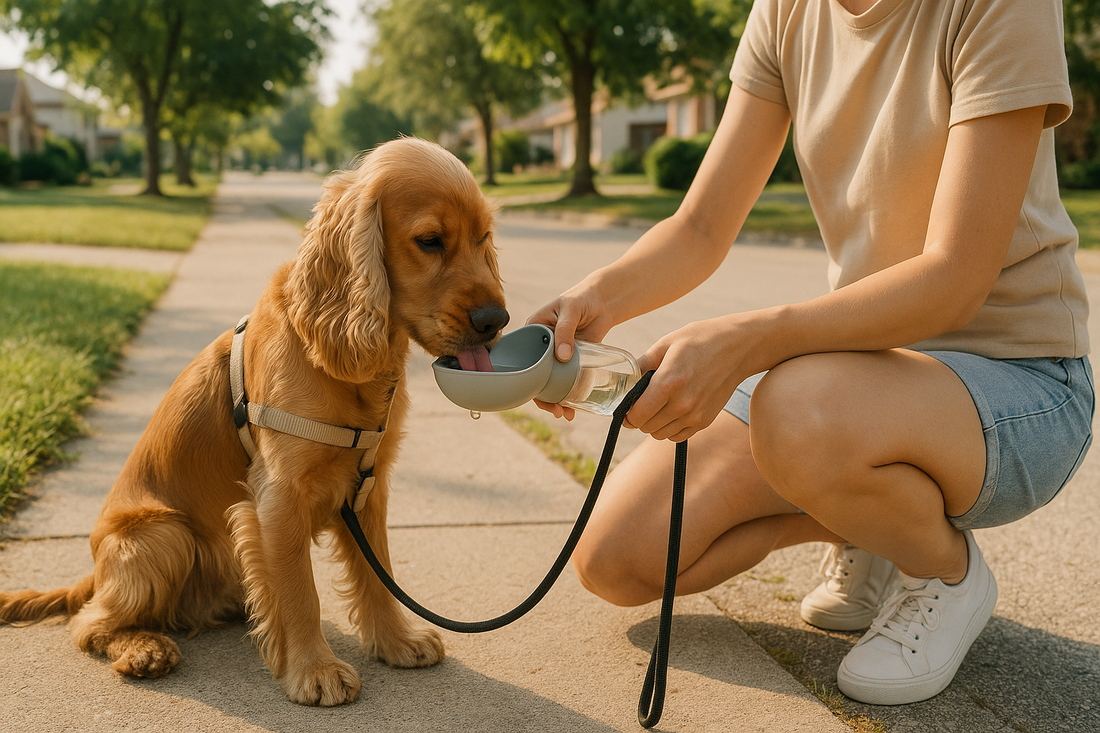
A dog water bottle and food container works well here because you can offer small drinks fast instead of juggling a bottle cap, your hand, and a leash. For many dogs, that is the difference between getting a sip at the right moment and waiting too long.
A border collie on a brisk walk in 28°C heat may want a small drink every 10 to 15 minutes if there is sun exposure and no real shade. A bulldog or senior golden retriever may need the walk shortened well before that. Summer does not reward stubborn mileage.
If you want travel-friendly gear built around hydration first, the dog travel hydration collection is the right collection for this cluster.
Choose Shade and Surface Before You Choose Distance
Most warm-weather walking mistakes start with route planning, not gear. People think, “We always do this loop.” But the same loop changes completely once one side of the street is baking and the pavement is holding heat.
Grass edges, tree cover, quieter side streets, and shorter shaded routes matter more than squeezing in the usual number of minutes. If the back of your hand is uncomfortable on the sidewalk after five to seven seconds, your dog does not need a full neighborhood tour. Go shorter. Go shadier. Or go home and do indoor play later.
Some dogs make this easy to spot. A black lab will start looking for lawns and pulling toward shade. A little dachshund might slow down and flatten its body language. Others, especially high-drive dogs, keep moving until they are suddenly not okay. You need to read the route before that happens.
Timing Decides Whether the Walk Feels Normal or Miserable
A summer dog walk at 7 a.m. and a summer dog walk at 11 a.m. are not the same event. Morning usually gives you cooler ground, lower sun exposure, and a dog that can recover faster once you get home.
Evening can work too, but stored pavement heat is real. In some neighborhoods, concrete and asphalt still feel rough well after sunset. So no, “the sun is lower now” is not always enough. Test the ground and watch how fast your dog starts panting.
If your dog has been refusing outdoor water on warm days, our earlier guide on why some dogs won’t drink water outside is worth reading alongside this one because heat issues get worse fast when hydration breaks are awkward or unfamiliar.
What to Pack for Different Summer Walk Setups
You do not need one giant universal dog-walk bag. Pack for the actual outing.
For a 10-minute bathroom walk
Bring water if the day is already hot, stick to the coolest route you have, and keep the pace calm. This is not the time for “one extra block.”
For a 20 to 30-minute neighborhood walk
Bring your water bottle, plan one or two shady stop points, and skip long stretches of exposed sidewalk. If your dog is a husky, pug, boxer, or heavy-coated retriever mix, be more conservative than you think you need to be.
For park walks and errand combos
Pack like the outing will run longer than expected, because it usually does. You talk to another owner. You stop at the car. The dog sniffs every tree for 12 extra minutes. A simple hydration setup matters even more when your schedule slides.
Practical Tips That Save Hot Weather Walks
- Offer small drinks every 10 to 15 minutes on warm walks once the air gets into the high 20s °C, especially for larger dogs and flat-faced breeds.
- Walk the shady side of the street even if it looks less convenient.
- Slow the first five minutes down. Dogs that launch out the door often heat up early.
- Use grass and dirt edges for short pause points when possible.
- Watch recovery time after the walk. If your dog is still panting hard several minutes later, the route or timing was too much.
- Replace distance goals with comfort goals on hot days. Your dog does not need to “complete” the usual route.
What Not to Waste Space On
People sometimes overpack summer walks and still miss the one item that would have helped. A bulky toy, too many treats, or random accessories do not solve heat. Water, smarter route choices, and a realistic schedule do.
If you already know your walks sometimes drift toward dusk, it also makes sense to keep safer visibility options nearby. The safety and walking collection is the relevant collection if your summer routine crosses into lower light later in the day.
The goal is not to look prepared. The goal is to make the walk boringly manageable. Dog drinks. Dog cools down. Dog gets home before the heat turns the outing into a problem.

FAQ
How often should I offer water during a walk in 28°C heat?
For many dogs, every 10 to 15 minutes is a sensible range on a sunny route. Big dogs, thick-coated dogs, and brachycephalic breeds often need earlier pauses.
Is a bottle better than a collapsible bowl for short summer walks?
Usually yes. A bottle is faster to use and more realistic when you are carrying only the essentials.
What is the biggest mistake on hot weather dog walks?
Using the usual route at the usual time without checking sun exposure and pavement temperature.
Should I bring water even if the walk is only around the block?
If the weather is already hot, yes. Short distance does not automatically mean low heat stress.
Do small dogs need the same summer setup as big dogs?
The basics are the same, but small dogs are closer to hot pavement while large dogs often burn through energy and body heat faster on longer walks.
Before your next warm-weather walk, check the ground, trim the route, and pack water you can use with one hand. See how the dog water bottle and food container holds up on long summer walks →