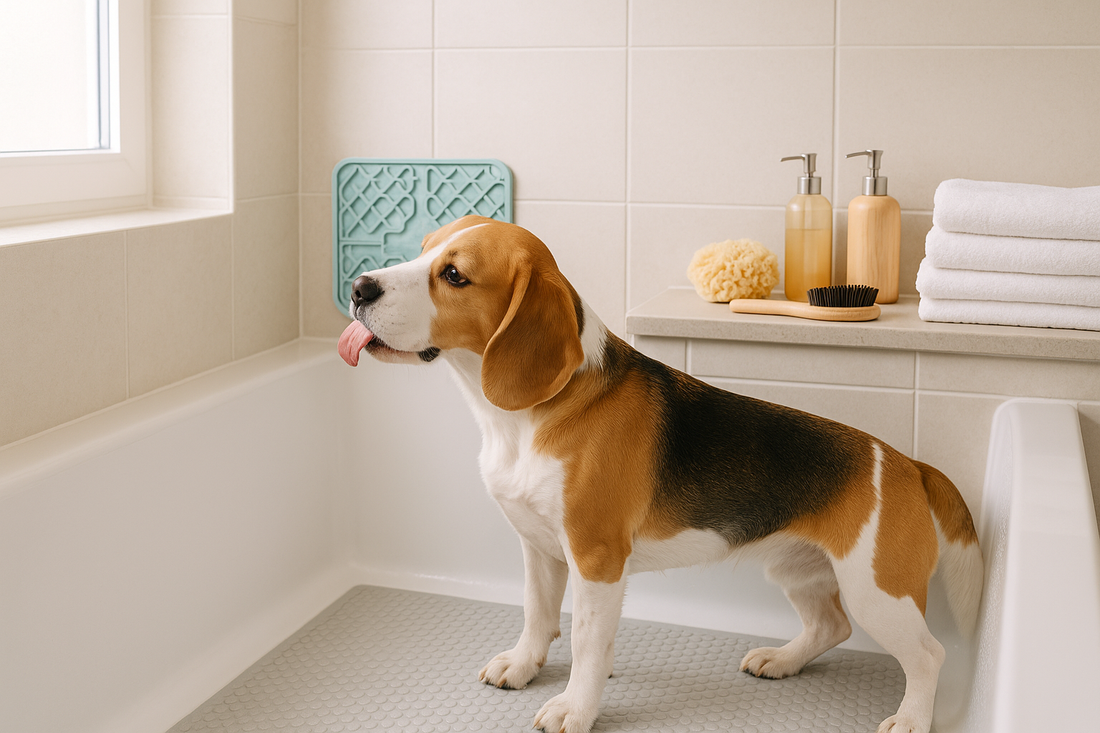
How Long Should a Dog Use a Lick Mat Each Day?
A lick mat can calm a dog beautifully, but more is not automatically better. If you use one every day, the real question is not whether lick mats help. It is how long should a dog use a lick mat each day before it stops being useful and starts becoming background filler. The answer depends on the dog, the goal, and what else is happening in the routine.
A senior spaniel decompressing after a short walk does not need the same session as a young doodle who uses a lick mat during grooming prep. Some dogs settle after five focused minutes. Others can stay engaged longer if the setup is chilled, layered, or used at a naturally calmer point in the day. What matters most is whether the mat is supporting a routine or simply filling time.

Start With the Goal, Not the Clock
Most owners ask about duration as if there is one perfect number. There is not. The better first question is: what do you want the lick mat to do?
If the goal is a short calm transition before visitors arrive, you may only need a brief session. If the goal is bath prep, crate downtime, or work-from-home quiet, you may want a longer one. A dog lick mat slow feeder supports all of those jobs, but the ideal use time changes with the moment.
If calm routines are already part of your daily setup, the bath time and calm collection is the most relevant collection for this topic.
Short Sessions Often Work Better Than Overlong Ones
A lot of dogs get the main benefit of the lick mat in the first few focused minutes. That is when the licking rhythm is steady, the dog is engaged, and the calming effect is most obvious. Once the mat is mostly cleared, the value drops fast.
For many dogs, a short deliberate session is better than stretching the experience so long that it turns into messy scraping, wandering, or disinterest. That is especially true if the mat is being used to lower arousal rather than just occupy time.
Our earlier article on the best lick mat spreads for calm, longer engagement connects directly here, because duration depends heavily on what you put on the mat.
What Changes the Right Daily Use Time
Several things shift the answer in practice.
The dog’s age and energy level
Puppies, working-breed adolescents, and high-energy dogs may blow through easy setups quickly. Older dogs often benefit from gentler, shorter, calmer sessions.
The purpose of the mat
Bath time, nail trims, post-walk decompression, and solo downtime are not the same use case. Each one changes how long the session needs to last.
The spread and texture
A thin spread on a shallow mat is a very short activity. A thicker chilled spread can last longer without needing a larger portion.
The rest of the routine
If the dog already had movement, sniffing, and training that day, the lick mat may only need to round out the calm. If the whole day has been restless, the mat may help but should not be the only outlet.
Signs the Session Length Is Working
You do not need to time every minute with a stopwatch. Watch the dog instead.
A good session ends with the dog calmer, not more impatient. The licking should look focused rather than frantic. The dog should come off the mat settled or at least softer in energy than before. If the dog finishes and immediately looks more amped, the setup may have been too exciting, too short to satisfy, or used at the wrong moment.
If you are still learning where lick mats fit best in the day, our post on when to use a lick mat outside mealtime is a natural next read.
Common Daily Use Mistakes
The first mistake is using the mat too reactively. Owners reach for it only when the dog is already bouncing off the walls. A lick mat works better as part of a routine than as a last-second emergency brake.
The second mistake is overfilling it. Bigger portions do not always create better calming. They often just create more cleanup and muddier timing.
The third is replacing too many other forms of enrichment with the mat. It is a useful tool, not the whole daily plan.
Practical Daily Guidelines
- Use short focused sessions for calming transitions and brief daily resets.
- Use slightly longer sessions only when the context calls for it, like grooming prep or quiet downtime.
- Adjust the spread and chilling method before simply adding more food.
- Watch whether the dog comes off the mat calmer, not just whether the dog stayed busy.
- Keep the lick mat part of a larger routine that includes movement and mental variety.
When to Shorten or Skip It
If your dog is uninterested, scraping at the mat in frustration, or already too wound up to settle, it may not be the right moment. Some dogs need movement or a sniff break first. Others need an easier spread or a shorter, clearer session.
The goal is not to use the mat every possible day at any cost. The goal is to use it well often enough that it keeps helping.
If you are comparing calm-time tools more broadly, our article on lick mat vs frozen kong for calm time at home gives another useful angle on timing and duration.

FAQ
How long should a dog use a lick mat each day?
For many dogs, a short focused session works best. The exact time depends on the goal, the spread, and the dog’s age, energy, and routine.
Can a dog use a lick mat every day?
Yes, many dogs can, as long as it fits into a balanced routine and is used thoughtfully rather than as the only form of enrichment.
How do I make a lick mat last longer without overfeeding?
Use a thicker spread, chill the mat, and match the portion to the grooves instead of piling on more food.
Is a longer lick mat session always better?
No. Once the dog has already gotten the calming benefit, a longer session may add little value and can even make the setup messier or less interesting.
What if my dog finishes the lick mat too fast every day?
Adjust the spread, texture, or context before assuming you need a bigger serving. Often the setup, not the duration, is the real issue.
If you want daily calm-time enrichment that actually fits real routines, check how the dog lick mat slow feeder handles short, repeatable sessions at home →