How to Help a Senior Dog Stay Active Indoors
Older dogs still need movement. They just need it delivered differently. If your dog is slowing down, skipping rough play, or having more weather-sensitive days, figuring out how to keep a senior dog active indoors becomes less about burning huge amounts of energy and more about protecting comfort while keeping the body and brain engaged.
A ten-year-old lab with stiff mornings does not need the same setup as a young shepherd bouncing off the sofa. A senior cavapoo may still love small games but get tired faster. An aging retriever may want movement in shorter rounds with better footing and more recovery. Good indoor activity for older dogs should feel useful, gentle, and repeatable, not like a reduced version of puppy chaos.

Senior Dogs Need Pacing More Than Intensity
A lot of owners accidentally overcorrect. They worry about joints or stamina and start doing almost nothing indoors. The result is often a dog that becomes stiffer, more bored, or less mentally engaged.
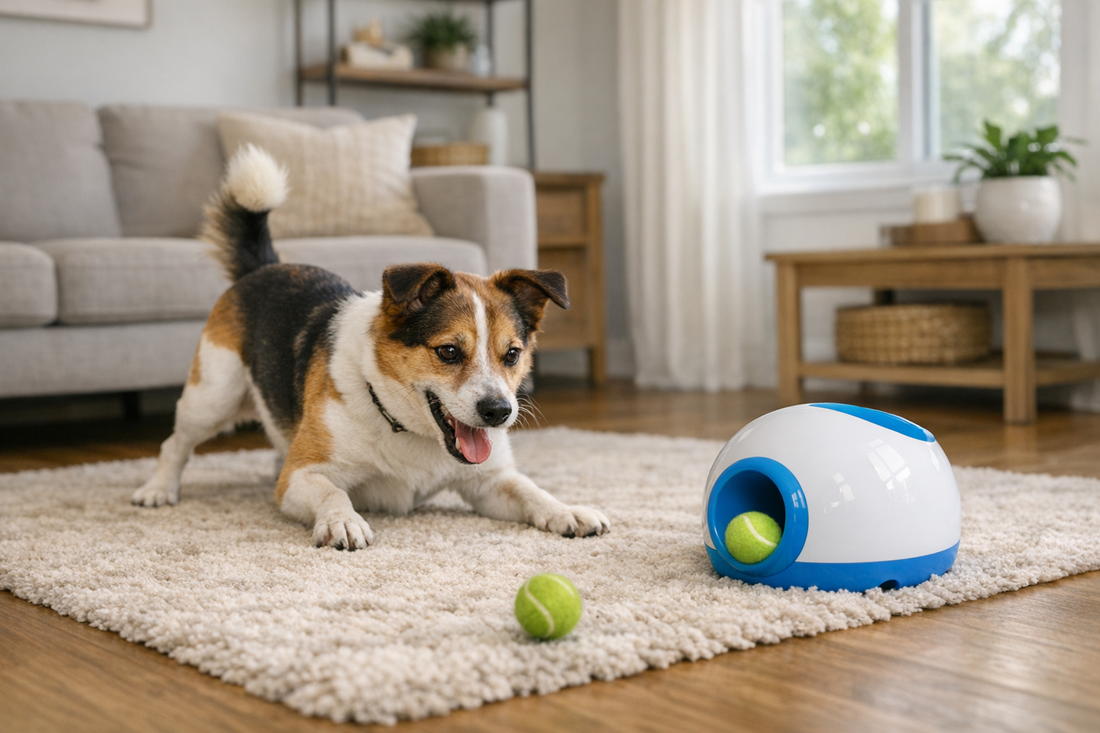
What older dogs usually need is not intense action. They need regular low-impact movement and tasks that keep them interested without asking for sharp turns, jumps, or frantic acceleration. A good interactive ball toy for dogs can help if the setup stays gentle and the floor is safe.
If indoor enrichment is already part of your routine, the indoor enrichment collection is the best match for this topic.
Choose Activities That Match the Dog Today
Senior dogs do not move the same way every day. Weather, stiffness, sleep, and general comfort all change the picture.
Some days your dog may enjoy short toy interaction and hallway movement. Other days the better choice is a slow search game or a calm sniff-based task. The smartest indoor routine is flexible enough to adjust instead of forcing the same plan every day because it worked last week.
Our earlier article on how to tire out a dog indoors without destroying your home still helps here, but with seniors the goal shifts from tire out fast to move well and stay engaged.
What Usually Works Best for Older Dogs
Low-impact does not mean boring. It means smarter.
Short movement rounds
A few gentle minutes of toy interaction, walking around the room, or following a rolling toy can be enough when the dog still wants to move but should not overdo it.
Search and scent games
These are excellent for seniors because they add brain work without demanding explosive movement.
Soft structured toy play
The right toy can encourage reaching, nudging, and re-engaging at the dog’s pace rather than forcing full-speed play.
Frequent mini sessions
Two or three smaller sessions often work better than one longer workout.
If you want another indoor angle, our post on rainy day activities for dogs that actually burn energy can be adapted well for older dogs by simply lowering the intensity and shortening the rounds.
Set the Room Up for Older Bodies
Senior indoor activity is as much about the environment as the activity itself. Slippery floors, tight corners, and clutter make older dogs work harder than they need to.
Use rugs or traction if your dog slides. Keep the play area simple. Avoid setups that ask the dog to twist quickly or pivot on hard flooring. Even a fun toy becomes a bad idea if the footing is wrong.
Older dogs often tell you clearly when the environment is too much: hesitation, shorter steps, reluctance to turn, or ending the game early. Listen to that feedback.
How Long Should Senior Indoor Activity Last?
Usually shorter than you think, but more often than you might expect.
The sweet spot for many senior dogs is a brief, successful activity followed by recovery. If you wait until the dog looks worn out, you probably pushed too far. You want the dog to finish still comfortable enough to feel good about doing it again later.
That is why mini sessions are so effective. They help you build movement into the day without treating activity like one big event.
Practical Senior Indoor Routine Tips
- Choose soft, low-impact play over fast high-arousal games.
- Use traction-friendly surfaces whenever possible.
- Break activity into shorter sessions with rest between them.
- Use toys and scent games that let the dog engage at their own pace.
- Stop while the dog still looks comfortable, not after they are clearly tired.
What to Avoid
Skip activities that ask for sharp jumps, hard braking, repeated slipping, or wild indoor fetch on slick floors. Also be careful with routines that look easy to you but create awkward turning or twisting for the dog.
Senior dogs still benefit from enrichment, but the wrong version can make them more uncomfortable instead of more active. Good indoor activity should leave the dog pleasantly engaged, not sore and overdone.
If your dog still enjoys toys but you are deciding what style is gentlest, our article on using an interactive ball toy for safe solo play is a useful next read.

FAQ
How do I keep a senior dog active indoors without overdoing it?
Use short low-impact sessions, good footing, and activities that encourage movement without demanding speed or sharp turns.
What indoor activities are best for older dogs?
Short toy interaction, scent games, gentle movement rounds, and simple enrichment tasks usually work best.
Can senior dogs still use interactive toys?
Yes, many can, as long as the toy and room setup support slower, safer engagement rather than frantic movement.
How often should a senior dog do indoor activity?
Many seniors do better with small sessions repeated through the day instead of one longer bout of exercise.
What is the biggest mistake with senior dog indoor play?
Pushing intensity too high or ignoring footing and comfort. Older dogs often need smarter setup more than more activity.
If you want indoor activity that supports older dogs without pushing them too hard, see how the interactive ball toy fits into a gentler home routine →