How Often Should You Rotate Interactive Toys for Dogs and Cats?
You buy a toy your dog loves on Monday. By Friday, it is lying under the coffee table like old furniture. Your cat bats at a moving ball for two days, then walks past it with the quiet confidence of someone who has seen everything. If you are wondering how often rotate dog cat toys, the answer is usually more about rhythm than quantity. Most pets do not need a bigger pile. They need toys to disappear, return, and feel fresh again.
For many homes, rotating interactive toys every 3-7 days works better than leaving everything available all the time. But the exact timing depends on the pet. A young border collie mix may need faster rotation than a calm senior cat. A curious kitten may re-engage after 48 hours, while a mellow adult dog may be happy with a weekly swap. The useful plan is simple enough to repeat and flexible enough to follow your pet's actual interest.

Why Toys Become Boring So Fast
Dogs and cats notice patterns. If the same toy sits in the same corner every day, it stops being an event. It becomes part of the room.
This happens even with good toys. Interactive motion, texture, sound, and movement all help, but constant access can make the best enrichment tool feel predictable. Pets are often more interested when a toy returns after a break because the change itself creates curiosity.
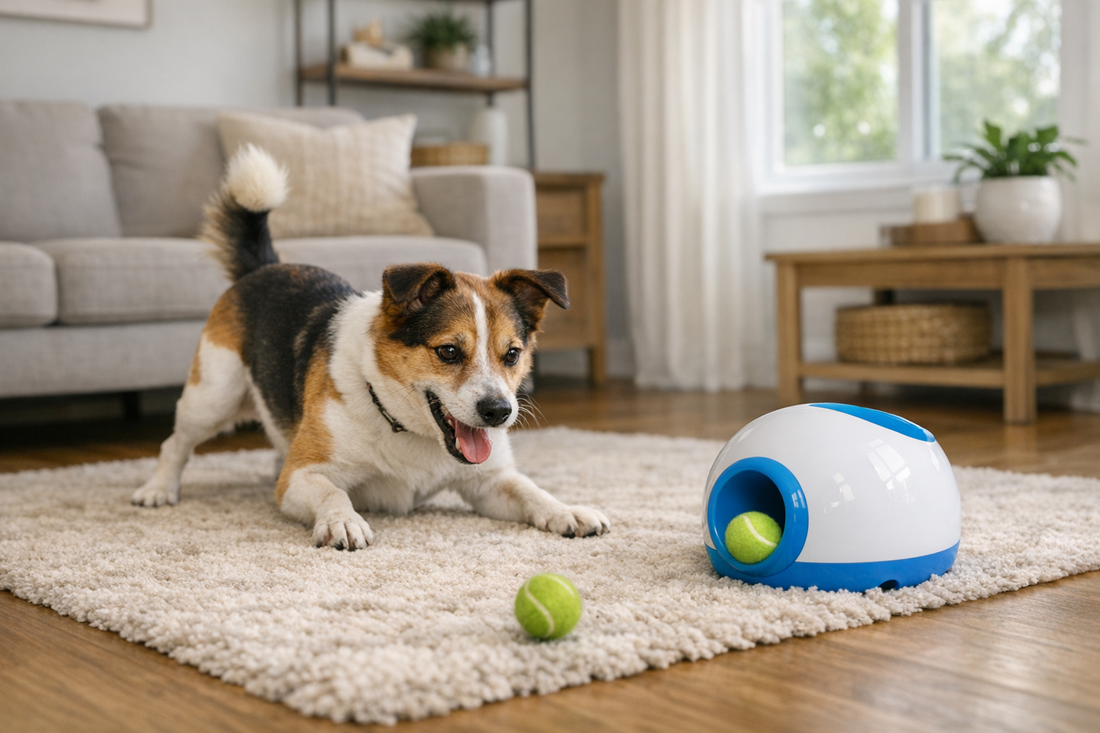
An interactive cat and dog ball toy fits well into rotation because it offers movement and surprise, but it still works best when it is not treated like permanent background decor. Bring it out for a play window, put it away, then reintroduce it later.
For this cluster, the indoor enrichment collection is the best place to connect toy rotation with practical daily routines.
A Simple Rotation Schedule That Works for Most Homes
Start with a small number of toys. Three to five is plenty for many pets. Keep one or two out, store the rest, then swap them on a predictable schedule.
Every 2-3 days
This works for puppies, kittens, high-energy dogs, and pets that lose interest quickly. It is also useful during bad weather weeks when indoor stimulation has to do more work.
Every 5-7 days
This is a good starting point for most adult dogs and cats. It gives enough novelty without making you manage toys like a full-time calendar.
Every 2 weeks
Some calmer pets do fine with slower rotation, especially if the toy is used in short sessions rather than being left out all day.
Our recent article on puppy enrichment ideas at home for bad weather days connects well here because puppies often need shorter, more frequent changes.
Do Not Rotate Every Toy at the Same Time
A full swap can work, but it can also make the routine feel weird for sensitive pets. Keep one familiar item available and rotate the others.
This is especially helpful for cats that like predictability and dogs that carry a favorite toy around the house. You are adding novelty, not taking away comfort. One reliable toy can stay in the environment while the interactive pieces change.
If your cat spends long stretches alone, our post on interactive toy routines for cats home alone gives a stronger solo-day angle.
How to Rotate Interactive Toys Without Creating Clutter
Toy rotation should make the house easier to manage, not messier.
- Keep a small storage bin for toys that are resting.
- Leave only one or two active toys out at a time.
- Use interactive toys in short play windows instead of leaving them running all day.
- Clean toys before storing them if they collect hair, crumbs, or food residue.
- Track interest loosely. If your pet ignores something twice in a row, give it a longer break.
The goal is not to create a perfect system. The goal is to keep play from going stale while keeping your home usable.
If your indoor setup is already feeling crowded, the toys collection can help you choose fewer items with clearer jobs instead of adding random extras.
Dogs and Cats Usually Need Different Rotation Cues
Dogs often show boredom more loudly. They bring the toy less, chew something else, demand attention, or start inventing games you did not approve. Cats can be quieter about it. They may stop stalking, ignore the toy, sleep through usual play times, or shift their attention to counters, cords, or shelves.
Watch behavior after the toy is introduced, not just the first minute. A dog that plays hard for three minutes and then gets overexcited may need shorter sessions. A cat that watches from across the room before pouncing may need more patience and less pressure.
The right rotation interval is the one that creates better engagement without making your pet frantic.
When to Retire a Toy Instead of Rotating It
Some toys do not need a break. They need to leave the routine.
Retire toys that are damaged, unsafe, too easy to destroy, or consistently frustrating. If a dog chews pieces off an interactive toy, it is not a good fit for unsupervised play. If a cat only gets annoyed by a sound or movement pattern, forcing it back into rotation will not help.
Good rotation depends on useful toys. A toy that creates stress every time it appears is not enrichment.
For broader indoor boredom signs, our article on signs your dog is bored at home is a useful next read.

FAQ
How often should I rotate dog and cat toys?
Most homes can start with every 3-7 days. High-energy pets may need changes every 2-3 days, while calmer pets may do fine with weekly rotation.
Should interactive toys stay out all day?
Usually not. Interactive toys often work better in short sessions because constant access can make them feel less interesting.
How many toys should be available at once?
One or two active toys plus one familiar comfort item is enough for many dogs and cats.
Do cats need toy rotation as much as dogs?
Yes, but they may show boredom more quietly. A cat that ignores toys may still respond well when old toys return after a break.
What if my pet only likes one toy?
Keep that favorite available, but rotate supporting toys around it. You do not have to remove the comfort item to create novelty.
If your toys are being ignored, do not rush to buy a bigger pile. Start with a cleaner rotation rhythm and see how the interactive cat and dog ball toy performs when it gets used in short, fresh play sessions →