Best Interactive Toy Routine for Cats Home Alone
A cat left home alone all day does not always show boredom in obvious ways. Some sleep through it and explode with energy at 10 p.m. Some start knocking objects off shelves because motion has become the only game left. Some get clingy the second you walk in. If you are looking for the best interactive toy routine for cats home alone, the goal is not to keep your cat entertained every minute you are out. The goal is to create enough movement, novelty, and predictability that the day does not feel completely flat.
One toy on the floor is rarely enough. Five random toys on the floor are not much better. Cats home alone usually do best with a routine that has timing, rotation, and one or two interactive pieces that still feel alive even when you are not actively waving them around yourself.
Start With Short Windows, Not All-Day Chaos
A lot of owners assume the answer is leaving stimulation out nonstop. Cats often use that badly. The toy becomes furniture by lunch.
Short play windows work better. Morning activation before you leave. One solo-friendly toy available during the day. A second active play block when you get home. That pattern gives the cat something to anticipate instead of turning every object in the room into background scenery.
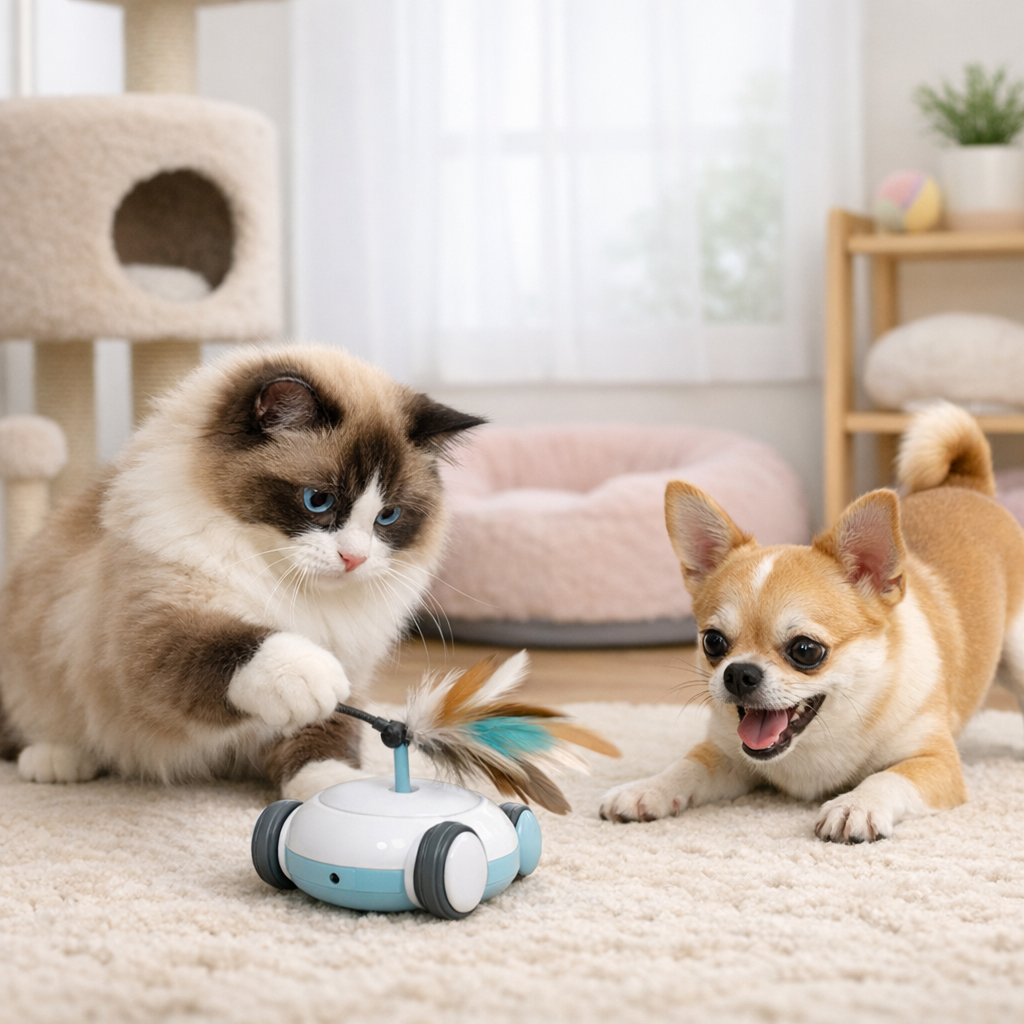
An interactive cat and dog ball toy fits this well because it creates motion without needing you to stand there for twenty minutes before work. That matters on normal weekdays when you are trying to get out the door, not build a perfect enrichment schedule.
For cats that spend most of the day indoors, the indoor enrichment collection is the best fit for this kind of routine planning.
Use a Two-Part Routine: Before You Leave and After You Return
The best solo-day setups usually have a clear rhythm.
Before you leave
Give your cat a short focused session that wakes up attention and movement. Even five to seven minutes matters. This is often enough to take the edge off the first restless part of the morning.
During the day
Leave one interactive option that creates occasional movement or re-engagement. Not a pile. One meaningful option.
When you get home
Do another active block before dinner or evening rest. This is where many cats need help most, because the long quiet stretch is over and the cat suddenly wants the whole house to react.
If your home is compact, our article on indoor cat enrichment for small spaces pairs naturally with this routine.
Rotation Matters More Than Buying More Toys
Most cats lose interest because the toy never changes, not because the home is doomed to be boring. Rotation fixes that cheaply.
Leave one interactive toy out for a few days. Put it away. Bring it back later. Pair it with a second toy that feels different in movement or texture. This keeps the cat from mentally filing everything under “already seen.”
The same trick works especially well for solo cats who spend long stretches without new input. A toy coming back after a short break can feel more interesting than a brand-new purchase that lives on the floor forever.
If you want the broader product angle, our post on interactive toys for cats and small dogs expands on the kinds of play styles that keep smaller pets engaged.
What Makes a Good Home-Alone Toy Routine
The best routine is not the longest one. It is the one your cat will actually respond to and the one you can keep doing on a workday.
Movement that feels unpredictable
Cats care about change. Even small variation can reset interest.
Enough rest between sessions
If the toy is always on, many cats stop noticing it.
Clear play zones
A hallway lane, a rug edge, or a quiet corner often works better than expecting the cat to play in the busiest part of the room.
A realistic evening reset
When you come home, give the cat a better option than attacking your ankles while you unpack groceries.
If solo play is the weak spot in your current setup, our article on safe solo play with an interactive ball toy is the next best read.
Practical Routine Example for a Workday
- Morning: 5-7 minutes of active chase or toy engagement before you leave.
- Daytime: leave one interactive motion toy available in a clear play space.
- Evening: do a second play block before dinner or before your own evening routine settles down.
- Every few days: rotate the main toy so it feels new again.
- Weekly: change one small thing in the setup, such as room placement or play lane.
This does not look impressive on paper. It works because it is simple enough to repeat.
Signs the Routine Is Working
You are looking for smaller clues, not magic. The cat greets you with interest instead of frantic energy. Night zoomies get shorter. Furniture scratching drops a little. The cat re-engages with the toy instead of staring at it once and walking off.
Some cats improve fast with better rhythm. Others need a week or two before the routine starts to feel normal. Either way, the useful question is not whether the cat played once. It is whether the whole day feels less flat and the evening feels less explosive.
If you want one more broader indoor angle, our earlier post on the best indoor toys for bored pets helps when boredom is showing up across the whole household routine.
FAQ
What is the best interactive toy routine for cats home alone?
A simple routine works best: one short play session before you leave, one solo-friendly interactive toy during the day, and one active session when you return.
How long should I play with my cat before leaving for work?
Even five to seven focused minutes can help, especially if the play feels active and ends before your cat gets overstimulated.
Should I leave multiple toys out for my cat all day?
Usually not. Many cats do better with fewer toys and more rotation, because constant access can make everything feel stale.
Can an interactive toy really help a cat home alone?
Yes, especially if it creates motion and novelty without needing you to be involved the whole time.
How do I know if my cat is bored while home alone?
Common signs include nighttime zoomies, clinginess when you return, more scratching, more vocalizing, or turning random household objects into entertainment.
If your cat’s solo days feel too empty, build a routine that gives the day some shape instead of buying random extras. See how the interactive cat and dog ball toy fits into your weekday play rhythm →