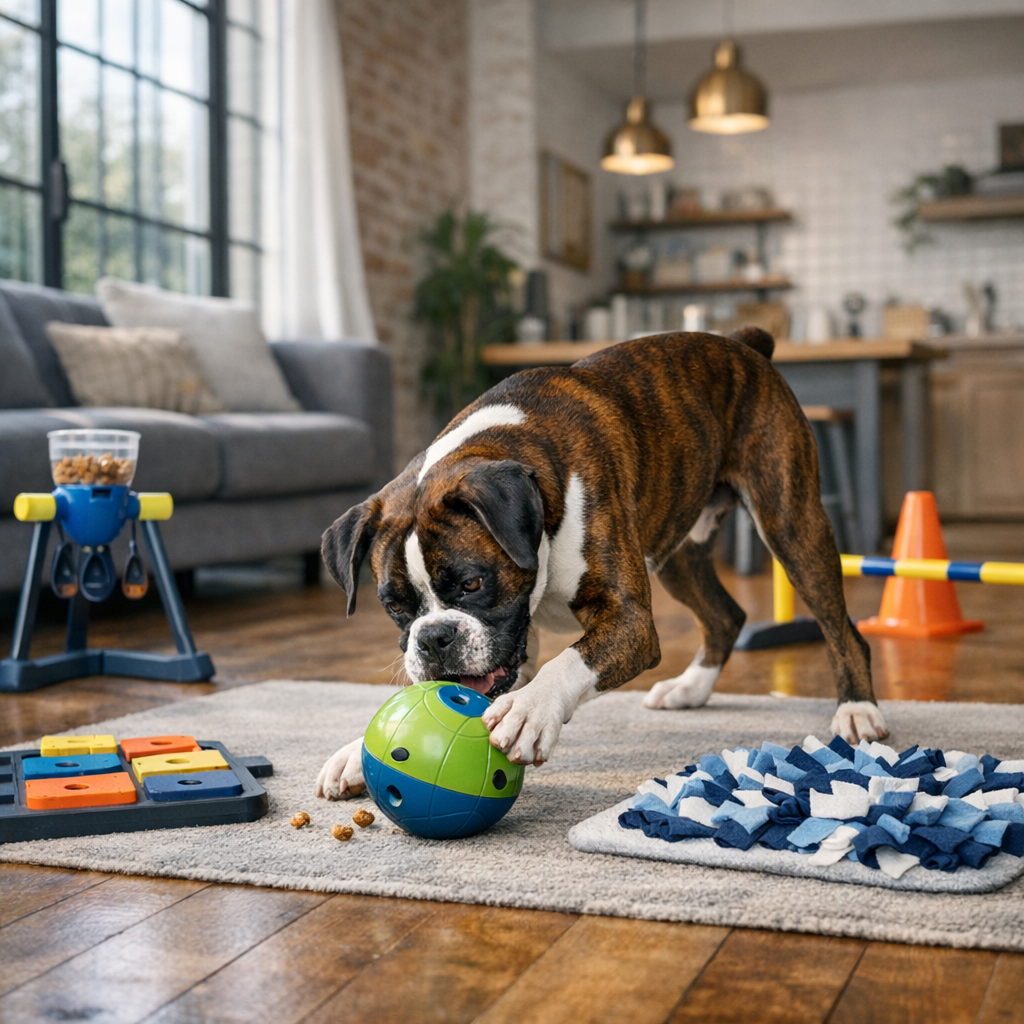
How to Keep Dogs Active Indoors
If you are wondering how to keep dogs active indoors, the answer usually comes down to variety, enrichment, and routines that match your dog’s energy level. Bad weather, busy days, and apartment living can all limit outdoor exercise, but that does not mean your dog has to spend the day bored. Indoor activity can still be meaningful when you combine movement, mental stimulation, and a few well-chosen tools.
Many dogs need more than a quick walk to feel satisfied. When they cannot burn energy outside, they often become restless indoors instead. That restlessness may show up as barking, pacing, chewing, or trouble settling. The goal of indoor activity is not to recreate a full outdoor run. It is to give dogs enough movement and engagement to keep home life smoother and more balanced.

Use Interactive Toys to Create More Movement
One of the easiest ways to keep dogs active indoors is to use toys that encourage chasing, pawing, nudging, and problem-solving.
Why interactive toys help
Toys that move or respond unpredictably can trigger natural play behaviors and keep dogs involved longer than standard toys.
When to use them
They are especially useful during work breaks, rainy afternoons, or anytime your dog needs a short but engaging activity session indoors.
Our interactive cat and dog ball toy is a good option when your dog needs more indoor movement and stimulation.
Add Food-Based Enrichment for Mental Activity
Indoor activity is not only about physical movement. Mental effort matters too, especially for dogs that get bored easily at home.
Lick mats and slow feeders
These tools help dogs work for food more slowly and can turn a routine snack or meal into a more engaging indoor activity.
Why this works
Mental engagement can help tire dogs out in a healthy way, especially when outside exercise is limited.
Our dog lick mat slow feeder is useful for calmer indoor enrichment that still helps keep dogs occupied and involved.

Benefits / Why It Matters
Keeping dogs active indoors helps reduce boredom, supports better behavior, and makes the home environment easier to manage. A dog that has enough movement and stimulation is often less restless and more able to settle afterward.
This matters for busy pet parents because not every day allows long outdoor sessions. Indoor routines provide a flexible backup plan that can still support your dog’s well-being.
How to Build a Simple Indoor Activity Routine
The best indoor routines are easy enough to repeat and varied enough to stay interesting.
Mix short active sessions with calm enrichment
A few bursts of toy-based movement combined with slower enrichment often work better than relying on only one type of activity.
Rotate toys and activities
Switching between options helps keep your dog interested and prevents the routine from becoming stale.
Work with your space
You do not need a large house to keep dogs active indoors. Small spaces can still support meaningful movement and enrichment if the activities are chosen well.
You can explore our toy collection for indoor-friendly options that support better movement and engagement at home.
What to Look for in Indoor Activity Tools
Choose tools that fit your dog’s size, play style, and daily routine. Some dogs need movement-focused toys, while others benefit more from enrichment they can work through calmly. The best setup often includes both. That gives you more flexibility depending on your dog’s mood, energy level, and the time of day.
Consistency matters more than making every session feel elaborate. A few practical activities repeated regularly can be enough to make a visible difference in your dog’s day.

FAQ
How can I keep my dog active indoors?
Use a mix of interactive toys, food-based enrichment, and short play sessions that encourage movement and mental engagement.
Do dogs really need indoor activity if they get walks?
Many dogs still benefit from indoor activity, especially on days when outdoor time is shorter or less active than usual.
What indoor tools help most with dog boredom?
Interactive toys, lick mats, and slow-feeding enrichment tools are some of the most useful options.
Can indoor activity tire a dog out?
Yes. Mental stimulation and short active play sessions can help reduce boredom and support calmer behavior afterward.
How often should I do indoor activities with my dog?
That depends on your dog’s energy level, but regular short sessions can often make a bigger difference than occasional long ones.
If outdoor exercise is limited, a thoughtful indoor routine can still help your dog stay more active, more engaged, and easier to settle at home.