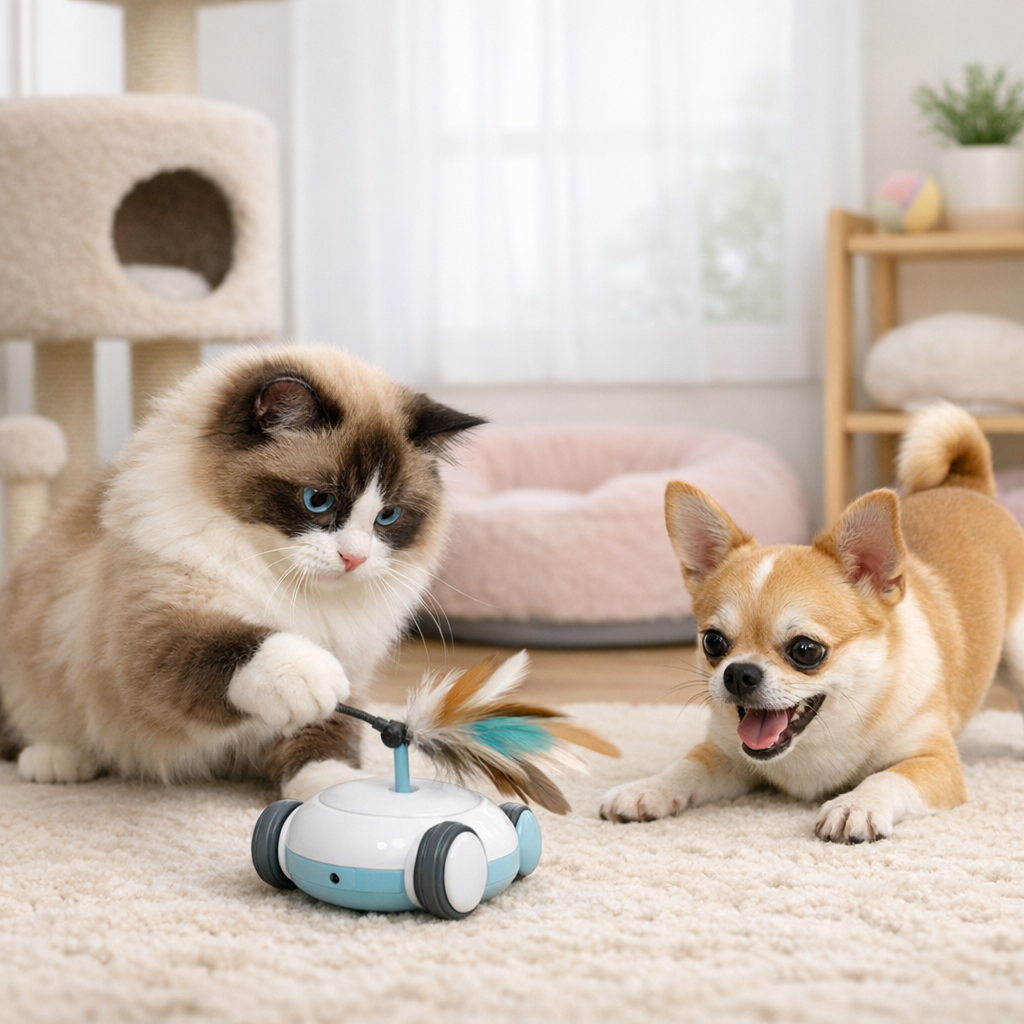
Interactive Toys for Cats and Small Dogs
Interactive toys for cats and small dogs can make a big difference when indoor routines start to feel repetitive. Smaller pets often need more than a standard toy left on the floor. They benefit from movement, novelty, and toys that respond in ways that keep them curious and engaged. The right interactive toy can help turn indoor time into something more stimulating and satisfying, especially for pets that get bored easily.
Interactive play matters because boredom can show up quickly in both cats and small dogs. Some pets pace, scratch, bark, or lose interest in ordinary toys almost immediately. Others need more mental engagement than their usual daily routine provides. Well-chosen interactive toys can help fill that gap without making home life chaotic.

Why Interactive Toys Work So Well
Interactive toys for cats and small dogs are effective because they do more than sit still. They move, roll, bounce, or react in ways that trigger chasing, pawing, pouncing, and problem-solving behavior.
Movement keeps attention longer
When a toy changes position or responds unpredictably, many pets stay engaged much longer than they would with a basic plush or chew toy alone.
Mental stimulation matters too
Interactive toys can challenge pets to think, track movement, and stay focused, which makes indoor play feel more satisfying.
Our interactive cat and dog ball toy is a practical option for adding more movement and curiosity-based play to indoor routines.
Best Types of Interactive Toys for Small Pets
Different pets respond to different kinds of play, so the best toy depends on your pet’s habits and personality.
Rolling and auto-motion toys
These work well for pets that love to chase and react quickly to moving objects.
Light puzzle and food interaction
Some smaller pets enjoy a toy more when there is a reward or problem-solving element involved. This can be useful for calmer enrichment as well as active play.
Toys that encourage pouncing or pawing
Cats especially tend to respond well to toys that activate stalking or batting behaviors, while small dogs may enjoy nudging and chasing similar shapes.

Benefits / Why It Matters
Interactive toys help reduce boredom, add indoor exercise, and support better daily engagement. That matters for pets that spend more time indoors, for busy owners who need practical enrichment options, and for homes where weather or space limits outdoor activity.
Good toys can also make routines easier by giving pets something positive and stimulating to focus on instead of inventing their own entertainment.
How to Choose the Right Interactive Toy
The best interactive toys for cats and small dogs usually match how the pet already likes to play.
Choose motion-based toys if:
Your pet likes chasing, pouncing, batting, or reacting quickly to moving objects.
Choose calmer enrichment options if:
Your pet benefits from problem-solving, food-focused engagement, or shorter bursts of concentrated activity.
Rotate toys for better results
Even great toys can lose impact if they are always available in the same way. Rotating options helps keep indoor play more interesting.
You can explore our toy collection for more indoor-friendly products that support playful routines and better daily stimulation.
What to Look for Before Buying
Choose toys that fit your pet’s size and your home setup. Smaller pets often do best with toys that are easy to bat, chase, or carry without being overwhelming. It also helps when a toy is easy to introduce and does not require too much setup every time you want to use it.
The best toy is the one your pet actually comes back to. That often means choosing something simple, well-matched to their natural play style, and easy to bring into the day more than once.

FAQ
What are the best interactive toys for cats and small dogs?
Rolling toys, auto-motion toys, and light puzzle or enrichment toys are some of the most useful options for indoor engagement.
Do interactive toys really help with boredom?
Yes, many pets stay interested longer when toys move, respond, or offer a more stimulating play experience.
Are the same interactive toys good for cats and small dogs?
Some are, especially movement-based toys, but it still helps to match the toy to the pet’s play style and size.
Should I rotate interactive toys?
Yes. Rotation can help keep them interesting and prevent pets from losing interest too quickly.
Can interactive toys replace playtime with owners?
No, but they can be a very useful part of a fuller indoor play routine and help keep pets engaged between direct play sessions.
If your pet seems bored indoors, the right interactive toy can bring more movement, curiosity, and satisfying play back into the day.