How to Make Mealtime Less Stressful for Anxious Dogs
If you want to make mealtime less stressful for anxious dogs, the first step is understanding that feeding stress is often about more than hunger. Some dogs become tense around bowls, noise, movement, or the general buildup before food arrives. That tension can make meals feel rushed, messy, and emotionally loaded instead of calm and predictable. The good news is that a better setup can make a real difference.
Anxious dogs usually do best when meals feel structured, quiet, and easy to understand. That is why simple changes in routine, environment, and feeding tools often help more than owners expect. When food arrives in a calmer way, dogs often respond with calmer behavior.

Start With a Predictable Feeding Routine
Dogs that feel unsure about what is coming next often become more reactive at mealtime.
What to do
Feed within a consistent daily window and keep the same general steps before every meal. That predictability helps anxious dogs know what to expect.
Why it helps
Routine lowers uncertainty, which can reduce tension before the food even reaches the floor.
Create a Quieter Feeding Space
Some anxious dogs eat faster or act more uneasy when meals happen in busy, noisy areas.
What to do
Choose a calmer feeding spot away from heavy foot traffic, loud noises, or other pets if needed.
Why it helps
A quieter environment makes the meal feel less pressured and easier to focus on.
Use Feeding Tools That Slow the Whole Experience Down
When anxious dogs rush through meals, the speed itself can add to the stress.
Problem solution
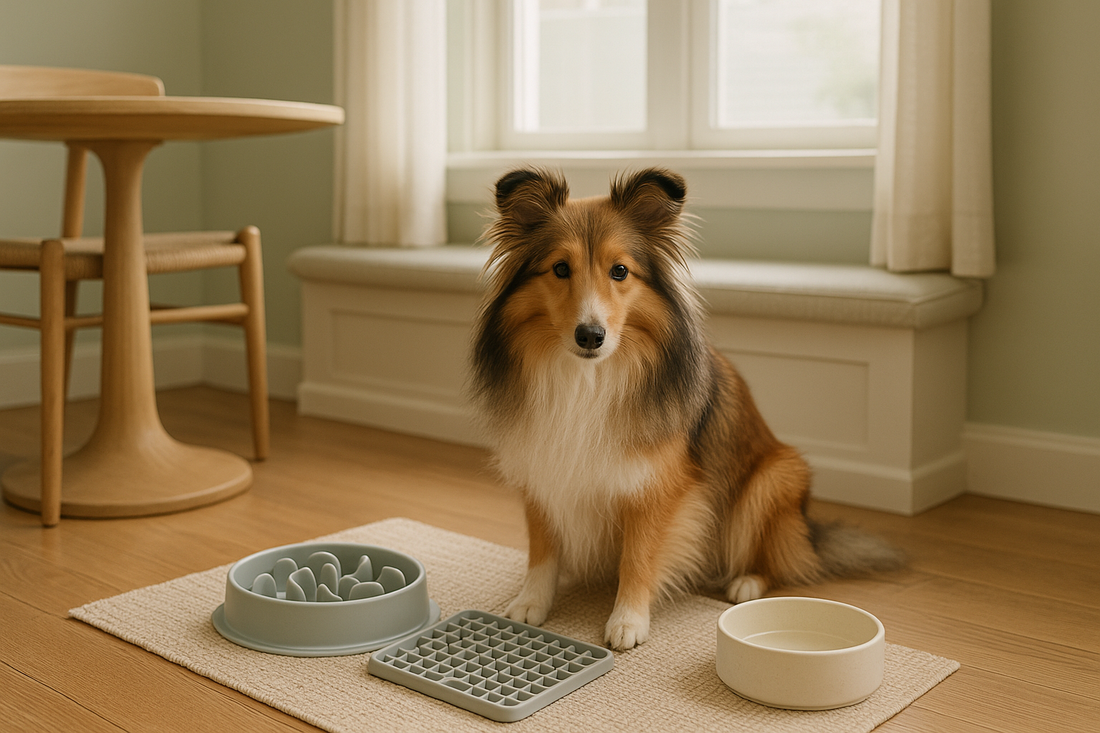
A dog slow feeder bowl helps because it changes the pace of the meal and creates a more structured feeding rhythm.
Why the product helps
Instead of inhaling food from a wide-open bowl, the dog has to work through the meal more gradually. That often makes the entire feeding moment feel more controlled.
If fast eating is part of the issue too, our article on why dogs eat too fast can help you identify what else may be contributing.
Use Calming Food-Based Support Outside the Main Bowl
For some dogs, mealtime stress is not only about the bowl. It is about the overall emotional state around food.
Lick mats for calmer engagement
A dog lick mat slow feeder can help with calmer food engagement before or after the main meal, especially if repetitive licking helps your dog settle.
Why this matters
It gives anxious dogs another food-related routine that feels soothing rather than rushed.

Why It Matters / Benefits
Making meals less stressful matters because feeding happens every day. If a dog feels tense twice a day around the bowl, that stress can quietly shape the whole rhythm of home life. Calmer meals often mean less rushing, less mess, and a dog that settles more easily afterward.
The biggest benefit is consistency. Once a calmer setup is in place, it becomes easier to repeat the same positive experience every day.
Solutions / What to Do
If your dog seems anxious at mealtime, begin with the simplest changes that lower pressure: a quieter feeding spot, more predictable timing, and a bowl that naturally slows things down. That combination works because it reduces both emotional tension and frantic eating behavior at the same time.
Start small, stay consistent, and let the routine do the work. The right products help because they support a calmer pattern without making the process complicated.

FAQ
Why is my dog anxious during meals?
Some dogs react to excitement, noise, competition, unpredictability, or previous feeding habits that made meals feel tense.
How can I make mealtime calmer for my dog?
Use a predictable routine, a quieter feeding space, and tools like slow feeders or lick mats that support calmer food engagement.
Can a slow feeder help anxious dogs?
Yes, it can help by reducing the speed and intensity of eating, which often makes the whole meal feel more controlled.
Is a lick mat useful for anxious dogs?
Yes, many dogs benefit from repetitive licking because it can support calmer focus during food-related routines.
Should I change everything at once?
No, a few simple changes done consistently usually work better than changing every part of the routine at the same time.
If mealtime currently feels tense for your dog, a calmer setup and the right feeding tools can turn it into a routine that feels much easier for both of you.