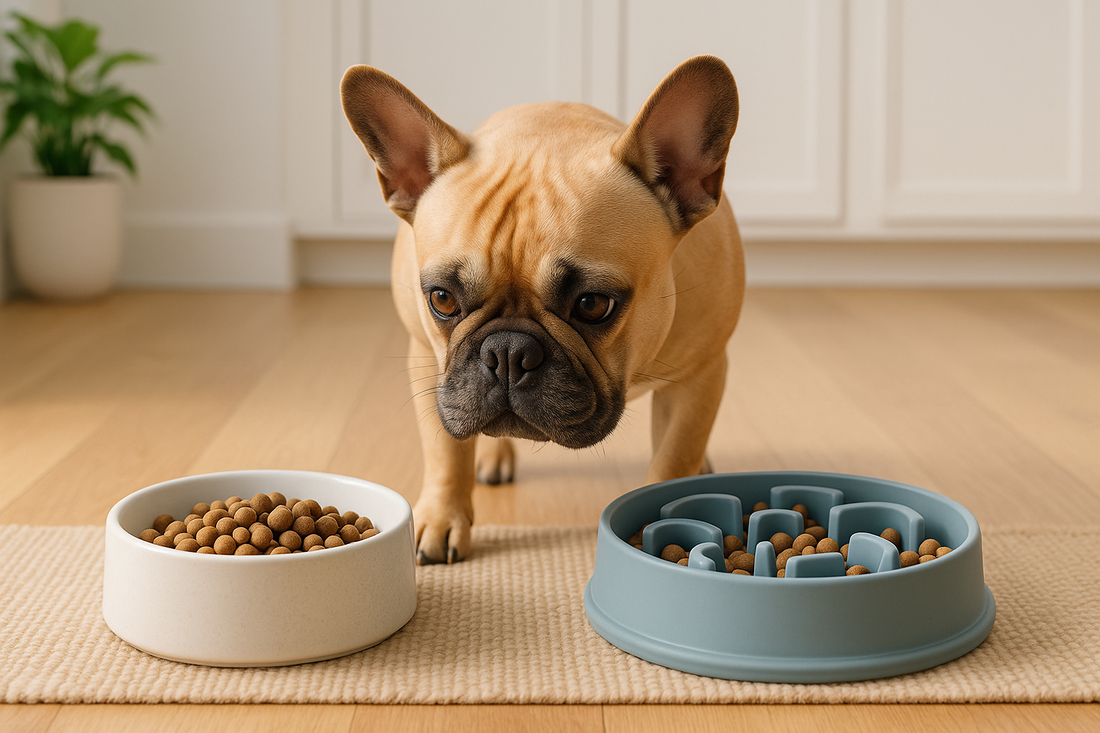
Slow Feeder Bowl vs Regular Bowl: Is It Worth Switching?
When comparing a slow feeder bowl vs regular bowl, the real question is not only which one looks better or feels trendier. It is whether the bowl actually changes the feeding experience in a useful way. For many dogs, a regular bowl works fine. But for dogs that gulp food, make a mess, or seem frantic at every meal, switching to a slow feeder bowl can be a meaningful upgrade.
The difference comes down to structure. A regular bowl offers immediate access to the entire meal. A slow feeder bowl introduces ridges or channels that create natural pauses and make eating more deliberate. That difference is exactly why some dogs benefit so much from switching.

How a Regular Bowl Works
A regular bowl is simple, familiar, and easy to clean. For dogs that already eat at a steady pace, that may be all they need.
Best fit for
Dogs that chew normally, stay calm at mealtime, and do not rush through food.
Main limitation
For fast eaters, a regular bowl can make it too easy to inhale the entire meal without slowing down.
How a Slow Feeder Bowl Works
A slow feeder changes the shape of the meal rather than changing the food itself.
What it does
Food is spread into raised sections or maze-like channels, so dogs have to work around the design instead of gulping in a straight line.
Why it helps
This makes the meal take longer and often creates a calmer pace. Our dog slow feeder bowl is designed for exactly that everyday use case.
When Switching Is Usually Worth It
If your dog eats too fast, finishes meals in seconds, or seems overexcited around food, switching is often worth trying.
Problem solution
A slow feeder helps solve the problem by changing how easily the dog can access food. That is why it is often more useful than simply trying to tell a fast eater to slow down.
Routine benefits
Many owners also find that mealtimes become less messy and easier to manage after the switch.
If you are still deciding whether fast eating is really the issue, our article on why dogs eat too fast can help you spot the pattern more clearly.
When a Regular Bowl May Still Be Fine
Not every dog needs a slow feeder bowl. Some dogs are already calm eaters and do not benefit much from more structure.
What to consider
If your dog eats normally and does not show signs of gulping or feeding stress, a regular bowl may be perfectly acceptable.
Why comparison still matters
Understanding the difference helps you know when a problem is worth solving with the bowl itself and when it is not.

Why It Matters / Benefits
Switching bowls matters when the current feeding setup is part of the problem. A slow feeder bowl can improve meal pacing, reduce frantic eating, and make the whole feeding routine feel more intentional. That is a practical benefit, not just a product feature.
For many owners, the biggest payoff is consistency. Once the right bowl is in place, calmer meals become easier to repeat without extra work.
Solutions / What to Do
If you are on the fence, look at your dog’s actual mealtime behavior. If meals feel too fast, messy, or stressful, switching is usually worth trying. A slow feeder works because it changes the environment around the meal in a way dogs naturally respond to.
You can also combine it with a dog lick mat slow feeder if you want an even calmer food routine beyond the bowl itself.

FAQ
What is the difference between a slow feeder bowl and a regular bowl?
A regular bowl gives open access to the meal, while a slow feeder uses ridges or patterns to make eating more gradual.
Is a slow feeder bowl worth it?
It often is for dogs that eat too quickly, act frantic at mealtime, or need a calmer feeding structure.
Do all dogs need a slow feeder?
No. Dogs that already eat calmly and steadily may do fine with a regular bowl.
Can switching bowls really change mealtime behavior?
Yes, because the bowl shape directly affects how the dog interacts with the food.
What should I try if my dog hates the slow feeder at first?
Start gradually and make the first few meals easier. A gentler introduction usually helps the dog adjust.
If your current bowl makes it too easy for your dog to rush through meals, switching to a slow feeder bowl is one of the simplest upgrades you can make.