Waterproof vs Water-Resistant LED Dog Collars: What Matters Most?
A lot of people see waterproof and water-resistant on product pages and treat them like the same thing. They are not. And when you are choosing a waterproof led dog collar for wet walks, drizzly commutes, or muddy evening routines, that difference matters more than the marketing makes it sound.
A collar that survives light rain on the way around the block is not automatically the same collar you want for repeated wet-weather use, splashy dogs, puddle-heavy routes, or everyday winter walking. If your dog treats every curb puddle like a personal challenge, or if you walk in rain three times a week, this is not a small detail.

Water-Resistant Usually Means Light Weather, Not Heavy Abuse
Water-resistant collars are often fine for brief exposure: drizzle, damp air, a little road spray, maybe a fast wipe-down afterward. That works for plenty of people. If your evening walks are usually dry and you only get caught in light rain now and then, water resistance may be enough.
The problem starts when owners stretch that label further than it was meant to go. Persistent rain, splashes, wet fur rubbing against the collar, and repeated exposure over weeks can push a water-resistant collar harder than expected.
For light wet-weather use, you may still be fine. For regular rain, think more carefully.
Waterproof Matters More for Real-Life Wet Routines
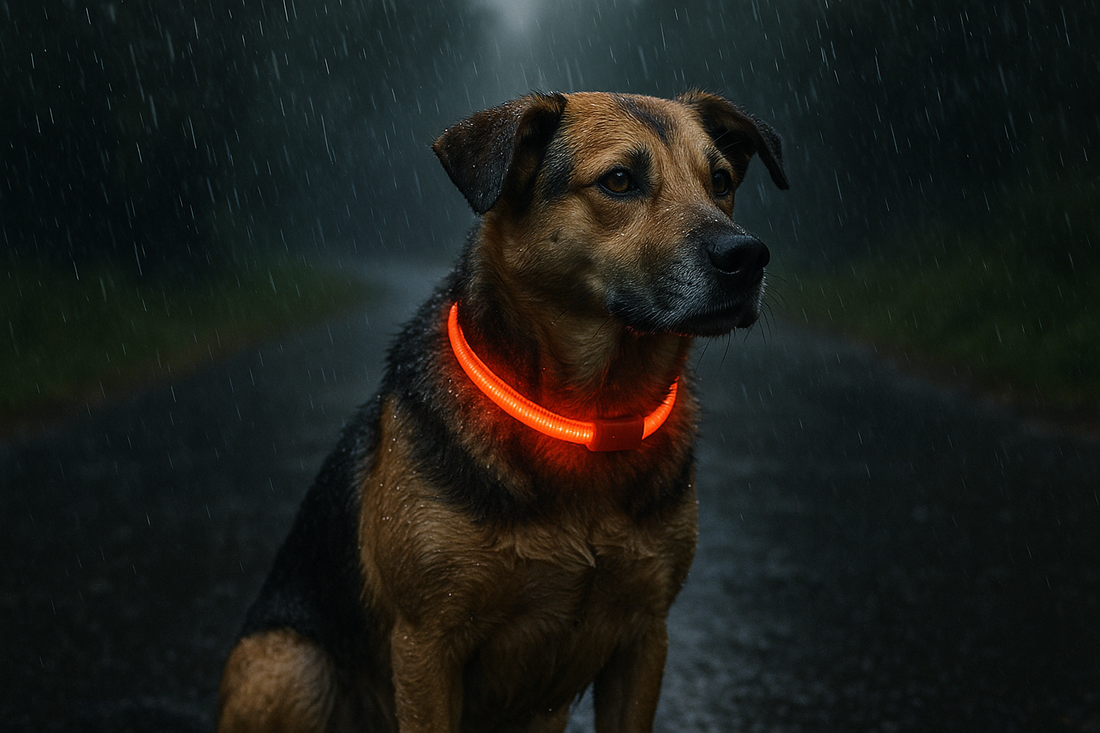
A waterproof LED dog collar makes more sense when wet conditions are part of your normal routine rather than an exception. Think winter commutes, rainy evening walks, damp trails, dogs who love puddles, or neighborhoods where sidewalks stay soaked long after the rain stops.
The value is not just survival in water. It is reliability. You want the collar to stay visible and working after repeat exposure, not only on the first wet week.
This is exactly the kind of use case covered by the night walk essentials collection, where low-light gear needs to keep performing even when weather is unpleasant.
Think About Your Dog, Not Just the Weather Forecast
Some dogs barely notice puddles. Others body-slam through them.
A neat little city dog who sticks close on sidewalks is easier on gear than a retriever, spaniel, or lab mix who charges into wet grass and shakes next to your legs. If your dog is physically rough on collars in general, lean toward more durability instead of betting on light-duty weather protection.
And coat type matters too. A thick wet coat can hold moisture against the collar longer than you think. Even if the walk itself is short, the collar may stay damp well after you get home.
What Actually Matters More Than the Label
The waterproof vs water-resistant label matters, but not by itself.
Consistency of performance
You want a collar that stays bright after repeated use, not just one rainy test walk.
Ease of drying and cleaning
If the collar traps grime, smells bad, or becomes annoying to wipe down, it gets used less often.
Fit and comfort
A waterproof collar that sits badly on the dog is still the wrong collar.
Your route conditions
Rainy city sidewalks, wet grass, muddy shoulders, and puddle-heavy parks create different levels of exposure.
If rainy routes are your main issue, our earlier article on rainy evening dog walk safety fits naturally with this comparison.
Practical Questions to Ask Before You Buy
- Do you walk in rain regularly or only occasionally?
- Does your dog splash through puddles or avoid them?
- Will the collar get wiped down and dried after wet walks, or mostly just hung by the door?
- Do you need a collar that handles repeated weekly weather exposure, not just emergency drizzle?
- Is your route usually sidewalk only, or does it include grass, mud, and road spray?
Who Usually Needs Waterproof Instead of Water-Resistant?
People with routine wet-weather exposure. That includes evening commuters, winter walkers, rainy-climate households, and dogs that turn every damp outing into a bigger mess than expected.
It also includes owners who do not want to baby the gear. If you want to grab the collar, use it, wipe it down, and trust it again tomorrow, waterproof tends to make more sense than hoping light weather protection keeps holding up over time.
For drier climates or mostly fair-weather routines, water-resistant may be perfectly reasonable. You just do not want to pay for light-duty protection and expect heavy-duty performance.

FAQ
Is waterproof better than water-resistant for LED dog collars?
If your dog walks in rain often or gets wet regularly, usually yes. Waterproof is the safer choice for repeat wet-weather use.
Can a water-resistant LED collar handle drizzle?
Usually yes. Light rain and brief damp conditions are often fine for water-resistant gear.
Do I need a waterproof LED collar if my dog loves puddles?
In most cases, yes. A splash-prone dog puts more wet exposure on gear than the weather forecast alone suggests.
What matters more: brightness or waterproofing?
Both matter, but if you walk in wet low-light conditions regularly, the collar has to keep working after getting wet or brightness on paper will not help much.
How do I know if water-resistant is enough for my routine?
If wet walks are occasional, light, and followed by drying the gear properly, water-resistant may be enough. For repeated rain exposure, waterproof is usually the safer bet.
Check your real walking conditions, not just the label language. See whether a dog LED collar matches the weather your routine actually deals with →