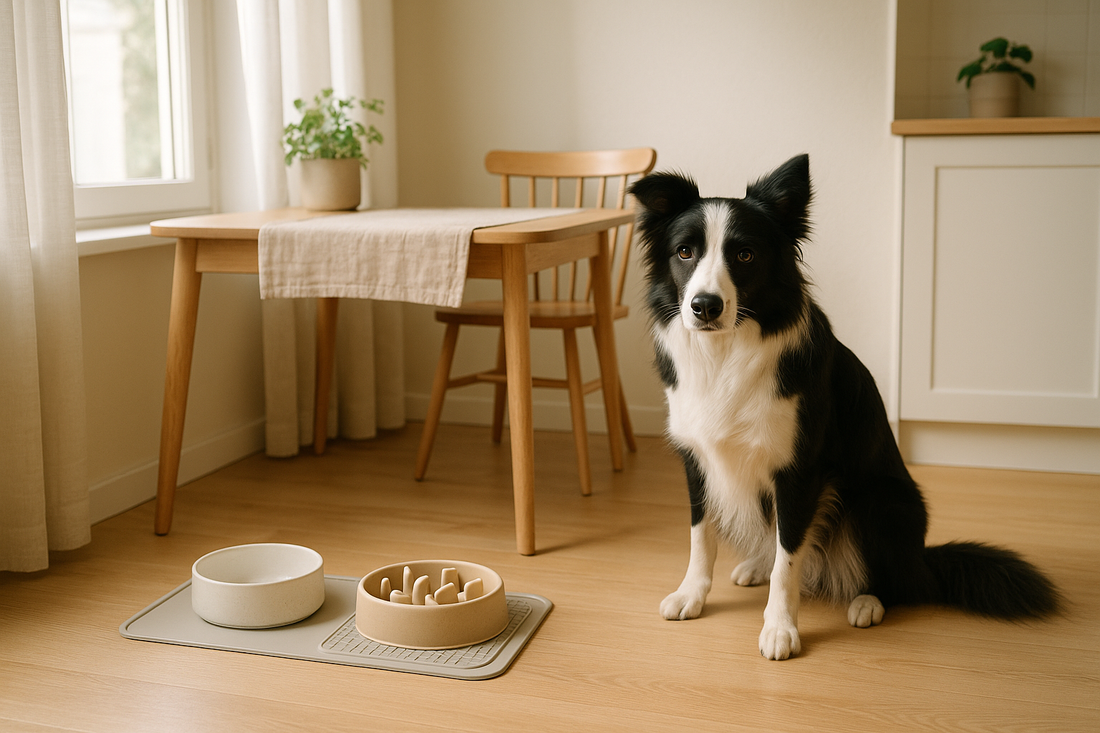
How to Build a Calm Morning Routine for Fast-Eating Dogs
Some dogs wake up ready to inhale breakfast like they are late for a meeting. They pace the kitchen, stare at the bag, spin at the bowl, then gulp the whole meal before you have finished making coffee. If that sounds familiar, a calm morning routine for a fast-eating dog can change much more than breakfast. It can make the whole first hour of the day feel steadier.
Morning chaos around food usually is not only hunger. It is anticipation, habit, and a routine that accidentally teaches the dog to get louder, faster, and more frantic before meals. The fix is not one magic bowl on its own. It is a setup that lowers arousal before food hits the floor and slows the meal down once it does.

Fast Morning Eating Usually Starts Before the Bowl Appears
Many owners focus only on what happens once the food is served. But the dog’s speed often is built by everything that comes before it: the sound of the bag, the rushed kitchen energy, the fact that breakfast always comes right after a high-excitement moment.
If the dog launches into the day at full speed and breakfast arrives in the middle of that state, fast eating is almost the expected outcome. A dog slow feeder bowl helps, but it works better when the routine leading into the meal is calmer too.
If fast eating is a regular issue in your home, the feeding and health collection is the most relevant collection for this kind of problem.
Build a Predictable Pre-Breakfast Pattern
Dogs settle faster when the morning has a recognizable rhythm. It does not have to be complicated. It just has to be consistent enough that breakfast stops feeling like a daily race.
Maybe the pattern is: outside break, a minute to decompress, bowl prep out of sight, then breakfast. Maybe it is a short sniffy walk, then water, then food. What matters is that the dog is not going straight from sleep to explosive anticipation to gulping.
Our earlier article on why some dogs eat too fast is useful here because morning speed often has more to do with routine and arousal than people first assume.
Use the Bowl to Slow the Dog, Not Frustrate the Dog
Some dogs need only a little help slowing down. Others need a more structured feeder. The goal is pacing, not irritation.
A slow feeder bowl works best when it matches the dog’s size, nose shape, and food type. If the pattern is too difficult, the dog may get more frantic instead of calmer. If it is too easy, breakfast is gone in seconds and nothing changes.
This is why generic “buy any maze bowl” advice often falls flat. A small terrier, a labrador, and a flat-faced dog do not all need the same setup. The right bowl creates pauses. The wrong one creates struggle.
If you want the product-specific angle, our post on the best slow feeder bowl for dogs goes deeper into what makes one feeder more useful than another.
What a Calmer Morning Usually Includes
The most effective routines are boring in the best possible way. Same order. Same feeding area. Same short transitions.
Low-drama food prep
Try not to turn the kitchen into a hype zone. Less talking, less teasing, less accidental buildup.
A small pause before the bowl goes down
Even a few seconds of waiting can help lower the launch speed.
A slower feeding tool
This is where the feeder bowl earns its place. It makes the calm effort last into the meal itself.
Post-meal quiet
If breakfast ends and the dog immediately races into another exciting event, the calm rhythm disappears quickly.
Our article on how to stop fast eating in dogs fits naturally with this, because morning routines are often the easiest place to make that change stick.
Common Morning Mistakes
The first mistake is feeding in the middle of rush and noise. The second is expecting the bowl alone to solve a routine problem. Another big one is changing too many things at once, then not knowing what actually helped.
Owners also tend to underestimate how much their own energy affects the dog. If you are scrambling, moving quickly, and reacting to the dog’s excitement, breakfast becomes a feedback loop. Calm routine breaks that loop. Rushed routine reinforces it.
Simple Morning Routine Plan
- Start with a short outside break or a low-key transition instead of going straight from crate or bed to food.
- Prepare breakfast without turning it into a performance.
- Ask for a brief pause before serving.
- Use the slow feeder bowl consistently instead of only on “bad” mornings.
- Keep the few minutes after breakfast quiet so the calmer pace carries through.
Why This Matters Beyond Breakfast
A calmer breakfast routine often improves more than eating speed. Dogs that start the day less frantic can settle faster, beg less aggressively, and move through the rest of the morning with less edge.
That helps the whole household. Busy mornings do not magically become relaxed, but they do become more predictable. And predictability is often what fast-eating dogs need most.
If your dog also begs or seems unsatisfied right after meals, our post on why dogs beg right after eating is another useful follow-up.

FAQ
How do I calm my dog down before breakfast?
Use a short predictable pattern before feeding, keep kitchen energy lower, and avoid serving food right in the middle of peak excitement.
Will a slow feeder bowl help in the morning specifically?
Usually yes, especially when the dog tends to wake up excited and go straight into gulping breakfast.
Should I make my dog wait before breakfast?
A brief pause often helps, as long as it stays calm and simple instead of turning into a frustrating standoff.
Why does my dog eat faster in the morning than at dinner?
Morning meals often follow a more intense buildup of anticipation, movement, and habit, which can make the dog rush the whole process.
How long does it take to improve a fast-eating morning routine?
Many dogs start showing improvement within days when the routine becomes more consistent, though lasting change comes from repetition.
If breakfast is the messiest part of your day, start by slowing the whole routine down, not just the bowl. See how the dog slow feeder bowl fits into a calmer morning pattern →