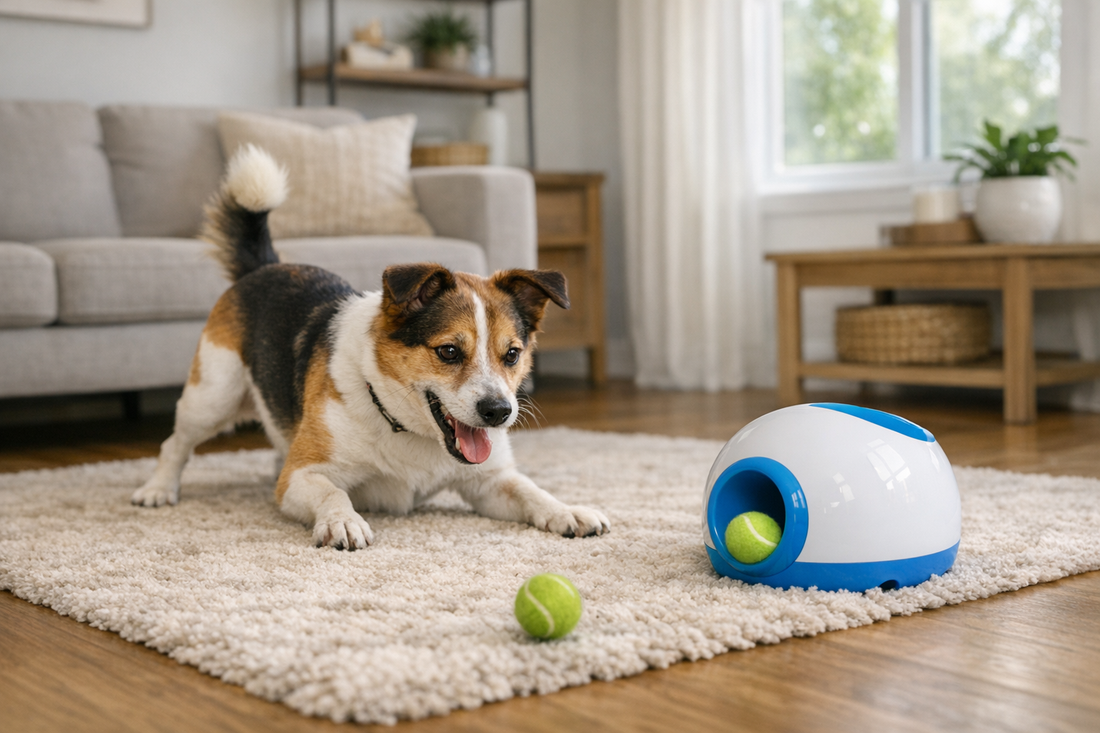
How to Use an Interactive Ball Toy for Safe Solo Play
You give your dog a moving toy because you need ten minutes to answer emails, finish breakfast, or stop being the full entertainment department for one morning. Sometimes it works beautifully. Sometimes the dog gets overexcited, the toy skids under a chair, and the whole thing turns into noise instead of useful play. That is why learning how to use an interactive ball toy for safe solo play matters. The toy itself is only part of the setup. The room, timing, and routine around it decide whether solo play actually helps.
A good solo-play session should buy you focused engagement, not create a new mess to manage. You are looking for controlled movement, repeatable interest, and a dog that can interact safely without needing constant rescue or redirection. The best version feels simple. The sloppy version happens when owners assume the toy does all the work on its own.

Solo Play Starts With the Right Space
The toy should not be introduced in the most crowded part of the house. Solo play works better when the dog has a clear area, decent footing, and fewer things to crash into.
Rugs, open floor space, and a room without delicate clutter make a huge difference. A strong interactive ball toy for dogs can create useful short chase cycles, but it still needs a setup that makes success easy. If the dog is slipping across polished floors or getting wedged between furniture every minute, you are not teaching safe solo play. You are teaching frustration.
If this kind of home enrichment is part of your weekly routine, the indoor enrichment collection is the best-fit collection for this topic.
Do Not Introduce It When the Dog Is Already Overamped
One of the most common mistakes is handing over the toy when the dog is already bouncing off the walls. Owners hope the toy will absorb that energy instantly. Usually it does not. It just gives the dog something to blast at.
Solo play works better when the dog starts slightly keyed up, not frantic. After a short walk, after a sniff break, or at the beginning of a work block can be ideal. The toy then channels energy instead of trying to reverse total chaos.
Our earlier article on how to tire out a dog indoors without destroying your home fits well here, because safe solo play is strongest when it is one part of a structured indoor routine.
Teach the Pattern Before Expecting Independence
Some dogs understand the toy quickly. Others need a little help learning the rhythm. If you drop the toy and walk away immediately, the dog may bark at it, paw randomly, or lose interest because the pattern never became clear.
Start by letting the dog interact with the toy while you are nearby. Show interest. Let the dog nudge, chase, pause, then re-engage. Once the dog understands that the toy is responsive and worth returning to, solo play gets much smoother.
This is especially true for dogs that usually expect play to involve you directly. Social dogs may need a few shorter introduction rounds before they treat the toy as a legitimate game on its own.
What Safe Solo Play Actually Looks Like
Safe solo play is not nonstop movement for half an hour. In real homes, it usually looks like repeated short bursts: approach, nudge, chase, pause, reset, repeat.
You want enough engagement to hold the dog’s attention, but not so much arousal that the dog starts slamming around the room. Safe solo play also means the toy is used for a limited session, not left out indefinitely as background clutter.
If you want the comparison angle, our post on automatic ball toy vs tug toys helps explain why solo movement tools and owner-led play solve different problems.
How Long to Use It
Most dogs do better with a short session than a marathon. Five to ten focused minutes can be plenty, especially if the dog is really engaging with the movement pattern.
If the dog is still interested but starting to get sloppy, that is usually the moment to stop. Owners often wait too long because the dog still looks excited. But excited is not always productive. The best stop point is often just before the dog tips into wild, noisy, or clumsy.
Ending at a good point makes the next session better too. The toy keeps value when it does not become background chaos.
Practical Solo-Play Rules
- Use the toy in one controlled room instead of letting the game spill through the whole house.
- Start when the dog is alert but not already frantic.
- Stay nearby for early sessions so the dog learns the play pattern clearly.
- Use shorter rounds and stop before the dog gets reckless.
- Put the toy away after the session instead of leaving it out all day.
When Solo Play Is Not the Right Tool
Not every dog is a great fit for this style immediately. Very anxious dogs, dogs that guard toys, and dogs that get over-aroused with moving objects may need more structure first. In those cases, the toy can still be useful, but not as a drop-it-and-walk-away solution.
Solo play also is not a substitute for all interaction. Dogs still need walks, training, and owner engagement. The toy should reduce pressure on the day, not replace every other outlet your dog has.
If your dog burns through home activities too quickly, our article on rainy day activities that actually burn energy is another good next step.

FAQ
How do I start solo play with an interactive ball toy?
Begin with the toy while you are nearby so the dog learns the movement pattern and sees that re-engaging with it is rewarding.
How long should a dog use an interactive ball toy alone?
Short focused sessions, often around five to ten minutes, usually work better than long overstimulating ones.
Is an interactive ball toy safe for indoor solo play?
Yes, if the room setup is safe, the flooring is stable, and the dog is not already overexcited before the session starts.
Why does my dog get too wild with moving toys?
Often because the session starts too late, runs too long, or happens in a cluttered space that feeds frustration and chaos.
Should I leave the toy out all day?
Usually no. Putting it away after a short session helps keep the toy interesting and prevents it from turning into background clutter.
If you want solo play that helps instead of creating more chaos, set the room up first and use the interactive ball toy in short, controlled sessions →