How to Tire Out a Dog Indoors Without Destroying Your Home
You skip the long walk because it is raining, freezing, or your schedule blew up. An hour later, your dog is sprinting from couch to hallway, dragging a blanket across the floor, and staring at you like the day has personally failed them. If you are trying to figure out how to tire out a dog indoors without destroying your home, the goal is not random chaos. The goal is controlled effort. Mental work, repeatable movement, and enough structure that your house still looks like a house afterward.
Indoor energy problems show up differently depending on the dog. A young border collie starts inventing jobs. A doodle paces and grabs things. A terrier starts digging in blankets. A lab turns one toy into a full-contact event. “Just throw a ball inside” sounds easy until the lamp nearly dies. So the trick is building indoor exercise that burns energy without turning your living room into a crash zone.

Indoor Exercise Works Better When It Has Rules
Dogs do not need constant intensity to get tired indoors. They need clear play patterns that ask for movement and focus at the same time.
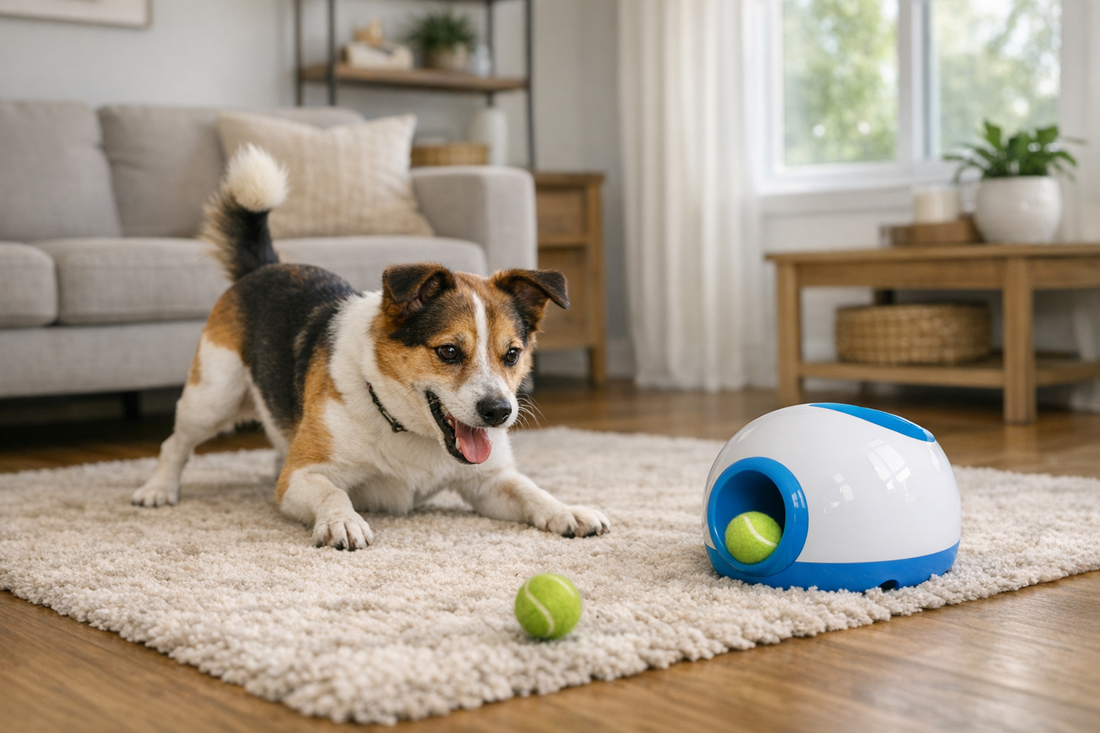
A good interactive ball toy for indoor dog play helps because it creates short chase cycles without you having to launch toys across the room. That matters in apartments, narrow hallways, and shared homes where “run full speed at the sofa” is not a great plan.
The point is not endless stimulation. The point is enough structured activity to take the edge off without teaching your dog that every room is a wrestling ring.
If indoor boredom is a regular issue, the indoor enrichment collection is the best-fit collection for this topic.
Movement Alone Usually Is Not Enough
A lot of owners try to solve indoor energy with pure motion. Tug. Chase. Hallway fetch. Repeat. That can help, but for many dogs, especially smart or easily overstimulated ones, movement without mental work just creates a fitter maniac.
Short indoor sessions work better when they include problem-solving or pattern. Search games. Short waits before release. Controlled ball play. A little impulse control between bursts of action. You do not need formal sport-dog drills. You just need the dog to think while moving.
Our earlier article on how to keep dogs active indoors is still useful here because daily indoor movement works best when it is built into the routine instead of used only as an emergency fix.
What Actually Tires Dogs Out Indoors
Not every activity pulls equal weight.
Short chase sessions
Good for dogs that need motion but do not do well with furniture-flying fetch.
Food or toy search games
Great for dogs that calm down when the brain starts working. Even two or three rounds can make a difference.
Start-stop play
Play for a minute, pause, reset, then play again. This burns energy without pushing the dog into a frantic state.
Solo-friendly enrichment
Especially useful when you still have work to do and cannot stay in full play mode for half an hour.
If your dog gets bored quickly, our earlier post on signs a dog is bored at home fits naturally with this topic.
How to Protect the House While the Dog Still Gets Tired
This is where most indoor plans fail. The activity might be fun, but the space is wrong.
Move breakables. Use rugs or a more stable surface if your dog skids on floors. Keep the activity in one area instead of letting it spread room to room. If your dog gets overamped around sofas or tables, do not build the game there. Use the safer area of the room or a hallway with less to crash into.
And stop earlier than you think. Indoor play often goes bad when owners let the dog escalate from engaged to wild. You want the dog tired, not feral.
Practical Indoor Energy-Burn Plan
- Start with 5 to 8 minutes of structured chase or toy interaction.
- Pause for a short calm reset instead of letting arousal climb endlessly.
- Add one simple search or scent game.
- Use an interactive toy again if the dog still has more to give.
- Finish with a calmer activity instead of ending on maximum speed.
This pattern works better in real homes than one long, messy session.
When Indoor Play Is Not the Whole Answer
Some dogs need more than a toy and a hallway. Young working breeds, adolescent sporting dogs, and high-drive mixes may still need training, sniffing work, and outdoor movement when possible. Indoor play should help, not replace every other outlet forever.
But for weather days, sick days, late workdays, and overbooked evenings, indoor structure can save the house and your sanity. You do not need perfect enrichment. You need enough useful activity to keep the dog from inventing worse ideas.

FAQ
How long does indoor play need to be to tire out a dog?
For many dogs, 10 to 20 minutes of structured indoor work can do more than a much longer session of random chaos, especially when movement and thinking are combined.
What is the safest way to tire out a dog indoors in a small apartment?
Short chase sessions with a controlled toy, scent games, and low-space enrichment usually work better than indoor fetch.
Can an interactive ball toy actually help with indoor energy?
Yes, especially for dogs that need short repeat movement without you throwing toys across the room all evening.
Why does my dog seem more hyper after indoor play?
Often because the play had too much intensity and not enough structure, pauses, or mental work.
What should I avoid when exercising a dog indoors?
Avoid slippery areas, cluttered spaces, and games that push the dog into reckless full-speed collisions.
If your dog needs an indoor outlet that does not wreck the room, build the play around structure instead of speed alone. See how an interactive ball toy fits into a calmer indoor routine →