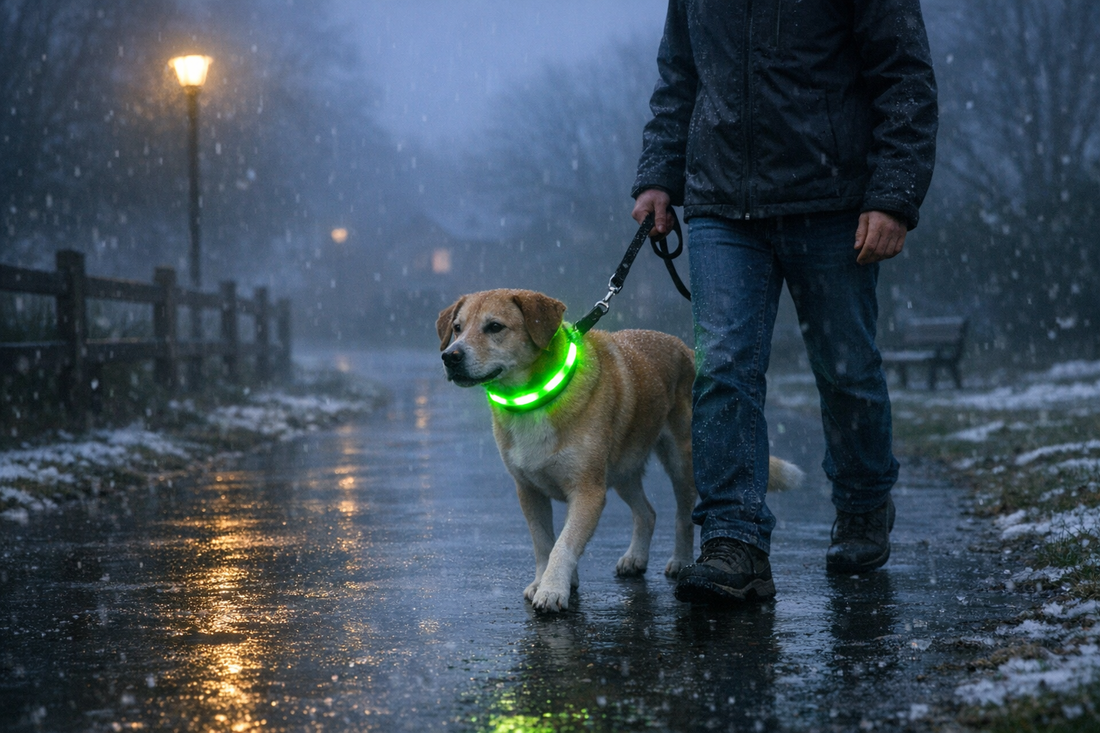
Dog Walking in Fog, Rain, or Snow: Visibility Checklist
Bad weather does not just make a walk inconvenient. It changes what you and everyone around you can see. Fog softens edges. Rain creates glare. Snow can flatten contrast so much that the ground, the air, and the dog all start looking like one washed-out blur. A dog walking visibility checklist matters because in fog, rain, or snow, the normal cues drivers, cyclists, and other walkers rely on become weaker fast.
This is not only a nighttime problem either. A grey morning in dense fog can be harder than a dry evening under streetlights. A black dog on a wet roadside can vanish sooner than you think. A white dog in snowfall can do the same for a different reason. Bad-weather visibility is about contrast, predictability, and gear that keeps working when the environment stops helping you.

Start With the Dog, Not the Forecast
The first question is not only how bad the weather looks. It is how easy your dog is to see in that weather.
Dark coats disappear in fog, rain, and low winter light. Light coats can blur into snowy backgrounds. Small dogs are harder to pick up quickly in every condition because they sit lower against the road and shoulder. So the checklist starts with a simple question: if someone looked up for one second, would they immediately know where your dog is?
A bright LED dog collar helps because it gives the dog a visible point that holds up better than fur color alone. That matters even more when the weather is flattening everything else.
If poor visibility is a seasonal routine for you, the safety and walking collection is the most relevant collection for this kind of setup.
Fog Needs More Distance Awareness
Fog changes depth perception. Things look softer, closer, or farther away than they really are. Drivers have less time to process movement, and you have less time to judge what is approaching.
That means your dog should stay more visually defined and a little closer to you than on a clear day. Wide wandering at the end of the leash is less forgiving when cars or bikes emerge from grey air with less warning. If you have already been thinking about LED brightness, our article on how bright a dog LED collar should be for city walks vs rural roads is useful here, because fog often behaves more like a dark-road problem than people expect.
Rain Adds Glare and Slippery Mistakes
Rain makes roads shinier, crosswalk paint slicker, and headlight reflection messier. A dog that is somewhat visible in dry conditions may become harder to track against wet pavement.
The checklist for rain is not complicated. Brighter visibility. Shorter route. Better footing. Less assumption that the usual walk still behaves the same way.
If your dog gets silly in puddles, pulls harder when wet, or hates rain enough to rush the whole route, the walk needs to be shorter and more controlled. Wet-weather irritation can make leash handling messier, and messy leash handling plus bad visibility is a bad combination.
Our rainy-route article on how to stay visible and safe on rainy evening walks goes deeper on the rain-specific part of this cluster.
Snow Creates a Different Visibility Problem
Snow is not only cold. It changes contrast in weird ways.
White dogs can blend into snowy edges. Dark dogs stand out better against snow, but not always when the light is flat and visibility is poor. Falling snow also disrupts how far away you can see motion clearly, especially under streetlights or headlights.
And snow makes people rush. Owners hurry because they are cold. Dogs pull because the air is exciting. That mix often leads to less careful route choice right when route choice matters more. Pick the cleaner path, not the shortest one.
Bad-Weather Visibility Checklist
- Check whether your dog is clearly visible against the actual weather background, not just indoors.
- Use active light instead of relying only on reflective details.
- Keep the dog a little closer in fog, rain, and snow than you would on a clear walk.
- Choose the better-lit route even if it is less convenient.
- Avoid roadsides, glossy crossings, and narrow shoulders when conditions are bad.
- Shorten the walk if visibility or footing is deteriorating faster than expected.
What Owners Usually Miss
The most common mistake is thinking one type of low visibility equals another. It does not. Rain glare is not fog. Fog is not snow. A setup that feels fine in one can still be weak in another.
The next mistake is assuming the dog is “still visible enough” because you can technically see them. The standard should be easier than that. In bad weather, you want your dog easy to locate instantly, not just detectable if you stare long enough.
If your dog is dark-coated, our article on how to keep track of a black dog at night is especially relevant, because bad weather often magnifies the same low-contrast problem.

FAQ
What visibility gear helps most in fog, rain, or snow?
An LED collar is one of the most practical choices because it creates active visibility instead of waiting for outside light to hit reflective material.
Are fog walks riskier than normal night walks?
They often are, because fog reduces distance judgment and gives drivers less time to react to movement.
Should I shorten dog walks in snow or heavy rain?
Usually yes, especially when footing is poor or visibility keeps dropping during the walk.
Is reflective gear enough for bad-weather walking?
It can help, but active light is usually more reliable when weather is already reducing contrast and clarity.
What is the first thing to check before a bad-weather dog walk?
Check whether your dog will stay clearly visible against the route and weather you are actually stepping into.
Before your next foggy, wet, or snowy walk, test your visibility on the worst part of the route, not the easiest one. See how a dog LED collar performs when the weather stops helping →