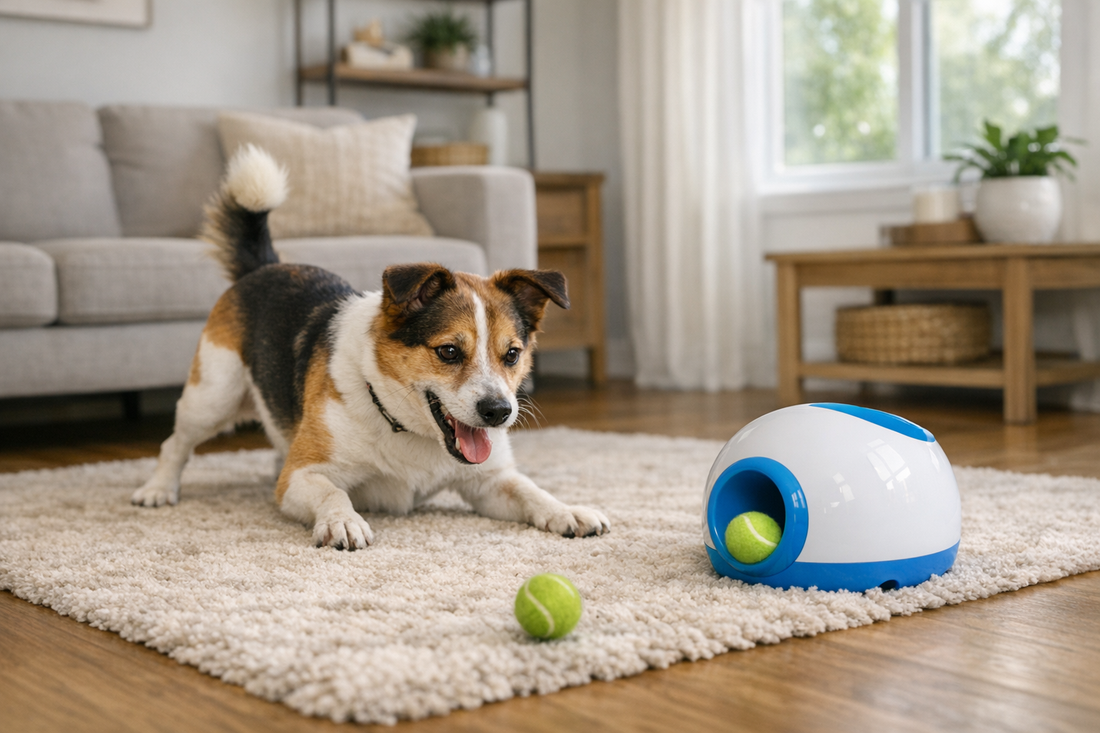
Automatic Ball Toy vs Tug Toys: Which Keeps Dogs Busy Longer?
You buy a new toy because your dog is bored, restless, and starting to turn socks, chair legs, or couch cushions into a side hobby. Two days later, the question changes from “Will my dog like it?” to “Will this actually keep my dog busy for more than six minutes?” That is where the automatic ball toy vs tug toy for dogs comparison gets useful. These toys do very different jobs, and if you pick the wrong one for your dog’s energy pattern, the toy ends up ignored or the play session gets too intense too fast.
A springy young spaniel, a clingy doodle, and a bulldog with short bursts of energy will all interact with these toys differently. Tug toys are more social and usually more intense. Automatic ball toys are more repeatable and often better for short independent play. Neither is automatically better. The better choice depends on what kind of “busy” you actually need.

They Tire Dogs Out in Different Ways
Tug toys create shared effort. Your dog pulls, braces, thrashes, re-engages, and reads your movement the whole time. It is physical and interactive, which is why so many dogs love it. But tug also depends on you being present and ready to manage arousal. If your dog gets louder, faster, or more obsessive with every round, tug can flip from fun to too much pretty quickly.
An interactive ball toy for dogs works differently. It gives the dog short bursts of motion, chasing, nudging, and re-engagement without needing your hands in every second of the game. In real homes, that matters. A toy that can hold attention for a few repeat cycles while you are nearby but not fully involved often gets used more consistently than the perfect toy that only works when you have fifteen spare minutes and full enthusiasm.
If you are building a more realistic play rotation for home use, the indoor enrichment collection is the right collection for this topic.
What Tug Toys Do Really Well
Tug is hard to beat for relationship-building. It gives you direct engagement, clear reward, and a strong outlet for dogs that love grabbing and pulling. A terrier mix, a shepherd, or an adolescent retriever may look much more satisfied after three minutes of structured tug than after mindless toy chewing.
Tug also works well when you want to add rules. Take it. Drop it. Wait. Restart. Those little pauses can turn a rough game into a useful training session.
But there is a limit. Tug toys rarely keep dogs busy longer on their own, because the toy does not really do anything unless you do. Once you stop participating, many dogs stop caring. Others keep pestering you for another round. So tug is great for engagement. It is usually weaker for independent occupation.
Where Automatic Ball Toys Pull Ahead
Automatic ball toys shine when the dog needs repeated action without you throwing, pulling, or constantly resetting the game by hand. That makes them especially helpful on work-from-home days, weather days, or evenings when your dog still has energy but you do not want indoor play to turn into furniture-pinball.
A good automatic toy can buy you short stretches of focused activity. Not an hour of silence. That is not the right expectation. But enough chase, pawing, nudging, and re-engagement to take the edge off.
For dogs that get bored fast, that repeatability matters more than owners expect. Our earlier article on how to tire out a dog indoors without destroying your home fits naturally here, because the most useful indoor tools are the ones that burn energy without creating new chaos.
Which One Keeps Dogs Busy Longer in Real Life?
For most dogs, automatic ball toys win on duration. Tug toys win on intensity.
If the question is pure engagement time, an automatic ball toy usually lasts longer because the game can continue in short loops without needing full owner input. A dog may drift away, come back, nudge it again, then re-engage. Tug does not work like that. Tug is on or off.
If the question is emotional satisfaction in a short burst, tug may still win for dogs that crave direct interaction. A high-social dog often values your participation as much as the toy itself.
So the smarter question is not only “Which keeps dogs busy longer?” It is “Busy in what way?”
Longer independent play
Automatic ball toy.
More direct owner-dog interaction
Tug toy.
Better option while you are multitasking nearby
Automatic ball toy.
Better option for a very grabby, social dog that wants a game with you
Tug toy.
When Each Toy Is the Wrong Choice
Tug is not ideal for dogs that go from excited to over-aroused in thirty seconds and then struggle to settle. You can still use it, but only with rules and short rounds. Otherwise it becomes a rehearsal for frantic behavior.
Automatic ball toys are not ideal if you expect them to replace all interactive play. They are tools, not babysitters. Some dogs also need a short introduction before they understand the movement pattern and start using the toy confidently.
And some homes are bad fits for certain play styles. Tug in a tight room with breakables everywhere is annoying. Fast chase on slick floors is not much better. That is why room setup matters as much as toy choice.
If your dog already struggles with boredom at home, our post on best indoor toys for bored pets is another useful companion read.
Practical Tips Before You Buy
- Choose an automatic ball toy if you need short solo-friendly play blocks, not constant owner participation.
- Choose tug if your dog values direct play with you and can stay under control during excitement.
- Use rugs or stable flooring if your dog tends to skid indoors.
- Do not judge a toy only by the first sixty seconds. Some dogs need two or three sessions before a new play routine clicks.
- Rotate toys instead of leaving everything out all day. Familiar toys regain value when they are not constantly available.
What Most Busy Owners End Up Needing
In practice, a lot of homes do better with both. Tug for connection. Automatic movement toy for repeatable indoor enrichment. One is not replacing the other. They cover different parts of the day.
If you only want one purchase right now, think about the moment you most need help. Is the problem that your dog wants you every second and never switches off? Or is the problem that your dog needs a stronger relationship outlet and loses interest in solo toys too quickly? Your answer usually points to the right toy faster than any trend list will.
Most busy owners are not looking for the most exciting toy on paper. They are looking for the one they will actually keep using on a Wednesday evening when energy is low, the dog is not tired, and the living room still needs to survive.

FAQ
Is an automatic ball toy better than a tug toy for dogs home alone?
Usually yes for short independent play, as long as the dog already understands how to interact with it safely and enjoys that play style.
Do tug toys tire dogs out faster than ball toys?
Often yes in short bursts, because tug can be more intense. But it usually requires your full participation the whole time.
Can an automatic ball toy replace tug sessions?
No, not really. It can replace some low-effort indoor play time, but it does not replace social interaction or training-style play with you.
What type of dog usually prefers tug toys?
Dogs that are social, grabby, and highly engaged with people often love tug more than solo toys, especially terriers, shepherds, and retriever-type dogs.
What if my dog loses interest in toys quickly?
Use shorter sessions, rotate toys, and avoid leaving every toy out all day. Novelty and structure matter almost as much as the toy itself.
If you need a toy that can hold attention without turning every play session into a full workout for you, check how the interactive ball toy fits into a practical indoor routine →