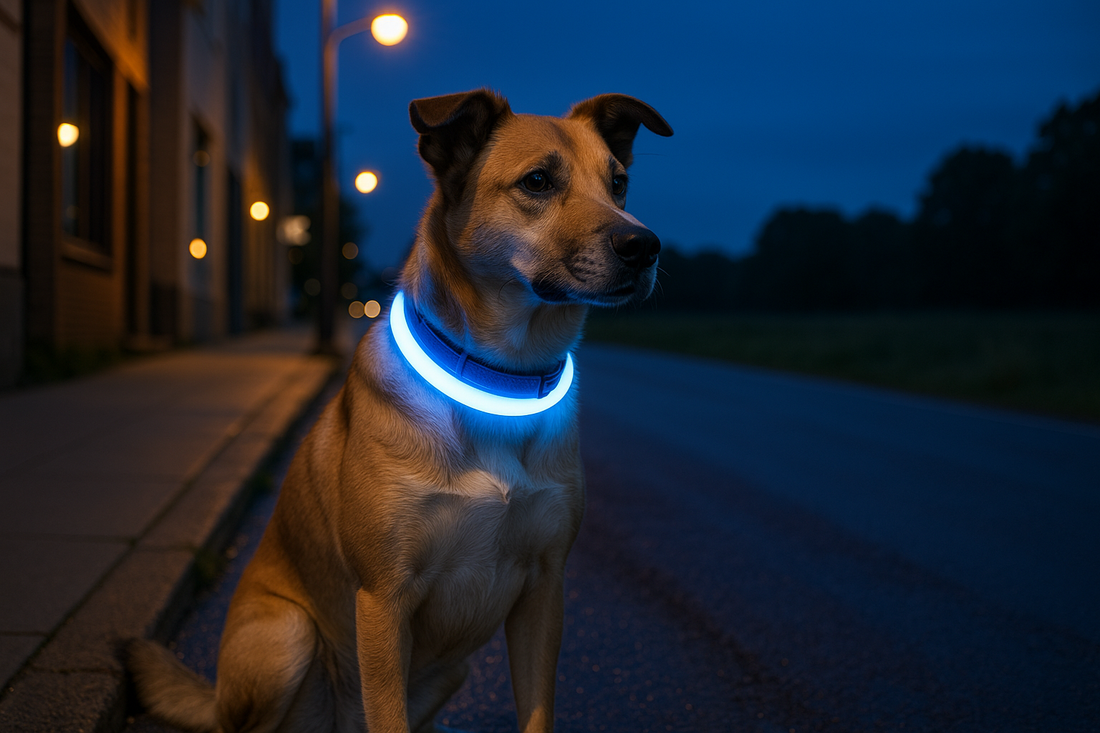
How to Choose an LED Collar for a Thick-Coated Dog
You clip a glowing collar onto your dog, step outside, and realize half the light has disappeared into fur. That is the real problem with buying an LED collar for a thick-coated dog. On a husky, Samoyed, fluffy shepherd mix, or heavy-coated doodle, visibility is not only about brightness. It is about whether the light can actually be seen once the collar sits in real fur instead of a product photo.
Plenty of collars look strong on short-haired dogs and underperform on thicker coats. The light gets buried, the strap twists, or the brightest section ends up pressed into ruff instead of facing outward. So if you walk a fluffy dog in the evening, you need to choose differently from someone with a smooth-coated whippet or lab. Here is what actually matters.

Start With Fur Coverage, Not Marketing Brightness
A bright collar is helpful, but thick fur changes how that brightness reaches the outside world. Dense neck fur can swallow a surprising amount of light, especially on dogs with a full mane around the front and sides of the neck.
That means your first question should be simple: how much of the collar will still be visible once it sits under real coat? A glowing strip that disappears under fluff is not solving much. A well-positioned LED dog collar can still work very well, but only when enough of the lit area stays exposed.
If low-light walks are already part of your routine, the night walk essentials collection is the most relevant collection for this topic.
Fit Matters More on Fluffy Dogs
With thick-coated dogs, poor fit shows up fast. Too loose, and the collar rolls into fur and points light the wrong way. Too tight, and it compresses coat uncomfortably without actually improving visibility enough to justify it.
You want a fit that is secure but not buried. On many fluffy dogs, that means checking the collar while the dog is standing naturally, not only when the coat is flattened by your hand. What looks visible at the door may disappear after five minutes of walking.
Some owners also miss how coat changes with season. A border collie in winter coat is a different fitting problem than the same dog in late spring. If your dog’s fur changes a lot during the year, the collar has to work across both versions.
Look at Visibility From the Side, Not Just the Front
A lot of people test dog gear from the front because that is how they put it on. Traffic does not always see your dog from the front.
Side visibility usually matters more on sidewalks, driveways, crossings, and neighborhood turns. Thick fur often bunches around the lower side of the neck, which can hide the collar right where you need it most. Step back, look from both sides, and check what the dog actually looks like at street distance.
Our earlier guide on how bright a dog LED collar should be for city walks vs rural roads works well with this topic because brightness only helps if the visible parts of the collar are facing outward.
Choose a Collar You Will Actually Recharge and Reuse
Fluffy dogs often need evening visibility gear for a long season, not a one-off walk. So convenience matters.
If the collar is fussy to charge, annoying to put on through thick fur, or easy to twist out of place, people quietly stop using it. That is a bigger problem than buying a collar that is slightly less bright on paper.
A rechargeable setup is usually easiest for daily routines, especially if your dog walks after work most evenings. You can see the lifestyle angle more clearly in our article on USB rechargeable dog collars for daily walkers, because regular use matters more than one perfect test run.
What Usually Works Best on Thick Coats
In practical terms, thick-coated dogs do best with collars that stay visible in sections rather than depending on one narrow line hidden under coat. You want enough lit area, a stable fit, and light that remains obvious while the dog is moving, sniffing, and turning.
A malamute with a huge neck ruff may need a different adjustment than a fluffy corgi. A doodle with soft puffy coat may hide the collar differently from a rough-coated shepherd. This is why generic “best LED collar” advice misses the point. Your dog’s coat shape changes the job.
And do not assume bigger is always better. A bulky collar can still get lost in fur if it sits badly. Visible placement beats raw size.
Quick Checklist Before You Buy
- Check how much of the glowing section will remain visible once the collar is sitting in full coat.
- Test side visibility, not only front-facing visibility.
- Choose a fit that stays stable while the dog moves and sniffs.
- Think about your dog’s winter coat, not just the current season.
- Pick a collar you will realistically recharge and use every week.
Common Mistakes With Fluffy Dogs
The first mistake is buying for brightness alone. The second is checking visibility indoors and assuming that is enough. Indoor tests flatter everything.
The third mistake is ignoring coat pattern. Thick front ruff, broad chest fluff, and neck bulk all affect how the collar sits. You are not choosing a gadget in isolation. You are choosing a visible layer on top of a specific body shape and coat type.
If your dog is also dark-coated, our post on how to keep track of a black dog at night is especially useful, because low contrast and heavy fur can combine into one harder visibility problem.

FAQ
Will an LED collar still work on a very fluffy dog?
Yes, but only if enough of the light stays visible outside the coat. Thick fur can hide a surprising amount of glow if the fit or position is wrong.
What type of coat makes LED collar visibility hardest?
Dogs with heavy neck ruffs, dense winter coats, and long side fur around the collar area usually create the biggest visibility challenge.
Should I size up for a thick-coated dog?
Not automatically. A bigger collar can still disappear into fur if it rolls or sits badly. Stable fit matters more than oversizing.
How do I test if the collar is visible enough?
Put it on, step outside in low light, and check the dog from both sides at realistic walking distance instead of only looking down from above.
Is a rechargeable LED collar worth it for a thick-coated dog?
Usually yes if you walk often after dark. A collar that is easy to recharge is more likely to stay part of your routine.
Before your next evening walk, test the collar on your dog’s full coat, not your hand. See how the LED dog collar performs when your dog is actually moving outdoors →