Best Pet Routine for Dark Winter Evenings
Dark winter evenings make a normal pet routine feel squeezed. You finish work, the sun is already gone, the pavement is cold, and your dog still needs movement before dinner. Your cat may be waking up just as the household wants to slow down. If you need a pet routine for dark winter evenings, the answer is not one long walk in bad light or a chaotic indoor play session at 9 p.m. The better routine splits the evening into safer movement, focused indoor enrichment, and a clear wind-down.
Winter does not remove your pet's need for stimulation. It changes how you deliver it. A young terrier may still need a real outlet after a short walk. A senior dog may need a safer, slower route with better visibility. A bored indoor cat may need motion and novelty before the house goes quiet. The routine has to fit the season, not pretend it is still a bright summer evening.

Start With the Safest Outdoor Window You Actually Have
In winter, the best walk time is often the one you can repeat without rushing. For many busy owners, that means after work, when visibility is already poor.
Keep the outdoor part simple. Choose the brighter route, avoid narrow dark shortcuts, and make the walk shorter if conditions are cold, wet, or icy. The point is not to prove you can still do the full route every night. The point is to get a useful reset without adding unnecessary risk.
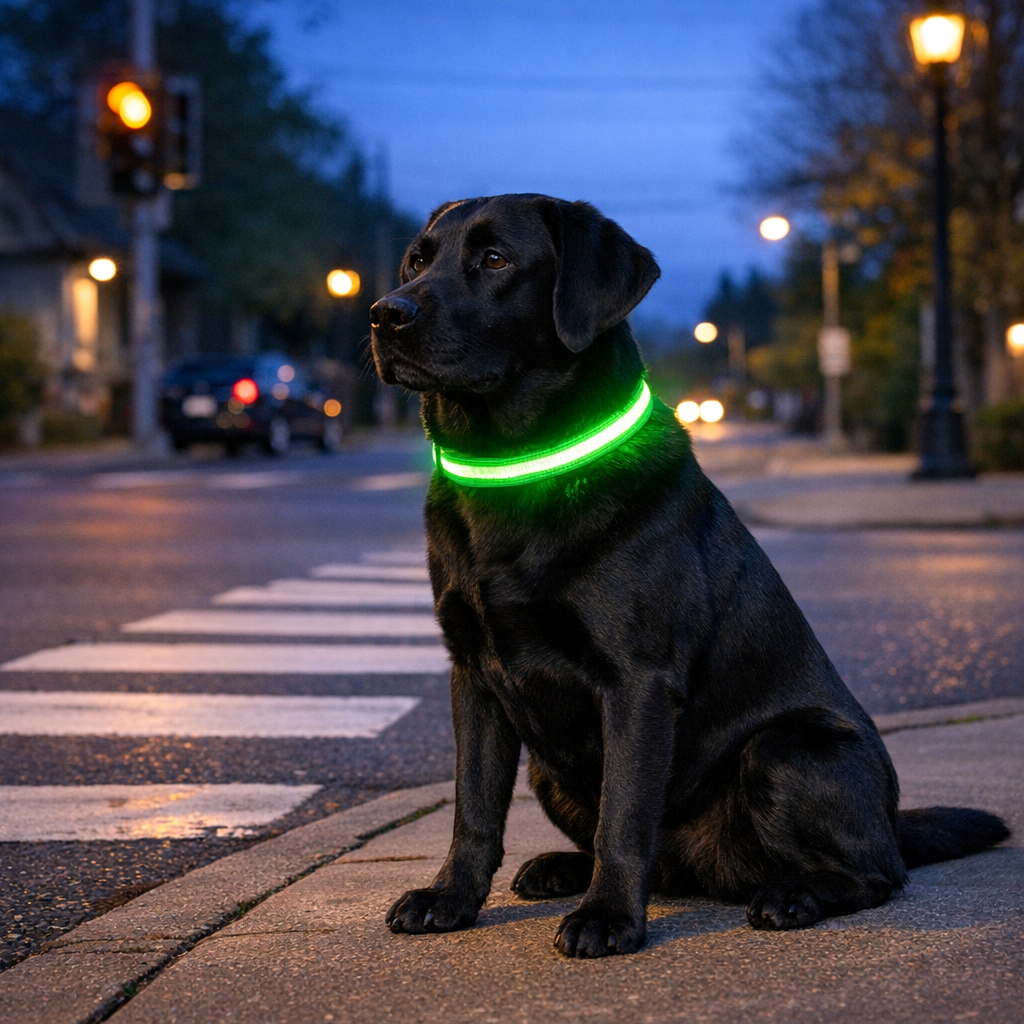
A dog LED collar is one of the most practical winter routine tools because it makes the dog visible before someone is already close. This matters around parked cars, apartment entrances, side streets, and winter evenings when drivers are tired too.
For low-light gear, the night walk essentials collection is the strongest collection match.
Pair Short Walks With Indoor Play
Shorter winter walks are not a failure. They just need a second piece.
If your dog normally gets a 35-minute sniff walk but winter weather turns that into 12 minutes, plan a short indoor play block after the walk. Keep it controlled. Five to ten minutes with an interactive cat and dog ball toy can give the evening a movement outlet without turning the living room into chaos.
This helps cats too. Dark evenings often shift household energy indoors, and cats can get restless when every evening looks the same. A short interactive toy session before dinner or before your own wind-down can reduce those late-night bursts that show up when everyone else is trying to relax.
If indoor energy is the main issue, the indoor enrichment collection connects directly to this part of the routine.
Build the Evening in Three Blocks
A dark winter routine works best when it has a clear shape.
Block 1: low-light walk or outdoor reset
Use visible gear, pick the safest route, and keep the pace realistic for weather and footing.
Block 2: indoor enrichment
Use controlled play, a short toy session, or a calmer food-based activity depending on your pet's energy.
Block 3: wind-down
Dim the household energy. Put toys away. Keep the last hour boring enough that your pet can settle.
Our post on evening walk safety checklists for busy pet parents is a useful companion for the first block.
Do Not Let Winter Evenings Become One Long Indoor Demand
When the outdoor part gets shorter, many pets start asking for stimulation in less convenient ways. Pawing at you. Barking at sounds. Scratching furniture. Stealing socks. Sprinting from room to room.
That does not always mean they need more intensity. Often they need a clearer sequence. Walk, play, settle. If the order changes every night, the pet keeps asking because nothing tells them the evening is moving toward rest.
If toy interest fades because the same items are always out, our recent article on how often to rotate dog and cat toys fits nicely here.
Practical Dark Winter Evening Routine
- Keep the walk gear near the door so the routine starts quickly after work.
- Use an LED collar before leaving, not only when the street looks dark enough.
- Choose a shorter route with better lighting instead of a longer route with poor visibility.
- Follow the walk with 5-10 minutes of controlled indoor play if your pet still has energy.
- Put active toys away after the play block so the evening has a clear end.
- Use the same order most nights so pets know what happens next.
Adjust for Different Pets in the Same Home
A dog and cat may need the same evening to solve different problems. The dog may need a safe outdoor reset. The cat may need movement after a quiet day indoors. A puppy may need several short blocks. A senior dog may need more warmth, traction, and predictability.
Do not force one routine to mean one activity for everyone. The structure can be shared while the activity changes. Walk the dog. Then do a short indoor toy session that works for the cat or for both pets, depending on your home.
For a broader routine view, our article on daily dog routines for busy owners connects well with winter schedule planning.
What a Better Winter Evening Feels Like
You should feel less like you are negotiating with the whole house after dinner. The dog has had a safe outing. The cat has had something to chase or investigate. The toys are not scattered everywhere until bedtime. The final hour feels quieter.
That is the real goal. A good winter routine does not need to be impressive. It needs to be repeatable when the day is cold, dark, and already a little too long.

FAQ
How long should a dog walk be on dark winter evenings?
It depends on weather, route safety, and your dog, but shorter well-lit walks paired with indoor enrichment often work better than forcing a long dark route.
Do I need an LED collar for winter walks if my dog is on leash?
Yes, often. A leash keeps your dog connected to you, but visibility helps other people notice the dog earlier in low light.
How can I stop my pet getting hyper at night in winter?
Use a clear sequence: outdoor reset, short indoor play, then a quiet wind-down. Random late play often keeps pets switched on longer.
Can indoor toys replace winter walks?
They can support shorter walks, but most dogs still need outdoor toilet breaks and some outside movement when conditions are safe.
What should I do if my cat gets active right when I want to sleep?
Move the active toy session earlier in the evening and keep the last hour more predictable and calm.
If winter evenings keep turning into restless noise, tighten the routine before adding more random gear. Start with safer visibility for walks and one useful indoor outlet, then see how the dog LED collar and interactive ball toy fit into your real evening rhythm →