Evening Walk Safety Checklist for Busy Pet Parents
You finish work later than planned, grab the leash, and head out while the light is already fading. That is normal life for a lot of dog owners. It is also the exact moment when small mistakes start stacking up. If you need an evening walk safety checklist for dogs, you are usually not looking for theory. You want to know what to check fast, what gear actually matters, and how to make a low-light walk feel controlled even when the day ran long.
Evening walks are not automatically risky, but they do punish lazy habits more than morning walks do. A black dog on a dim sidewalk disappears faster than most people expect. A tired owner takes the shortcut across the darker block. A distracted driver turns into a side street without noticing the dog near the curb. None of that sounds dramatic until it happens close to you. A simple repeatable checklist fixes more of this than people think.

Start With Visibility Before You Open the Door
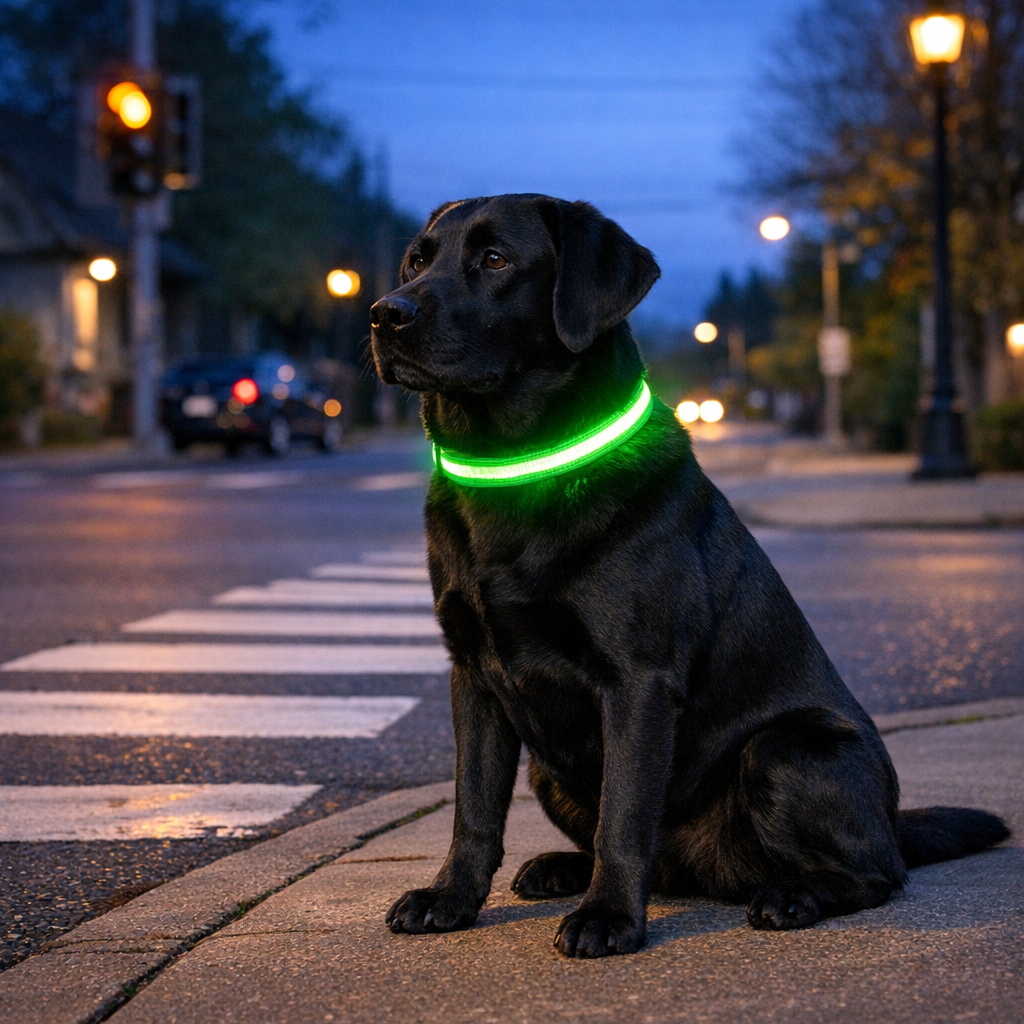
The first check is not the leash. It is whether your dog will actually be visible once you step outside. Streetlights help, but they leave dark gaps. Porch lights help, but only for a few seconds. If your walk regularly starts at dusk or later, a dog LED collar for evening walks is one of the most useful upgrades you can make because it solves the problem before a driver, cyclist, or runner gets close.
This matters even more with small breeds, black-coated dogs, and fluffy dogs that seem obvious to you because you know where to look. To everyone else, the dog is just a low moving shape until the light catches right.
If low-light walks are a regular part of your week, the night walk essentials collection is the strongest collection match for this routine.
Our earlier article on whether it is safe to walk a dog after dark pairs well here because it covers the broader safety picture behind this checklist.
Choose the Route You Can Manage Half-Asleep
Busy pet parents often walk at the end of the day, which means you are not always making perfect decisions. Good. Your route should not require perfect decisions.
Pick the version of the walk that still works when you are tired. Better lighting. Fewer blind driveways. Less fast traffic. More space between the sidewalk and the road. Familiar corners. If you have ever thought, “It is just one darker block,” that is usually the block to avoid.
For a lot of dogs, the easiest route is also the calmest route. Fewer surprises mean less leash tension, less freezing at odd noises, and less zigzagging when you are already trying to keep the walk moving.
If you are still weighing your general walk timing, our recent post on morning vs evening dog walks helps connect schedule with safety.
What to Check Before the Walk Starts
A checklist works best when it stays short enough to use every day.
- Check the collar, clip, or harness before the door opens, not halfway down the sidewalk.
- Check visibility in real light conditions, not under your kitchen light.
- Check the route in your head and pick the better-lit option by default.
- Check whether the walk needs water, especially after warm days or longer evening outings.
- Check your own pace. Night walks go better when you leave five minutes earlier instead of rushing the whole route.
If the walk is longer than a quick loop, a dog water bottle and food container is still worth carrying. Warm pavement can hold heat into the evening, and some dogs drink more than owners expect after sunset in late spring or summer.
Different Dogs Need Different Evening Rules
A calm senior cavalier on a well-lit block does not need the same safety setup as a young husky that lunges toward every moving shadow. Breed, coat, age, and temperament change what your checklist needs to emphasize.
For black or dark-coated dogs
Visibility needs to be treated as the first priority, not a nice extra. Dark coats vanish against asphalt, hedges, and parked cars almost immediately.
For reactive or easily startled dogs
Pick routes with more space and fewer sudden triggers. Busy owners often underestimate how much evening noise bounces differently at night.
For strong pullers
Shorten the route before you lower the safety standard. A shorter controlled walk is better than a longer messy one with bad positioning near traffic.
For apartment dogs
Think about the whole path, not just the street. Parking lots, shared entrances, elevators, and dim side paths are all part of the walk.
If your dog is dark-coated, our post on how to keep track of a black dog at night is the most relevant next read in this cluster.
Practical Evening Walk Habits That Actually Help
Fancy plans are not what keep evening walks safe. Boring habits do.
- Keep your dog on the side farthest from traffic when sidewalks are narrow.
- Use lit crossings even if they add a minute.
- Shorten the leash near driveways, parked cars, and corners.
- Skip the phone once the light drops. Even a few distracted seconds matter more at night.
- Cut the route short if your dog looks uneasy, over-aroused, or harder to handle than usual.
These are small moves, but they stack in your favor fast. And that is really what a good evening checklist is for: reducing the chance that a tired end-of-day walk turns into a preventable mess.
What Busy Pet Parents Usually Get Wrong
Most evening walk problems start with rushing. Rushing out the door. Rushing the route choice. Rushing because dinner is waiting, messages are piling up, or the whole walk feels like one more task.
When people are rushed, they lean on familiar habits. Sometimes those habits are fine. Sometimes they mean using the darker side street, skipping visibility gear because the walk is “only ten minutes,” or letting the dog wander too far ahead because you want the walk to feel done already.
You do not need a perfect routine. You need a routine that still holds together when you are tired. That usually means visible gear ready by the door, one default safe route, and a short checklist you can run without thinking.
If you want to keep the whole evening setup simple, the safety and walking collection is another useful collection for low-friction daily gear.

FAQ
What should be on an evening walk safety checklist for dogs?
The essentials are visibility, secure gear, a safer route, and realistic pacing. For longer outings, add water and a plan for lower light conditions.
Do I need an LED collar if my street has lamps?
Usually yes if you walk at dusk or later. Streetlamps create uneven pools of light, and dogs often disappear between them faster than owners expect.
Is a 10-minute evening walk still risky?
It can be if the route is dim, traffic is active, or your dog is dark-coated, small, reactive, or hard to control near the road.
Should I bring water on evening walks in warm weather?
For longer walks or warm evenings, yes. Pavement can stay hot well after sunset, and dogs may still need a drink even if the air feels cooler to you.
What is the most common mistake on evening dog walks?
Assuming a short familiar route is automatically safe enough to skip visibility and route checks.
Before tonight’s walk, set up the gear by the door and choose the safer route before you clip the leash on. Check how the dog LED collar fits into your real evening routine →