Best Toy Rotation Plan for Dogs That Get Bored Quickly
Some dogs do not need more toys. They need fewer toys at the right time. If your dog loses interest fast, stops caring about new things after one day, or starts treating the toy basket like background furniture, the problem usually is not variety alone. It is access. A strong toy rotation plan for dogs works because it brings novelty back without forcing you to buy something new every week.
Dogs that get bored quickly often are not hard to entertain. They are just too familiar with everything all at once. When all toys stay out all the time, most of them lose value. Good rotation fixes that by changing what is available, when it appears, and what job it is meant to do.
Why Toy Rotation Works Better Than Constant Access
When the same toys are always scattered around the room, most dogs stop noticing them. The toy is still there, but the excitement is gone. Rotation resets that relationship by letting the dog re-encounter a toy instead of living around it.
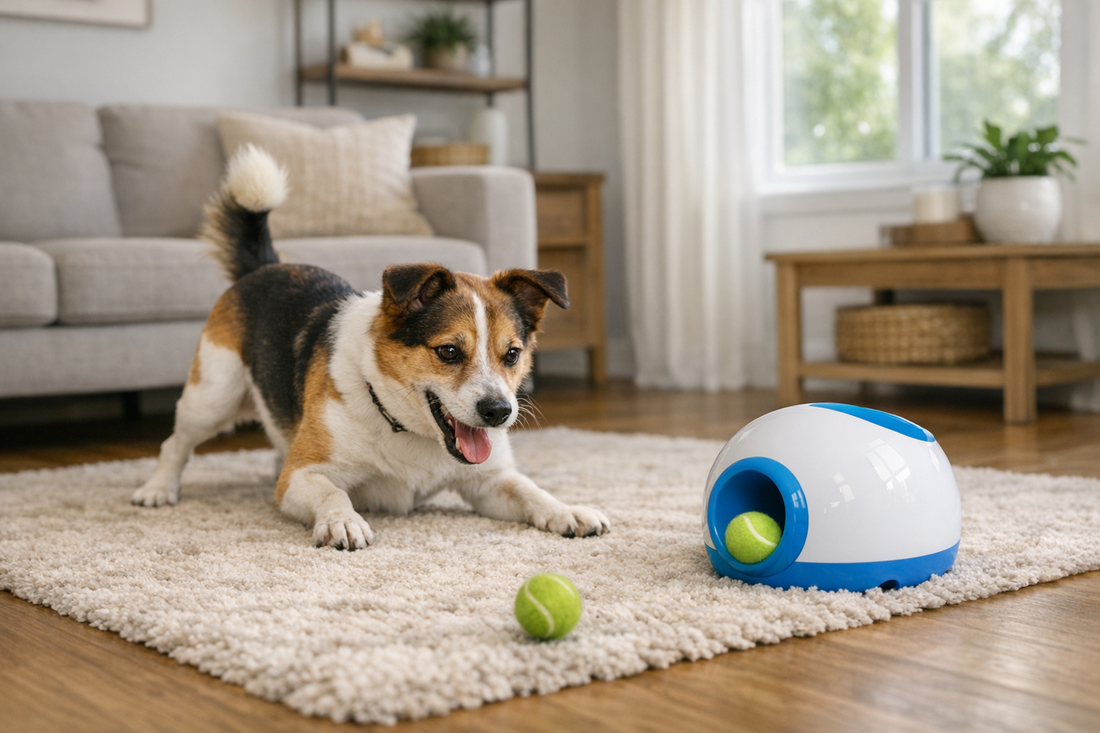
A well-used interactive ball toy for dogs becomes more effective in rotation because it stays associated with a specific kind of session instead of becoming part of the furniture. That matters a lot for dogs that burn through interest quickly.
If home play and enrichment are part of your weekly routine, the indoor enrichment collection is the most relevant collection for this topic.
Do Not Rotate Randomly
A random swap now and then is better than nothing, but the best toy rotation plan for dogs that get bored quickly is more intentional. Different toys should have different jobs.
Some are better for solo movement. Some are better for calming engagement. Some are better for short owner-led sessions. If you rotate without thinking about function, you may end up offering three similar toys in a row and wondering why the dog seems unimpressed.
Our article on how to use an interactive ball toy for safe solo play pairs well here because toy rotation is strongest when one of the toys has a clear, repeatable role in the day.
Build the Rotation Around 3 Small Categories
You do not need a complicated spreadsheet. Most homes do well with a simple three-part structure.
Movement toys
These are the toys that create chase, nudging, or active engagement.
Calm-time toys
These help the dog settle, lick, chew, or focus in a quieter way.
Owner-interaction toys
These are for short, shared play sessions that feel social and rewarding.
If the rotation includes all three, the dog gets more variety in function, not just in shape or color. That is usually what keeps interest alive longer.
How Often to Rotate
Most dogs do not need a full daily overhaul. That often turns into work for you without adding much value.
A practical rhythm is to keep only a small set out, then swap one or two items every couple of days or when interest starts dropping. Some dogs benefit from even shorter cycles. Others are fine with a slower rhythm as long as the toys do not all stay available at once.
If the dog still loves a toy, you do not need to yank it away just because the schedule says so. Rotation should keep interest strong, not make the routine feel mechanical.
Our earlier article on automatic ball toy vs tug toys is useful here if you are still deciding which roles your current toys actually fill.
Common Mistakes That Kill the Rotation
The biggest mistake is leaving too much out. The second is rotating only when the dog is already wild and bored, instead of keeping the routine ahead of that point.
Another common problem is storing toys badly. If the dog can still get to all of them, there is no real rotation. And if the replacement toy is not appropriate for the dog’s energy in that moment, it may still flop even if it is technically “new again.”
Simple Toy Rotation Plan
- Keep only a few toys available at once.
- Make sure each available toy has a different job: movement, calm, or owner-led play.
- Swap one or two toys before the dog gets fully bored, not after.
- Store the rest out of sight so they actually regain novelty.
- Pay attention to which toys work best at different times of day.
What Good Rotation Feels Like
A good rotation plan makes the dog more interested in ordinary toys again. You see better re-engagement, less wandering away after thirty seconds, and fewer evenings where every toy seems “broken” because the dog is unimpressed by all of them.
It also makes life easier for you. Instead of buying more and more stuff, you get more use from what is already working. That is especially valuable in busy homes where the problem is not a lack of toys, but a lack of structure around them.
If boredom is already becoming destructive, our post on signs a dog is bored at home and what to do next is another strong follow-up.
FAQ
How many toys should I leave out for a dog at one time?
Usually a small handful works better than a full toy pile, especially if each toy has a different purpose.
How often should I rotate my dog’s toys?
Every few days is a practical rhythm for many homes, though some dogs benefit from quicker or slower swaps depending on their interest level.
Why does my dog get bored with toys so fast?
Constant access often makes toys lose value. Rotation helps by restoring novelty and clearer purpose.
Should interactive toys stay out all day?
Usually no. Many interactive toys work better when they appear in specific sessions instead of becoming background clutter.
Do I need to buy more toys if my dog is bored?
Not always. Many dogs respond better to better rotation and structure than to a constant stream of new toys.
If your dog is bored with everything by midweek, stop adding more and start rotating smarter. See how the interactive ball toy fits into a simple toy rotation plan →