Hiking at Dawn or Dusk With a Dog: Safety Gear Checklist
Dawn and dusk are some of the best times to hike with a dog. The trail is quieter, the temperature is usually easier, and the light can be beautiful. They are also the times when small preparation mistakes show up fastest. Shadows hide roots, visibility drops quickly, and a hike that felt straightforward at the trailhead can feel very different 40 minutes later. That is why a hiking with dog at dusk safety gear checklist matters. Low-light hikes reward simple, useful gear and punish “we’ll probably be fine” packing.
You do not need to carry half a camping store for a short dawn or dusk outing. You do need enough visibility, hydration, and route control to handle a trail that gets dim faster than expected. The best checklist is the one you can repeat without thinking too hard every single time.

Visibility Needs to Be Planned Before the Trail Gets Dim
A lot of owners start a dusk hike with enough light and assume that is the same as being prepared for the whole walk. It is not. Once the trail starts losing contrast, dogs disappear faster than people expect, especially against brush, rocks, and darker ground.
A bright LED dog collar matters here because it keeps your dog easy to track without relying only on your eyes adjusting well. That becomes even more useful on winding paths, uneven terrain, and trails where cyclists or other walkers may appear with little warning.
If evening or low-light outings are already part of your routine, the night walk essentials collection is the best-fit collection for this topic.
Hydration Still Matters Even on Short Low-Light Hikes
Cooler light does not automatically mean low effort. Dogs can still get warm, especially on inclines, dry ground, or longer paths that feel “short” only on the map.
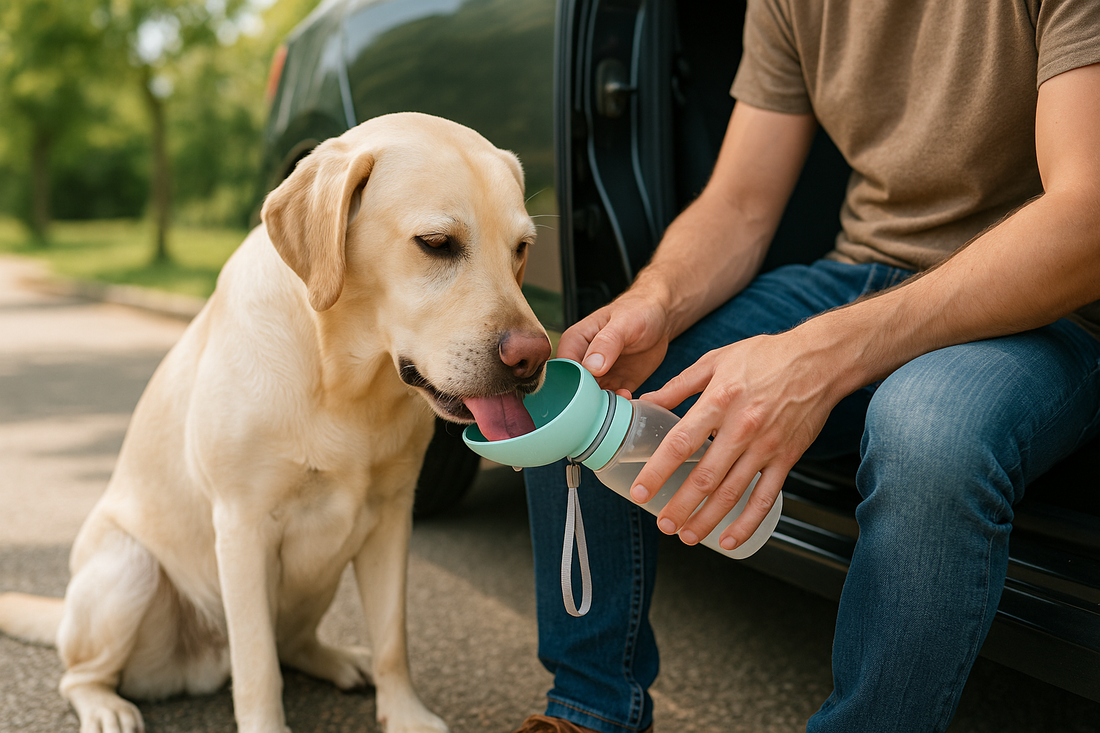
A compact dog water bottle and food container makes these outings easier because you can offer water quickly without unpacking a separate setup on the side of the trail. That matters more than people think when you are keeping one eye on the path and one on the dog.
Our article on best dog essentials for weekend hikes and day trips pairs naturally with this because low-light hikes often blend into bigger day-out routines.
Low-Light Trails Change What “Normal Gear” Means
The same leash and collar setup you use for a daytime park loop may be fine on one trail and weak on another. Dawn and dusk ask more from basic gear because the trail is doing less visual work for you.
You want enough visibility to see your dog clearly at a glance, enough hydration to avoid dragging the outing longer than it should go, and enough control that sudden movement on the path does not turn into confusion. If your dog tends to move ahead, stop sharply, or cut sideways toward smells, these moments feel much bigger in low light.
Our earlier post on how to choose an LED collar for a thick-coated dog is especially useful if your dog has dense fur that can hide part of the glow.
What Actually Belongs on the Checklist
This is where people often overcomplicate things. Keep it practical.
Visible collar or low-light visibility gear
Not optional if the light is already fading or the trail may be darker on the way back.
Water
Even for moderate hikes, especially on warmer evenings or if the route has climbs.
A realistic route plan
Know where the turn-around point is before the light gets worse.
Waste bags and one small reward option
Still useful on trails, and easy to forget when you are thinking only about “hiking gear.”
Simple, repeatable carry setup
The more awkward the pack-out, the less likely you are to bring it next time.
What Owners Usually Underestimate
The biggest mistake is treating dusk hikes like daytime hikes with prettier lighting. Low-light hiking changes your margin for error. A missed trail marker, a dog that blends into the path, or a water stop you skipped because “we’re almost done” all become more annoying when the trail is getting darker by the minute.
Dawn hikes can create a different version of the same problem. You start cool and confident, but shadows, moisture, and uneven early light can still make tracking and footing trickier than expected.
If your dog is dark-coated, our article on how to keep track of a black dog at night is another strong companion read for this exact kind of visibility problem.
Quick Dawn or Dusk Gear Checklist
- Bring visible low-light gear before the trail is dim, not after it becomes hard to see.
- Pack water even for shorter hikes that may run longer on the return.
- Know your turn-around point before the light changes.
- Keep your carry setup simple enough that you will actually use it every time.
- Assume the last part of the hike will look darker than the first.

FAQ
What safety gear do I need for hiking with a dog at dusk?
The most useful basics are visible low-light gear, a practical water setup, and a simple plan for route timing before the trail gets darker.
Is an LED collar useful for dawn hikes too?
Yes, especially on trails with heavy shade, winding paths, or poor contrast early in the morning.
Should I bring water on a short dusk hike?
Usually yes. Short hikes often last longer than expected, and dogs can still need a break even in cooler light.
What is the biggest mistake on low-light hikes with dogs?
Starting with “just enough” daylight and assuming it will stay that easy for the entire route.
How do I make low-light hikes easier to repeat?
Keep the gear simple, consistent, and easy to grab so preparation feels automatic instead of like a special expedition.
Before your next low-light trail outing, build the smallest kit that still covers visibility and water. See how the LED dog collar and dog water bottle and food container fit into a real dawn-or-dusk routine →