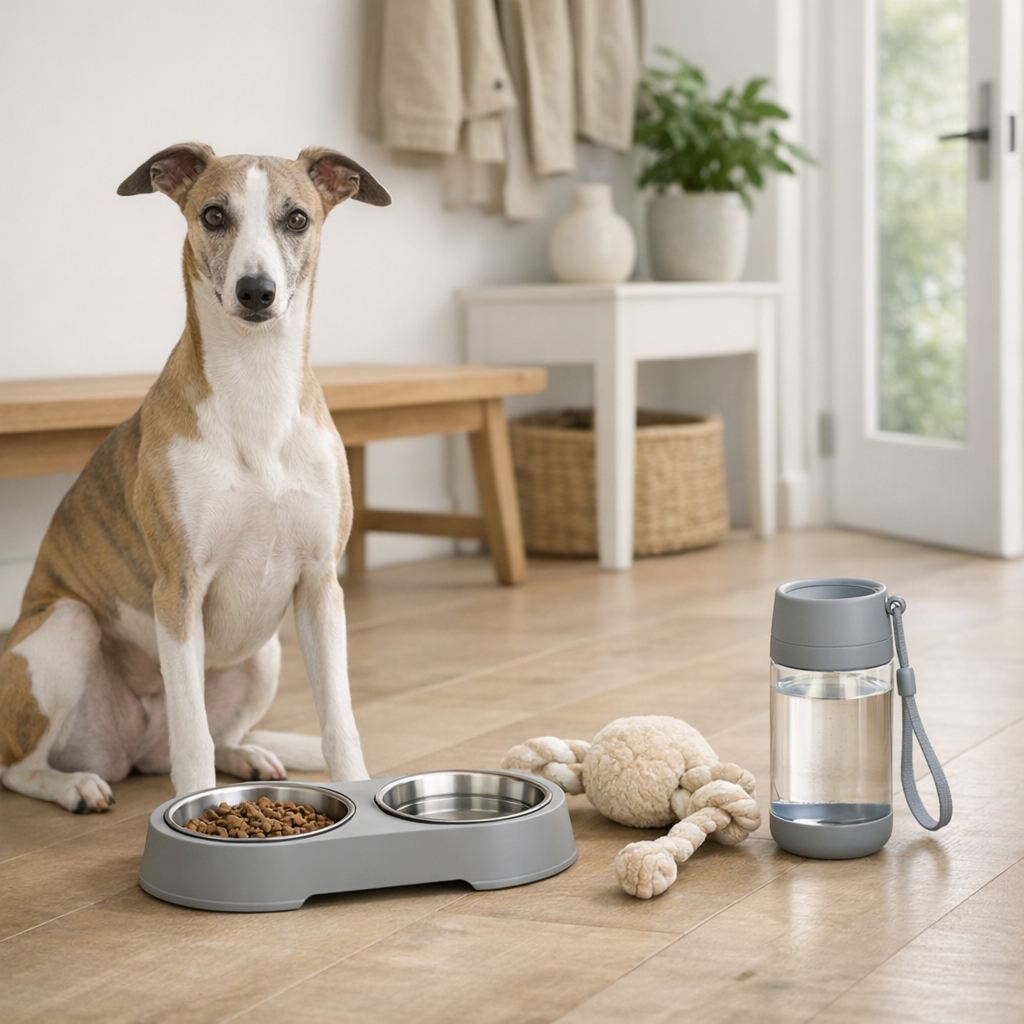
Build a Starter Kit for Walks, Meals, Travel, and Indoor Play
A lot of starter kits look great on paper and become clutter by next month. Too many pieces. Too many “maybe useful” add-ons. Not enough attention to what actually gets used on a Tuesday. If you want a dog starter kit for walks, meals, travel, and indoor play, the smartest version is not the biggest one. It is the one that covers the four parts of daily life that repeat constantly: leaving the house, feeding the dog, handling short travel or errands, and giving the dog somewhere to put energy indoors.
This matters whether you just brought home your first dog or you are trying to clean up an overgrown pile of accessories that never really became a system. A good starter kit should reduce friction. Less scrambling before walks. Less messy mealtimes. Less awkward travel packing. Less indoor boredom at the end of the day.
Start With the Four Problems You Actually Need to Solve
Most dog routines break in the same places.
- Walks get rushed because the gear is scattered.
- Meals get messy or too fast because the feeding setup is basic and chaotic.
- Travel turns clumsy because water and treats are never packed together.
- Indoor time falls apart because the dog has energy and nothing useful to do with it.
If a starter kit fixes those four points, it is already doing its job. If it does not, it is probably just taking up space.
For Walks, Prioritize Safety and Simplicity
Walk gear should be grab-and-go. Not a project.
If your dog often walks at dusk, early morning, or after work, a dog LED collar is one of the few starter-kit items that solves a problem before it starts. Visibility changes low-light walks immediately, especially in apartment lots, side streets, and dim neighborhood routes.
A good walk kit also works better when it stays together physically. That might mean keeping the collar, leash, and walk extras in one place near the door instead of trying to remember where each piece ended up after yesterday’s outing.
If low-light or everyday walk safety is part of your routine, the safety and walking collection is the strongest collection fit for this part of the kit.
Our article on evening walk safety checklists for busy pet parents fits naturally here if walks are the part of your routine that usually gets rushed.
For Meals, Choose Tools That Lower Daily Friction
The feeding part of a starter kit should be boring in the best possible way. Calm. Easy to clean. Easy to repeat.
If your dog eats too fast, a dog slow feeder bowl usually earns its place faster than almost any decorative feeding upgrade. It helps with pace, mess, and mealtime tension at the same time.
For dogs that need calmer food engagement outside the main bowl meal, a dog lick mat slow feeder is a strong companion piece. It helps with short settle moments, bath prep, and routine transitions that are easier when the dog has something focused to do.
If feeding structure is the weak spot in your daily setup, the feeding and health collection is the most relevant collection to browse next.
Our earlier post on dog feeding station ideas also helps turn these tools into a better setup, not just another purchase.
For Travel, Keep Hydration and Convenience Together
A lot of people think “travel” means road trips only. In reality, most pet travel is smaller than that. Car rides. Park stops. Quick errands. Outdoor waits. Cafes. Weekend loops. That is exactly why travel gear should be compact.
A dog water bottle and food container belongs in a practical starter kit because it solves two annoyances at once: hydration and quick on-the-go feeding or reward handling. It is the kind of item you actually end up using because it removes steps instead of adding them.
If your routine includes day trips or quick stop-and-go outings, our post on dog travel checklists for errands and parks is the right follow-up.
For Indoor Play, One Good Outlet Beats a Bin of Random Toys
Indoor play is where many starter kits go wrong. People buy a lot of toys but not one toy that fits the dog’s real energy pattern.
An interactive cat and dog ball toy is a strong starter-kit piece because it gives you an easy indoor option for days when the dog still has energy after walks or when outside time is shorter than planned. It does not need to replace all active play. It just needs to make indoor time easier to manage.
The indoor enrichment collection is the best companion collection for this part of the routine if indoor boredom is becoming the real daily pain point.
Our recent article on how to tire out a dog indoors without destroying your home fits this category well.
What a Real Starter Kit Can Look Like
- One visibility upgrade for walks.
- One feeding tool that solves speed or mess.
- One travel hydration tool you can grab quickly.
- One indoor toy that the dog actually uses.
- One place in the home where these daily-use items live.
That last point matters more than it sounds. Good gear still creates friction if you have to search for it every day.
How to Keep the Kit Useful Instead of Overbuilt
Ask one question before adding anything: what repeated problem does this fix?
If you cannot answer that clearly, it probably does not belong in the starter kit. A real routine kit should feel tighter over time, not bigger. You should gradually end up with the few items that actually earn their place.
And if your current setup already feels overbought, this is a good reset point. Keep the pieces that support walking, feeding, travel, and indoor play well. Drop the rest.
If you want the broader essentials angle, our article on what pet parents actually need for a simpler daily care routine is the natural companion piece.
FAQ
What should be in a dog starter kit for daily life?
A practical kit should cover walks, feeding, travel hydration, and indoor play without adding unnecessary clutter.
Do I need both a slow feeder and a lick mat?
Not always, but they solve different problems. A slow feeder helps with meal pace, while a lick mat is useful for calmer short routines and transitions.
What is the most useful travel item for a dog starter kit?
A dog water bottle is one of the most useful because it handles hydration in quick everyday outings, not only big trips.
How many toys should a starter kit include?
Usually fewer than people think. One good indoor enrichment toy that gets used is better than a pile of ignored ones.
How do I know if my starter kit is too big?
If items are not solving a repeated daily problem or never leave the drawer, the kit is probably overbuilt.
Build your starter kit around the four moments that happen every day, not the fantasy version of dog ownership. See how these essentials work together in the best-sellers collection and tighten your setup before the next busy week →