Can Indoor Play Reduce Destructive Chewing? What Dog Owners Should Know
You leave the room for twenty minutes and come back to a chewed table leg, a shredded slipper, or the corner of a dog bed pulled open like a zipper. Most owners ask the same question at that point: can indoor play reduce destructive chewing, or is chewing always a training issue first? In plenty of homes, indoor play helps a lot. Not because it magically teaches perfect behavior, but because many dogs chew less when their brain and body are getting the right kind of work before boredom spills over into furniture.
A young lab mix on a rainy day is not the same case as a teething puppy or a dog with separation stress. The reason matters. But for a big chunk of everyday destructive chewing, especially the restless late-afternoon kind, the missing piece is often structured indoor activity that arrives before the dog starts making their own entertainment.
Chewing Is Often a Symptom, Not the Whole Problem
Dogs chew for different reasons. Some are bored. Some are under-exercised. Some are over-aroused and bad at settling. Some are puppies with obvious mouthy phases. If you treat all chewing like disobedience, you usually miss the pattern.
Indoor play helps most when the chewing is linked to unused energy and a lack of mentally engaging routines. A dog that gets a predictable outlet at 4 p.m. is less likely to invent a project with your shoe rack at 4:20. That is why interactive play belongs earlier in the cycle, not only after damage has already happened.
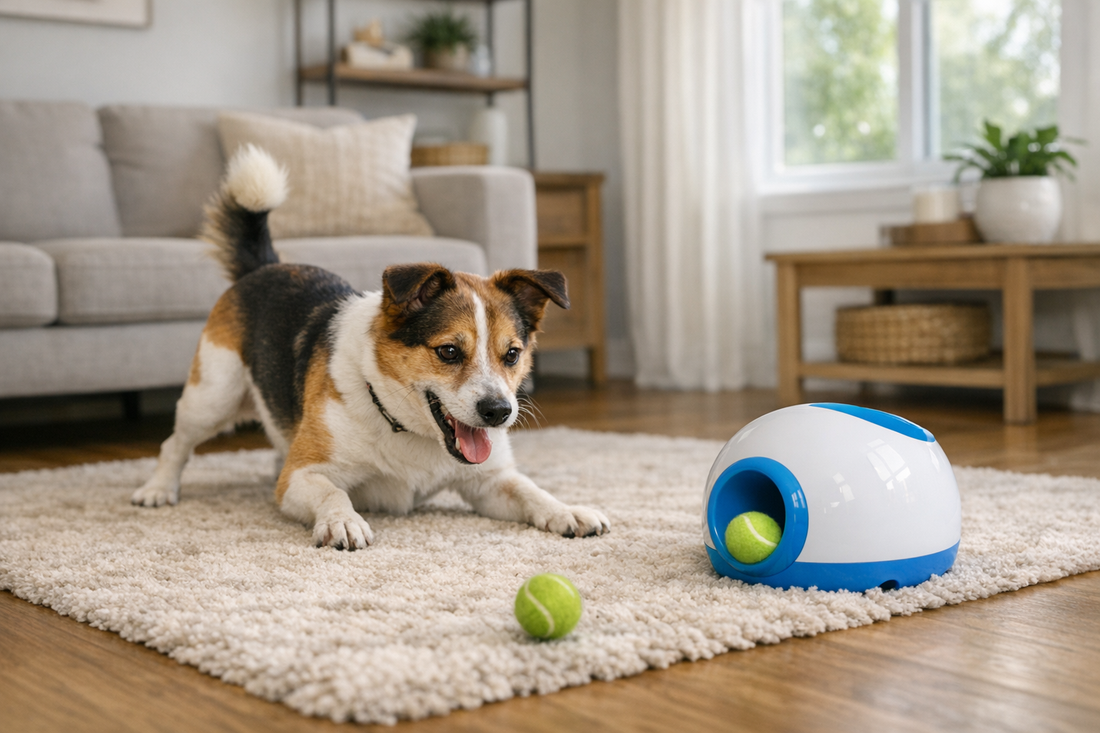
A good interactive cat and dog ball toy is useful here because it gives the dog a moving target and solo-play option that feels more active than a passive chew lying on the floor.
If indoor enrichment is the gap in your routine, the indoor enrichment collection is the most relevant collection for this topic.
What Indoor Play Actually Fixes
Indoor play does not solve every chewing problem. It usually helps with three specific ones.
Unspent physical energy
Some dogs simply have too much fuel left in the tank. Short bursts of movement indoors can take the edge off enough that the dog stops looking for a DIY project.
Restless mental energy
Dogs often need novelty, pursuit, or problem-solving, not just another object to hold in their mouth.
Bad timing in the daily routine
If the chewing always shows up in the same window, that is often a scheduling problem. Indoor play inserted earlier can change the pattern.
Our earlier article on how to tire out a dog indoors without destroying your home is a strong companion piece because it focuses on the energy-burn side of the same issue.
Interactive Play Usually Works Better Than Random Toy Dumping
Many owners already have toys everywhere and still have a chewing problem. That is because access alone is not the same thing as engagement.
A dog that ignores three static toys may come alive the second a toy moves, rolls unpredictably, or asks for chase. Interactive indoor play is useful because it feels like an event. It creates a clearer shift in attention than tossing another plush onto the floor and hoping for the best.
That is where a moving toy setup can outperform a basket of options. You are not asking the dog to invent the game from scratch. The toy is doing part of that work.
When Indoor Play Is Not Enough by Itself
Some chewing cases need more than enrichment. If the dog panics when left alone, targets only one specific object type, or chews hardest during teething spikes, indoor play is only part of the answer.
It also will not fix a dog who has never learned what is okay to put in their mouth. Management still matters. So does redirecting early and preventing rehearsal on things you want to keep intact.
But many owners swing too far into management only. Gates, “leave it,” moving shoes, closing doors. All of that is useful. It just works better when the dog is not already under-stimulated and hunting for something to do.
If you want the solo-play angle, our guide on how to use an interactive ball toy for safe solo play fits directly into this problem.
How to Test Whether Indoor Play Helps Your Dog
Look at timing, not just damage. If chewing happens mostly on rainy days, in the late afternoon, or after long stretches indoors, that is a clue.
Pick one predictable chewing window and add 10 to 15 minutes of structured indoor play before it. Not after. Before. Then watch what changes over the next week. You are looking for less pacing, less object scouting, and a smoother transition into rest.
A border collie mix may need a more active chase-style burst. A senior terrier may need a gentler, shorter session. The exact game matters less than the consistency.
Practical Indoor Play Ideas That Pull Dogs Off Destructive Habits
- Use a short interactive play block before the time of day when chewing usually starts.
- Rotate high-value indoor toys instead of leaving everything out all week.
- Match the game to the dog. Fast chase for one dog, lighter rolling pursuit for another.
- End play before the dog gets more frantic, then make the transition to rest easy.
- Keep valuable chew targets out of reach while the new routine is taking hold.
If your dog gets bored fast with the same setup, our article on the best toy rotation plan for bored dogs is the natural next step.
What Improvement Usually Looks Like
It is rarely dramatic on day one. More often, you notice that the dog stops patrolling for trouble as quickly. They settle sooner. They pick up fewer “forbidden” items. The chewing window gets shorter or disappears on the days when the play block happens on time.
That does not mean indoor play solved everything forever. It means you found one driver behind the behavior and gave it a better outlet. For many busy households, that is enough to turn destructive chewing from a daily irritation into an occasional management issue instead of a constant one.
FAQ
Can indoor play really reduce destructive chewing?
Yes, often it can, especially when chewing is linked to boredom, underused energy, or a predictable restless part of the day.
How long should indoor play last before I expect to see a difference?
Many dogs respond well to 10 to 15 minutes of structured play before their usual chewing window, though breed, age, and energy level change the answer.
Does indoor play help puppies that chew everything?
It can help, but puppies also chew because of development and teething. Indoor play should support the routine, not replace management and appropriate chew options.
What kind of toy is best for dogs that chew out of boredom?
Toys that move, roll, or create a chase pattern often work better than passive toys because they hold attention longer.
What if my dog still chews furniture after indoor play?
Then the chewing may involve another factor such as teething, stress, lack of training, or the play session not matching what your dog actually needs.
Test one structured indoor play block before your dog’s usual trouble window and track the difference for a week. See whether the interactive cat and dog ball toy gives your dog a better target than the furniture →