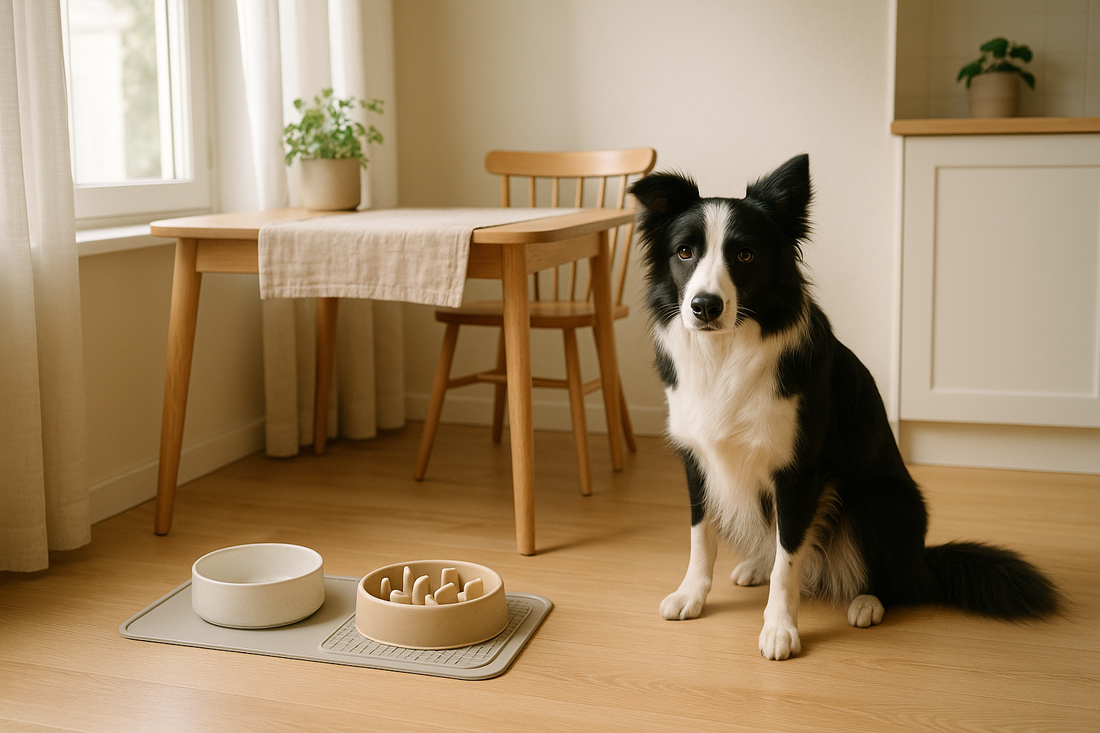
One Dog Eats Too Fast, One Eats Slow: Feeding Tips for Mixed Households
Two dogs can turn one simple meal into two totally different problems. One is done in thirty seconds and looking for leftovers. The other is still halfway through breakfast, distracted by sounds in the hallway or carefully taking one bite at a time. If one dog eats too fast and one eats slow, feeding tips for mixed households need to solve both patterns at once. Fixing only the fast eater is not enough. Protecting only the slow eater is not enough either.
What makes these homes tricky is not just pace. It is pressure. The slow dog often feels watched. The fast dog often learns that hovering might pay off. Mealtime becomes rushed for one and stressful for the other. The right routine changes that by giving each dog a setup that fits how they actually eat.

Separate the Dogs Before You Change the Tools
Owners often jump straight to bowls and accessories. Those help, but the first fix is usually space.
If the fast dog can finish and immediately loom over the slower dog, the whole routine becomes tense. Separation does not have to be dramatic. Different corners, different rooms, baby gates, or simple visual barriers can be enough. The point is to stop one dog’s pace from controlling the other dog’s experience.
A dog slow feeder bowl helps the fast eater, but it works much better when the slow dog is not still dealing with post-meal pressure from a dog that finished instantly.
If feeding issues are a regular problem in your home, the feeding and health collection is the most relevant collection for this topic.
The Fast Eater and the Slow Eater Need Different Jobs
The biggest mistake in mixed households is trying to make both dogs eat the same way with the same setup. That usually fails because the dogs are not solving the same problem.
The fast eater needs pacing. The slow eater needs calm. Those are different goals. One dog may need ridges, slower access, and more engagement with the meal. The other may simply need a quiet spot and no audience.
Our article on how to stop fast eating in dogs covers the speed side well, but in mixed homes the social setup is just as important.
Protect the Slow Dog’s Space
Slow eaters do not always need special hardware. They often need protection from interruption.
A dog that eats at a normal pace alone may look like a “problem eater” only because another dog is hanging nearby. If your slower dog keeps lifting their head, carrying food away, or walking off between bites, watch the environment first. The pressure may be social, not appetite-related.
For some dogs, even hearing the faster dog’s bowl scrape across the floor is enough to change how they eat. That is why separate feeding zones matter so much.
What Helps the Fast Dog Most
The fast dog usually needs the opposite kind of support.
Slow the bowl down
This is where a feeder bowl earns its keep. It creates pauses and prevents the meal from vanishing instantly.
Lower the pre-meal hype
If the fast dog enters meals already frantic, gulping gets even worse.
Keep routines boring and predictable
The calmer the setup, the less the fast eater turns breakfast into a race.
If you want the product angle, our post on the best slow feeder bowl for dogs helps you match the feeder to the dog instead of grabbing the first maze bowl you see.
Do Not Punish the Fast Dog for Finishing First
This is a common trap. Owners start hovering over the fast eater, repeatedly telling them to move away, and creating even more tension around the meal.
Instead, build a simple post-meal plan. Finish, move away, settle somewhere else, and get rewarded for doing that calmly. The idea is to teach the fast dog what happens next, not just what not to do.
At the same time, the slower dog should not feel rushed to beat the other dog. A fair routine protects both sides.
If mealtime tension is already spilling into conflict, our earlier article on preventing mealtime fights in multi-dog homes is the next place to look.
Practical Mixed-Household Feeding Tips
- Feed the dogs in separate spaces before trying to fine-tune anything else.
- Use a slow feeder for the fast dog and calm quiet space for the slow dog.
- Create a simple post-meal routine so the fast dog does not hover the moment they finish.
- Do not assume the slow dog needs a special bowl if the real problem is social pressure.
- Keep mealtime order and location consistent enough that both dogs know what happens next.
What Improvement Usually Looks Like
In a better mixed-household routine, the fast dog finishes more slowly and has a clear next step. The slow dog eats without checking over their shoulder every few bites. Meals feel less rushed, less noisy, and less like a management problem.
You are not looking for identical eating styles. You are looking for a routine where both dogs can succeed at their own pace without making the other dog’s meal harder.

FAQ
How do I feed two dogs when one eats too fast and one eats slowly?
Separate them first, then support each dog differently. The fast dog usually needs slower access to food, while the slower dog often needs a calmer, protected space.
Should both dogs use the same type of bowl?
Not necessarily. In many mixed households, different feeding setups work better because the dogs are solving different problems.
Why does my slow dog seem even slower around the fast dog?
Social pressure often changes eating behavior. A dog that feels watched or rushed may eat more cautiously or keep walking away from the bowl.
What should I do with the fast dog after they finish?
Give them a clear post-meal routine away from the other dog’s feeding area so hovering does not become part of the pattern.
Can a slow feeder really help in a multi-dog home?
Yes, especially for the fast eater, but it works best when it is paired with enough physical separation for the slower dog to eat in peace.
If your current mealtime routine is rushing one dog and stressing the other, start by separating the spaces and slowing the faster eater down. See how the dog slow feeder bowl fits into a calmer mixed-household routine →