Rainy Day Activities for Dogs That Actually Burn Energy
Some rainy day dog advice sounds nice and does almost nothing. A chew for ten minutes, one lazy hallway toss, then your dog is back to pacing, whining, or trying to turn your coffee table into a project. If you need rainy day activities for dogs that actually burn energy, you need more than distraction. You need movement, repetition, and just enough brain work to take the edge off.
A young cocker spaniel on day three of bad weather is not the same problem as an older bulldog who only needs a little extra outlet. Some dogs get wired when they miss one proper walk. Others mainly get bored. The best rainy-day routine handles both by mixing controlled motion with short reset moments, instead of one long chaotic play session that leaves the room wrecked and the dog even more amped.

Indoor Play Works Better in Short Bursts
One of the biggest mistakes on rainy days is trying to make up for the weather with a single huge session. That often backfires. Dogs get overstimulated, slip on the floor, smash into furniture, then stay hyper instead of settling.
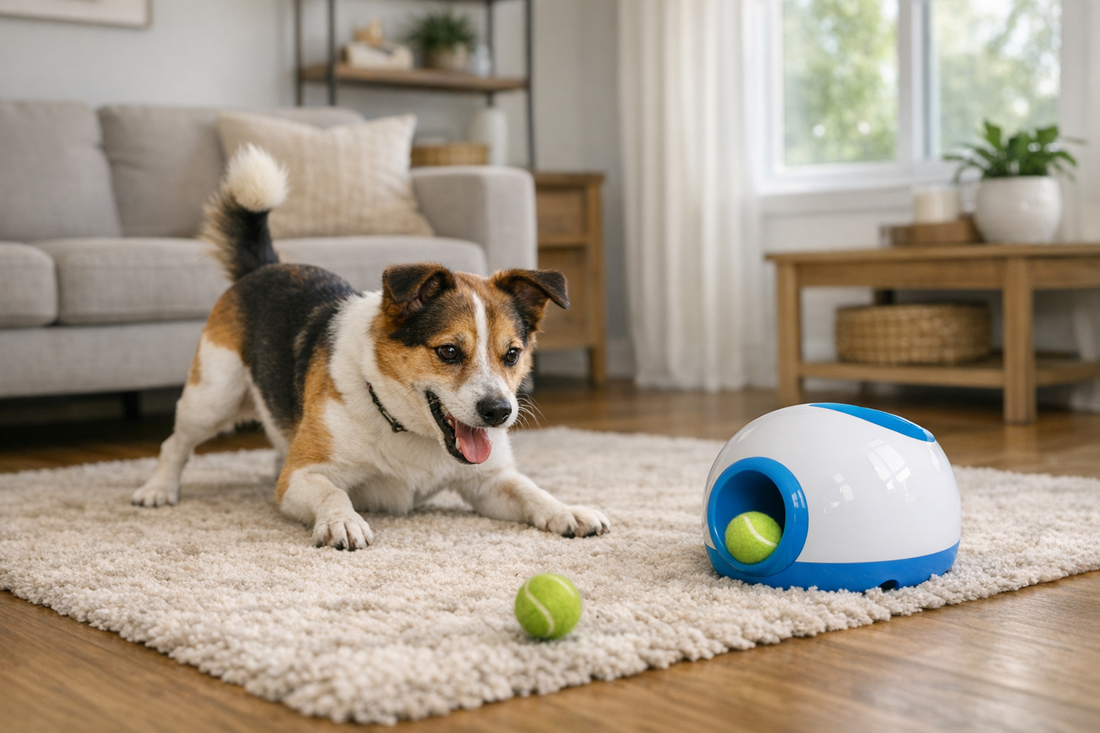
Short rounds work better. Five to eight minutes of active play, brief pause, then another focused round. A solid interactive ball toy for indoor dog play is useful here because it gives you repeat motion without asking you to throw toys across the room for half an hour.
If your rainy-day problem shows up a lot in your home, the indoor enrichment collection is the right collection to build around.
Not All “Enrichment” Burns Real Energy
A sniff mat, lick break, or chew can absolutely help your dog settle. But if your dog is climbing the walls after missed walks, calming enrichment by itself may not be enough. You often need a sequence: move first, then settle.
That is why effective rainy-day plans usually combine chase, search, and reset. Motion empties some of the tank. Brain work smooths the edges off what is left. A dog that only gets mental stimulation may still be physically twitchy. A dog that only gets frantic motion may stay revved up. The balance is what works.
Our earlier article on how to tire out a dog indoors without destroying your home pairs well with this, because rainy days are exactly when structured indoor energy-burn matters most.
Activities That Usually Work Best
Some rainy-day ideas sound fun to humans but do not move the needle much for dogs. These tend to work better in real life:
Controlled chase games
Good for dogs that need action but get too wild with indoor fetch.
Short search sessions
Hide treats or toys in easy spots first, then make it a little harder. This adds brain work without needing much space.
Start-stop toy play
A burst of movement, short pause, then another round. Great for dogs that spiral upward if play never breaks.
Solo-friendly toy interaction
Useful when you still need to answer emails, cook dinner, or get through the evening without becoming the full entertainment department.
If you want a product-level comparison, our post on automatic ball toys vs tug toys helps clarify which indoor play style actually lasts longer.
Match the Activity to the Dog You Have
A rainy-day plan should fit your dog’s style, not an idealized “active dog” template.
A retriever-type dog may love repeated chase and toy re-engagement. A terrier mix may do better when you add problem-solving and search. A shepherd or border collie often needs some rules built into the game, not just movement. A brachycephalic dog may need gentler bursts and quicker pauses.
And space matters. A small apartment does not need tiny effort. It needs smarter structure. You can burn energy in a narrow living room if the games are controlled and the floor setup is safe.
Rainy-Day Energy Burn Plan You Can Actually Repeat
- Start with 5 minutes of active movement using one toy or one game only.
- Pause before your dog tips into wild, slippery, furniture-bouncing mode.
- Add a short search or scent task to shift the brain on.
- Run one more active round if your dog still has plenty left.
- Finish with something calmer so the session ends downward, not upward.
This kind of sequence is much more repeatable than trying to exhaust the dog in one dramatic burst.
What Usually Fails on Rainy Days
The biggest failure is random play with no structure. Owners keep going because the dog still looks excited, but excited is not always the same as productively tired. Another failure is choosing activities that are too passive for high-energy dogs and then assuming “indoor enrichment does not work.”
The room setup can fail too. Slippery floors, clutter, and breakables make indoor play more stressful than it needs to be. Clear the space first. Then use it well.
If your dog gets bored fast between sessions, our earlier post on best indoor toys for bored pets gives you a broader view of what to rotate in.

FAQ
How do I burn a dog’s energy on a rainy day without a long walk?
Use short indoor movement rounds combined with search games or pattern-based play, rather than depending on one passive enrichment activity.
What indoor activity works best for a high-energy dog in bad weather?
Usually a mix of controlled chase, structured toy play, and short scent tasks works better than one activity alone.
Can interactive toys really replace outdoor exercise for one day?
For one weather-heavy day, they can help a lot, especially when paired with a structured routine. They do not replace outdoor life forever, but they can absolutely save a bad-weather evening.
Why is my dog still wild after indoor play?
Often because the play was too intense, too long, or had no reset points. Some dogs need more pauses and more brain work, not just more motion.
What is the safest rainy-day setup for small homes?
Short sessions, stable flooring, fewer obstacles, and toys that create repeat movement without full-speed indoor fetch usually work best.
Before the next rainy evening traps you indoors, build one repeatable plan instead of improvising every time. See how the interactive ball toy fits into a real bad-weather routine →