Indoor Cat Enrichment Ideas for Small Spaces
A cat can get bored in a studio apartment just as easily as a dog can get restless in a backyard. The difference is that cats often hide the problem longer. They sleep more, stare out the window, sprint at 11 p.m., scratch the chair you actually like, or start treating your kitchen counter like the only interesting place left in the home. If you need indoor cat enrichment ideas for small spaces, you are usually trying to solve that exact pattern: not a lack of love, just a home routine that is too flat.
Small homes do not need huge cat trees and fifteen random toys scattered across the floor. They need a tighter setup. Better stimulation. More movement built into the day. And at least one interactive option that still works when you are busy, tired, or living around furniture that already earns every inch it takes up.
Think Vertical Before You Think Bigger
One reason cats get under-stimulated in small homes is that people judge space only by floor area. Cats do not. A one-bedroom apartment with two strong window perches, a shelf route, and one safe lookout spot often feels richer than a larger room with nothing to climb on.
Vertical access gives indoor cats more choices without forcing you to give up half the living room. A perch near a window can turn ten slow minutes of bird-watching into a real part of the day. A shelf path can break up long inactive hours. Even a stable chair near a window, used intentionally, can give a cautious cat a new observation point.
But vertical space alone is not always enough. Some cats need something that moves back.
For compact play ideas and gear that fits apartment life, the indoor enrichment collection is the best collection match for this topic.
Interactive Motion Matters More in Small Rooms
Cats in smaller homes often run into the same problem: their environment stays too predictable. Same corners. Same hallway. Same sofa. Same human schedule. Movement-based enrichment helps because it changes the pattern without asking you to redesign the whole room.
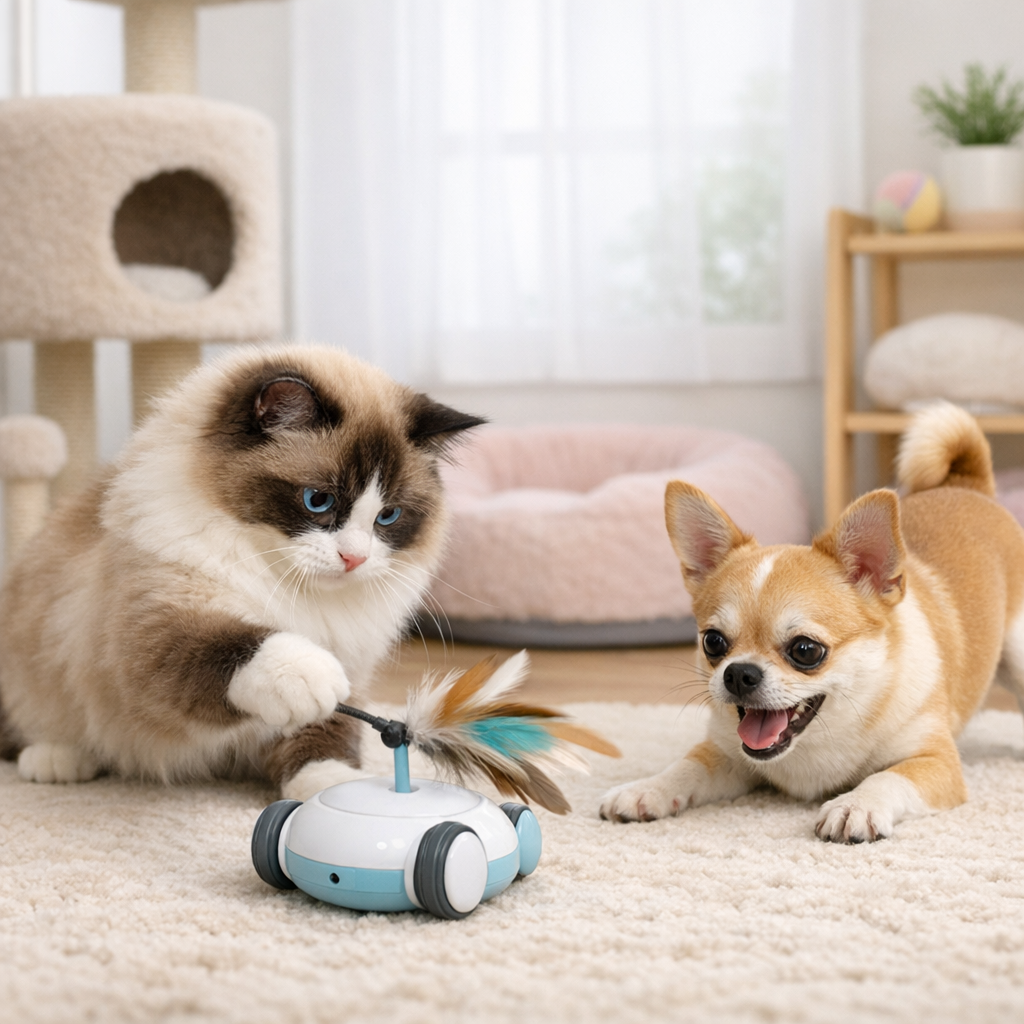
An interactive cat and dog ball toy works well in this kind of setup because it creates short bursts of motion that break up stillness. That matters especially for young indoor cats, solo cats, and cats that like stalking but lose interest when every toy depends on you holding it.
The win here is not “more chaos.” The win is a short play block that wakes up chase, pounce, and curiosity in a space that otherwise feels static.
If you want a broader comparison of moving toys and small-pet play, our post on interactive toys for cats and small dogs connects naturally to this one.
Use Rotation Instead of Toy Piles
A lot of small homes look cluttered because owners try to solve boredom with quantity. Cats usually do better with rotation than with constant access to everything.
Leave a few familiar items out. Put the rest away. Bring them back later. That simple switch often makes an old toy interesting again because the cat experiences it as change, not background noise.
This is especially helpful in apartments where floor clutter builds up fast. Three purposeful items beat twelve ignored ones. You are not trying to build a toy store. You are trying to create moments that feel new enough for the cat to care.
If you want the solo-play angle, our article on how to use an interactive ball toy for safe solo play is a useful follow-up.
Build Enrichment Into Normal Household Moments
The easiest cat enrichment routines are the ones that attach to something you already do. Open the blinds in the morning, and that becomes watch time. Clear the hallway for ten minutes in the evening, and that becomes chase time. Put one toy away after play, and tomorrow it feels fresh again.
You do not need to entertain your cat nonstop. You do need to create repeatable moments where the cat gets to hunt, observe, climb, or investigate. In small homes, those little routine anchors matter more because there is less accidental stimulation floating around.
This is also where an interactive toy can beat a passive toy. Passive toys are fine, but many cats stop noticing them once they settle into the same corner for a week. Motion changes the room. That is a big deal when the room itself is small.
If your cat shares the home with a small dog or another pet, the toys collection can help you keep the play setup more flexible without loading the space with oversized gear.
Practical Indoor Cat Enrichment Ideas for Small Spaces
- Use window time intentionally by creating one safe viewing perch with a clear outside view.
- Rotate toys every few days instead of leaving everything out all month.
- Create one short daily chase session, even if it only lasts five to seven minutes.
- Use an interactive toy when you need the room to feel different without adding clutter.
- Keep one vertical route or lookout spot available so the cat can change levels during the day.
- Clear one play lane in the evening instead of expecting the cat to perform around chair legs and storage boxes.
What Boredom Looks Like in a Small-Space Cat
Not every bored cat is destructive in an obvious way. Some get louder. Some start waking you up earlier. Some overgroom. Some knock things down because movement itself has become the entertainment. Others simply sleep more and then explode with energy at the least convenient hour.
Small-space boredom often looks like uneven energy. Long inactivity. Short intense bursts. Sudden obsession with cords, cabinets, or one forbidden shelf. If that sounds familiar, your cat may not need more square footage. Your cat may need better enrichment timing.
Our earlier post on the best indoor toys for bored pets is another good companion if you want a broader indoor boredom angle.
What Actually Fits in a Small Home
The best enrichment setup for a small apartment is usually compact, movable, and easy to reset. One perch. One climbing option if you have room. One interactive toy that gets real use. A simple rotation habit. That is already enough to change the feel of the day for many indoor cats.
Owners often make small homes harder by trying to copy big-home pet setups. You do not need that. A tighter, smarter setup works better because it gets used consistently instead of becoming visual clutter you start ignoring along with the cat.
FAQ
How do I enrich an indoor cat in a small apartment?
Focus on vertical space, short daily play, toy rotation, and one interactive option that adds movement without taking over the room.
What is the best toy for indoor cat enrichment in a small space?
A compact interactive toy is often a strong choice because it creates motion and novelty without needing a large play area.
How often should I rotate cat toys in a small home?
Every few days is often enough to make familiar toys feel interesting again, especially for cats that lose interest quickly.
Do cats really need interactive play if they sleep most of the day?
Yes. Sleeping a lot is normal, but cats still need short periods of chase, stalking, and investigation to keep the day mentally richer.
What are signs my indoor cat is bored?
Common signs include late-night zoomies, scratching furniture more often, overgrooming, attention-seeking noise, or turning household objects into the main entertainment.
If your cat’s world feels too small by the end of the week, do not add random clutter and hope it helps. Try a tighter play routine and see how the interactive cat and dog ball toy fits into your indoor setup →